
7 Ways to Split Group-Trip Costs Without Awkwardness
Group trips get expensive when nobody knows what “we’ll split it later” means. One person books the house, another buys groceries, and a third assumes the rental car is included in the shared budget. The math may be easy; the expectations are not. A low-drama trip starts before anyone pays: agree on what is shared, what stays personal, how to handle different budgets, and when balances will be settled.
These seven approaches are designed for couples, friends, and family groups with different spending habits. None requires every traveler to spend the same amount on every activity. The goal is a clear method that people can understand, including someone who does not want to discuss money every hour. Choose the lightest system that fits your group and the number of shared purchases.
Set the rules before reservations
Start with a short conversation about comfort range. Ask each person what total trip cost feels workable, what they want to prioritize, and whether they prefer a private room, shared meals, or optional excursions. Avoid asking someone to name their maximum in front of the group if that would make them uncomfortable. Give people a way to share privately with the organizer. Then plan lodging and transport around the range everyone can genuinely accept.
Separate costs into three buckets: shared essentials, optional shared choices, and individual spending. Lodging, a grocery run, or a shared airport transfer may be essential. A boat tour or group dinner may be optional. Souvenirs, drinks, and personal snacks stay individual unless everyone agrees otherwise. This simple distinction prevents the assumption that “group trip” means every purchase is automatically divided across everyone.
7 ways to split group-trip costs without awkwardness
1. Split shared essentials equally
An equal split works when people receive roughly the same benefit and agree to the purchase. It is simple for shared groceries, a standard airport transfer, or one group booking. Tell the group the estimated amount before committing and send the receipt afterward. If one person does not use a rental car or shared activity, do not quietly include them in that cost; ask the group to decide whether it is a shared trip expense or an opt-in.
2. Split by room or bed rather than by person
Lodging can be divided by room, bed, or privacy level when accommodations differ. A couple using a private room may pay more than someone using a sofa bed, while a family room may benefit several people. Share the full booking total and the proposed allocation before it is nonrefundable. If the group prefers a per-person split, make sure everyone understands the room arrangement and can opt out before the deposit is paid.

3. Let people opt into premium activities
Plan a core itinerary with low-cost shared options, then list higher-cost excursions separately. Each person can choose whether to join without turning the decision into a referendum on the trip. Reserve only after the group confirms who is participating and how the cost will be divided. If a minimum group size changes the price, tell everyone the break-even number and what happens if someone drops out.
4. Use a rotating host for small shared purchases
For modest items such as coffee, a taxi, or picnic supplies, a rotating host can work if amounts stay similar and the group is small. Track who paid and avoid letting one person carry the expenses all weekend. If the costs diverge, settle up rather than assuming they will balance later. A simple note in a shared app is enough; the record should be visible to the people sharing the costs.
5. Assign costs by actual use
Some expenses are not evenly shared. A driver may pay less for a rental if others are using it for a day trip, or participants may divide a tour only among those attending. Decide the rule before booking. For fuel, tolls, or groceries, choose a clear method—equal split, headcount for each use, or a pre-agreed contribution—and document it. Avoid recalculating every tiny variation unless the group wants that level of precision.
6. Make a shared trip fund
A shared fund can cover agreed essentials such as groceries, transit passes, or a house deposit. Set a contribution amount and name one person to track it, with receipts visible to everyone. Do not use the fund for unapproved upgrades or personal purchases. If the balance runs low, ask before collecting more. Return unused money at the end or apply it to a final shared bill only if everyone agrees.

7. Choose a payment app or settle on set dates
A payment app can simplify receipts and balances, but not every traveler uses the same service or can pay instantly. Agree on the app before the trip, check fees and access, and keep a cash or bank-transfer alternative. Set one mid-trip check and one final settlement date. A predictable schedule is less awkward than repeated reminders in the group chat.
A fair plan for uneven budgets
If budgets differ, design the trip so the lower-cost option still feels complete. Choose a comfortable shared base, then make paid upgrades optional. A group can share a modest rental and let individuals buy a special dinner, or book a central house while splitting bedrooms differently. Do not frame a person’s budget limit as a lack of enthusiasm. A good trip lets everyone participate without pressure to borrow or hide the cost.
Be careful with “we’ll cover you now and you can repay later.” That can create debt and resentment. If one person is temporarily paying for a shared reservation, agree on the amount, deadline, and cancellation plan in writing. When someone cannot pay a deposit immediately, look for a booking structure that does not force the organizer to become the group’s lender.
Use a simple expense agreement
- What is shared and what is personal
- who is booking and paying
- how unequal rooms or participation are handled
- how refunds and cancellations are split
- where receipts and balances are recorded
- when the group settles the balance
- how someone can opt out
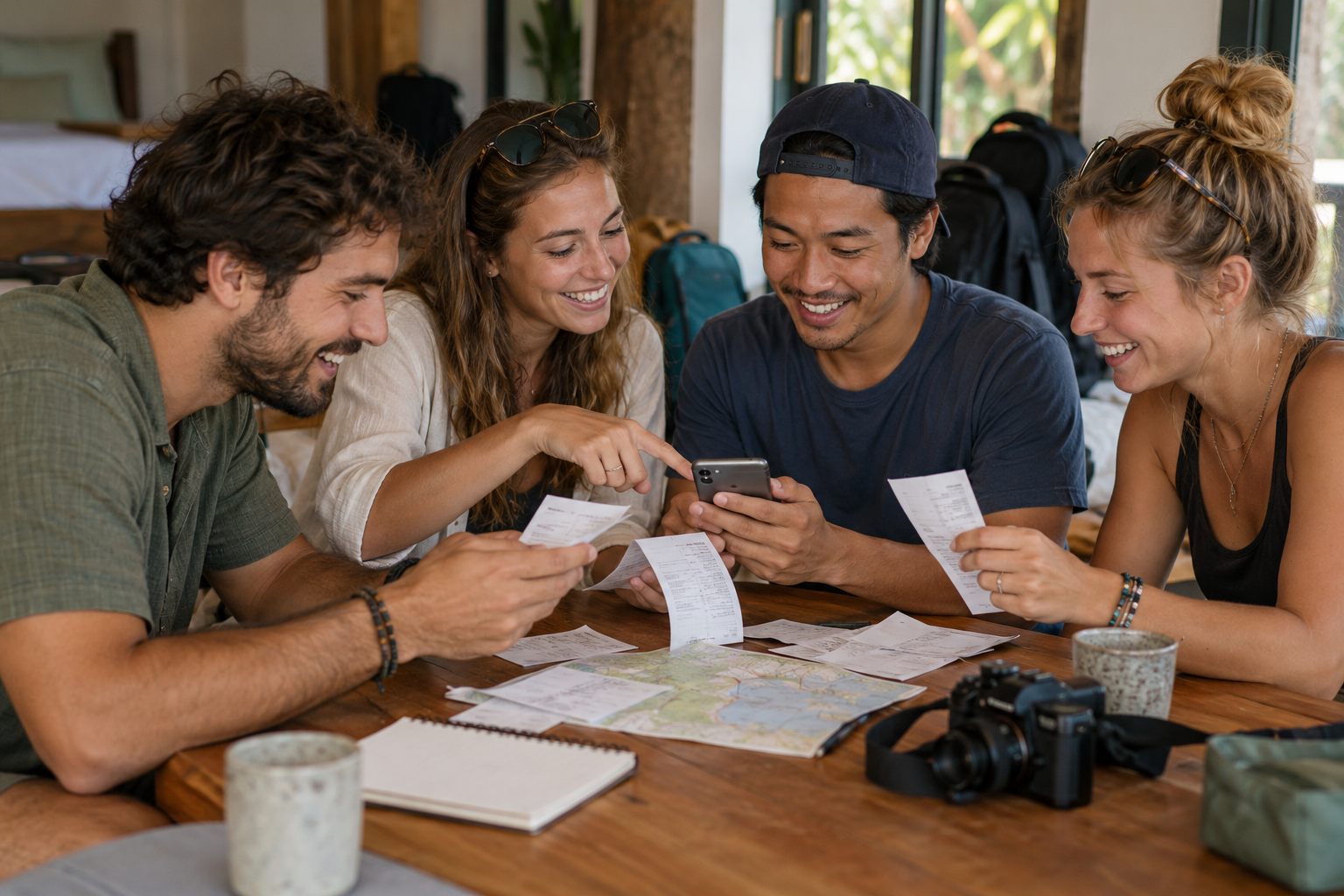
Keep the agreement short enough that people will read it. A pinned group message can say: “We split the house by room, rides by riders, shared groceries equally, and tours only among participants. Please approve optional costs before booking; final balances are due the week after we return.” The exact rules can differ. What matters is that they are visible and agreed before the purchase.
What to do when plans change
A missed train, illness, or changed itinerary can affect costs. Check cancellation terms and refund rules before dividing the original price. If one traveler leaves early, distinguish between costs that can still be changed and costs the group cannot recover. Avoid rewriting the rules while someone is upset; return to the agreement, explain the available options, and make a clear decision together.
If someone has paid too much, settle promptly instead of waiting for the next trip. If a refund arrives after balances were paid, return it according to the same allocation. Keep an open record of shared costs and allow people to correct errors without embarrassment. The purpose of tracking is clarity, not policing every coffee.
A low-friction group-trip rhythm
Before booking, share a rough per-person estimate and identify optional upgrades. During the trip, record shared expenses once a day or after a major booking. At the end, confirm the final balance and set a date to pay. Give the organizer a clear limit for spending without approval. This rhythm keeps the group informed without turning the vacation into an accounting exercise.
Make money expectations part of the plan
The fairest split is the one the group understands before anyone is committed. Agree on categories, adjust for actual use when it matters, and leave room for people to decline optional costs. Clear expectations protect friendships and make it easier to plan a trip that fits more than one budget.
Three situations where the split needs extra care
A group renting one large home
A large vacation rental may have shared common space but uneven sleeping arrangements. Before booking, list who gets each bedroom, whether bathrooms are private, and whether the price changes with guest count. Decide whether rooms are priced by occupancy, privacy, or equal share. If a couple takes the largest suite while one traveler uses a sofa bed, an equal split may feel unfair even if everyone agreed to share the house. Show the proposed calculation before the cancellation window closes.
A family trip with different ages
A family may have children who do not pay the same way as adults, grandparents who prefer a private room, or relatives who join for only part of the stay. Agree whether children count as full shares for lodging, groceries, and transport, and whether a short-stay visitor pays a nightly portion. There is no universal correct formula. A clear, consistent rule prevents the organizer from making a different decision for each relative.
A group with one person doing most of the planning
The person who researches, books, and tracks receipts is contributing time as well as money. Decide whether the group will keep costs equal and share the work, or whether the planner will receive a defined convenience benefit such as choosing a preferred room. Do not leave this unspoken until the planner feels taken for granted. A short task list can distribute the work: one person handles lodging, another meals, another transport, and a fourth records the shared expenses.
Example: a simple three-day ledger
Suppose four friends split a rental home equally, but only three join a boat excursion and two share a taxi to a late dinner. The lodging is recorded as one common cost divided four ways. The excursion is recorded only for the three participants. The taxi is divided between the two riders. Shared groceries are split among the four, while each person’s restaurant order stays personal. The ledger needs only date, item, amount, payer, and the people included. Everyone can check it without asking the organizer to reconstruct the weekend from memory.
If the excursion is booked at a group rate that depends on four people, disclose the difference before the fourth person opts out. The three participants can choose to pay a higher per-person rate, or the group can find another activity. Do not assume the absent traveler should subsidize an activity they are not attending unless they explicitly agreed to that condition.
Words that make the conversation easier
Try a neutral opening: “Before I reserve anything, can we agree on what counts as shared and set a comfortable range for the lodging?” For an optional cost, say: “This is about $X each for the people who join. I’ll wait for everyone to opt in before I book.” For a balance, share the receipt and ask for a specific date. Clear, matter-of-fact language usually feels kinder than an apology or an indirect hint.
Agree on what happens with cancellations and refunds
A shared booking can create unequal loss if one person cancels. Before paying, decide whether the traveler who withdraws is responsible for a nonrefundable share, whether the group will try to find a replacement, and how any supplier refund will be distributed. Check whether the booking can be split or changed rather than assuming one person’s cancellation leaves the rest unaffected. A written message is useful because nobody has to rely on a vague memory after plans change.
The agreement should also cover an unexpected extra cost, such as a replacement ride or an added night after a disruption. Set a reasonable threshold for spending without group approval. For example, the organizer might be able to pay for a necessary small transfer, but a new tour or lodging upgrade needs a quick group decision. This keeps the trip moving while preserving a say in larger expenses.
If a traveler is uncomfortable discussing money in a group call, offer a private way to share limits and concerns before choosing lodging. Respect the answer and plan an alternative without asking them to justify every budget choice.