
10 Southwest Road Trips With Short-Hike Stops
A Southwest road trip can put a red-rock overlook, a desert garden, and a high-country forest on the same itinerary. The challenge is that “short hike” does not always mean easy: heat, altitude, loose rock, sun exposure, and limited water can turn a half-mile walk into the hardest part of the day. A good route pairs each scenic drive with a walk that fits the season and the people in your car.
Below are ten trip frameworks with a manageable walk as the anchor rather than an afterthought. Trail names, access, parking, and conditions can change, so check the official park or public-land page before you go. Use the shortest route that gives your group the experience it wants, carry more water than a casual town walk requires, and turn back before heat or fatigue becomes a problem. The landscape will still be there on another day.
Choose the hike before the day’s mileage
Before choosing a route, decide what “short” means for your group. A flat paved path, a half-mile sandy trail, and a half-mile climb over slickrock are very different outings. Look at elevation gain, shade, surface, exposure, and the return distance. Then choose the day’s driving radius around that walk. When the hike is the main reason for the trip, stay nearby the night before rather than starting with a long drive in the dark.
Desert safety is not just a summer concern. Spring and fall can still bring strong sun, while higher elevations can be cold, windy, or snowy. Check the local forecast, park alerts, and trail-specific notices. Start early in hot weather, carry water for everyone, wear sun protection, and do not rely on a phone signal for navigation or help. If a route is closed or the conditions feel wrong, use the paved viewpoint, visitor center, or lower-exposure alternative.
Ten Southwest drives with walkable highlights
1. Sedona’s Red Rock Scenic Byway and a short creek-side walk
Use Sedona as a base and follow the Red Rock Scenic Byway with one easy-to-moderate walk chosen from current Forest Service or city guidance. Oak Creek views and red-rock scenery make the drive rewarding even when trailhead parking is full. Decide on a primary trail and a nearby alternative before leaving. Some popular access points require a pass or shuttle, and a busy weekend can make a short hike hard to start at the time you planned. This trip fits travelers who want dramatic scenery without driving between distant national parks.
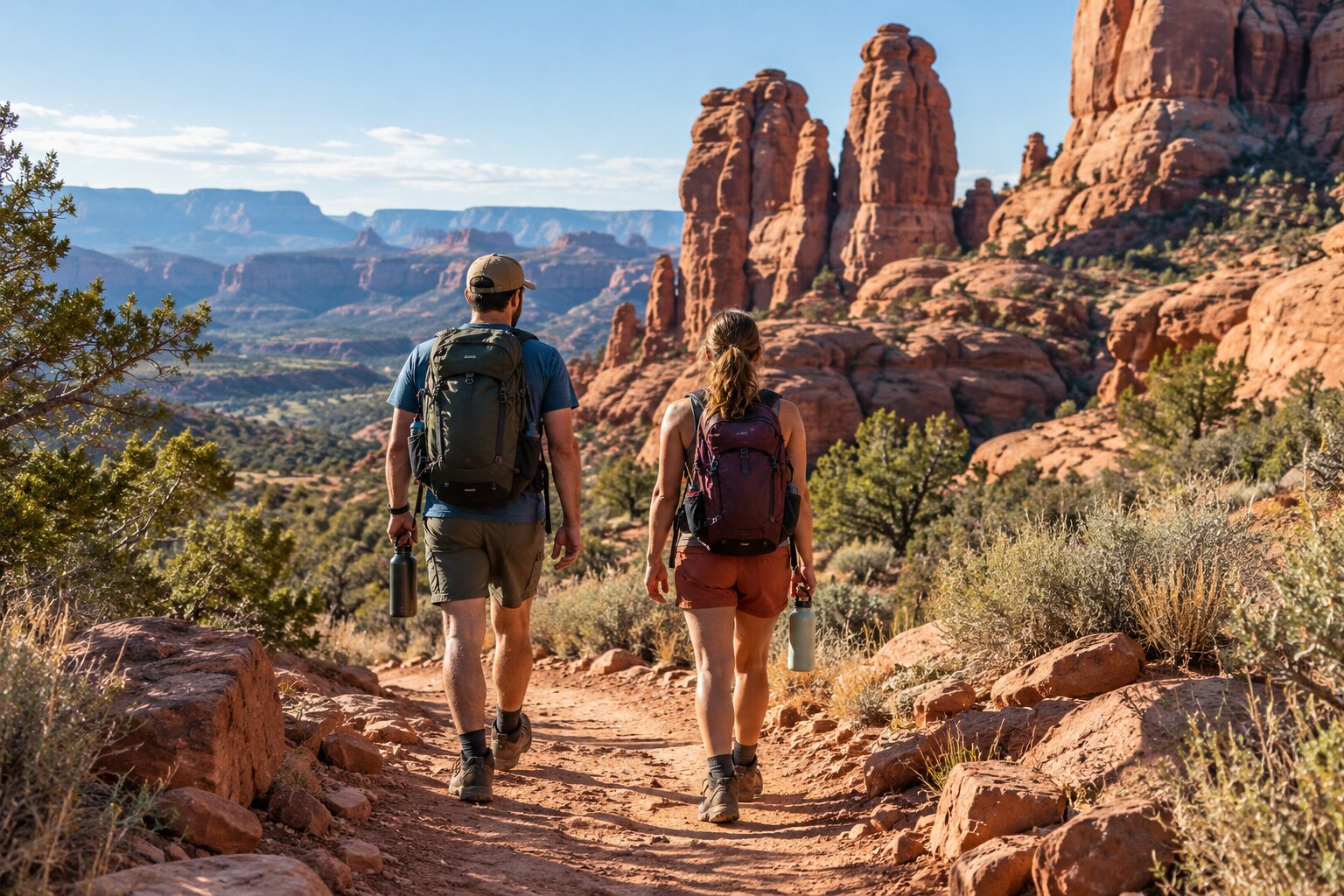
2. Grand Canyon South Rim with the Rim Trail as a choose-your-distance walk
The South Rim’s Rim Trail allows visitors to enjoy the canyon without committing to a descent. Choose a short section between accessible viewpoints and use the shuttle where it helps; do not treat the entire rim as a single casual walk. The elevation, sun, wind, and winter ice can matter even near developed areas. Build a day around one rim segment and a visitor stop rather than adding a long trail simply because the map makes it look close. This is a strong first-time option for mixed-age groups that need flexibility.
3. Petrified Forest National Park with a short badlands loop
Drive the park’s main road and select one short established trail near the Painted Desert or petrified wood areas. The open landscape can look mild, but shade and water are limited. Stay on marked paths and leave petrified wood where it is; taking natural and cultural resources is prohibited. The route works well as a half-day add-on between longer drives because you can see much of the park from the road and add one purposeful walk. Check current operating hours and road notices before entering.
4. Saguaro National Park’s scenic loop and a desert discovery trail
Choose either the Tucson Mountain District or the Rincon Mountain District for the day rather than trying to visit both across town. Each offers a scenic drive and short walks, but travel between districts adds time. In hot months, begin early and keep the trail near the top of the morning plan. A loop road plus a short nature trail makes an accessible introduction to the Sonoran Desert, while a visitor center can fill in the context without extending the walk. Check heat and trail alerts and stay on established routes among cacti.
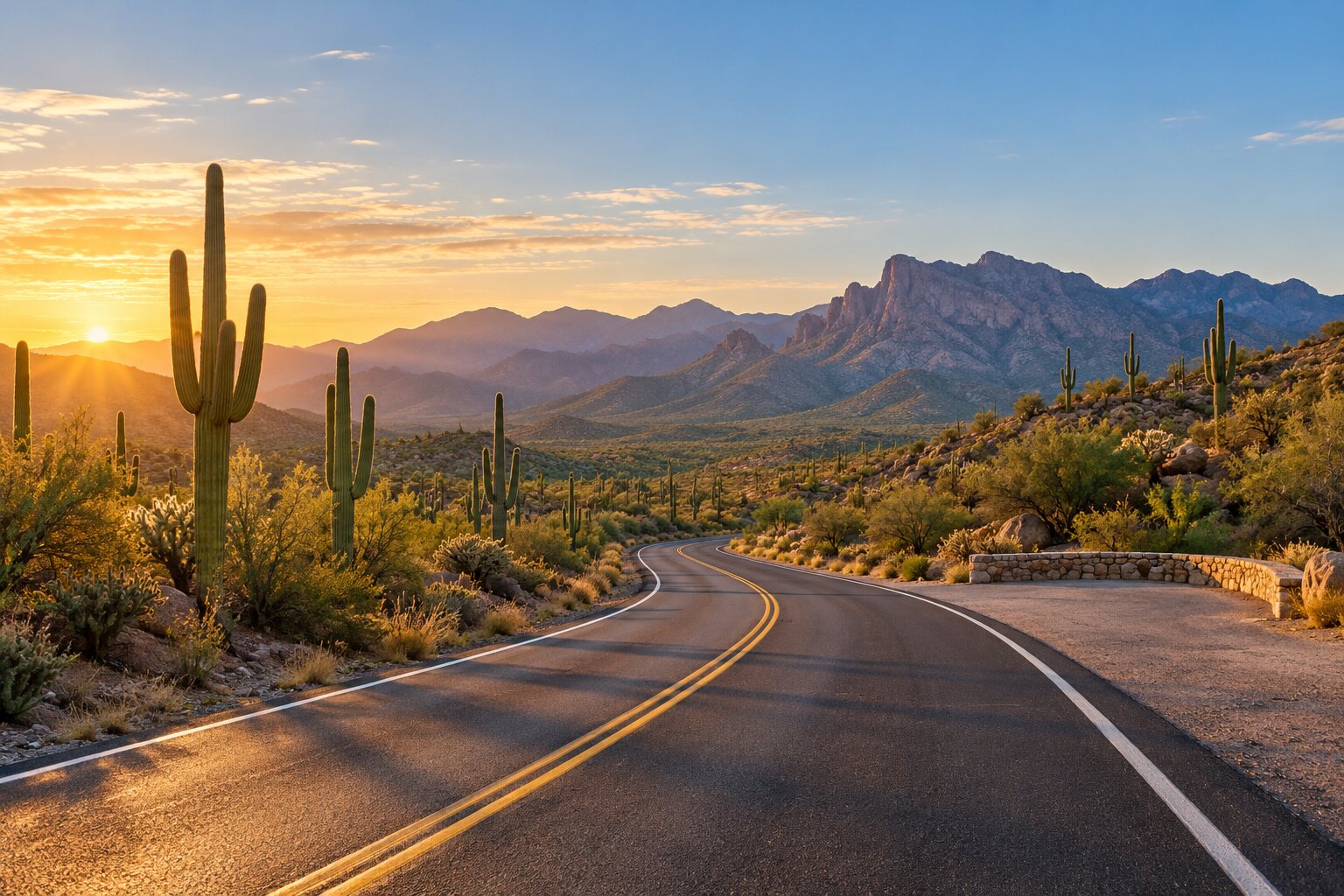
5. Organ Pipe Cactus country from Ajo with a short nature loop
Use Ajo as a practical base for Organ Pipe Cactus National Monument and choose one short nature trail or visitor-area walk to pair with a scenic drive. The monument is remote, so fuel, water, and service planning matter more here than in a city-park day. Check the road conditions and any safety notices before leaving town. Do not assume that all scenic routes are suitable for every vehicle; follow the current park guidance and avoid unpaved stretches if conditions or your vehicle make them a poor fit.
6. White Sands with an early walk on the dune field
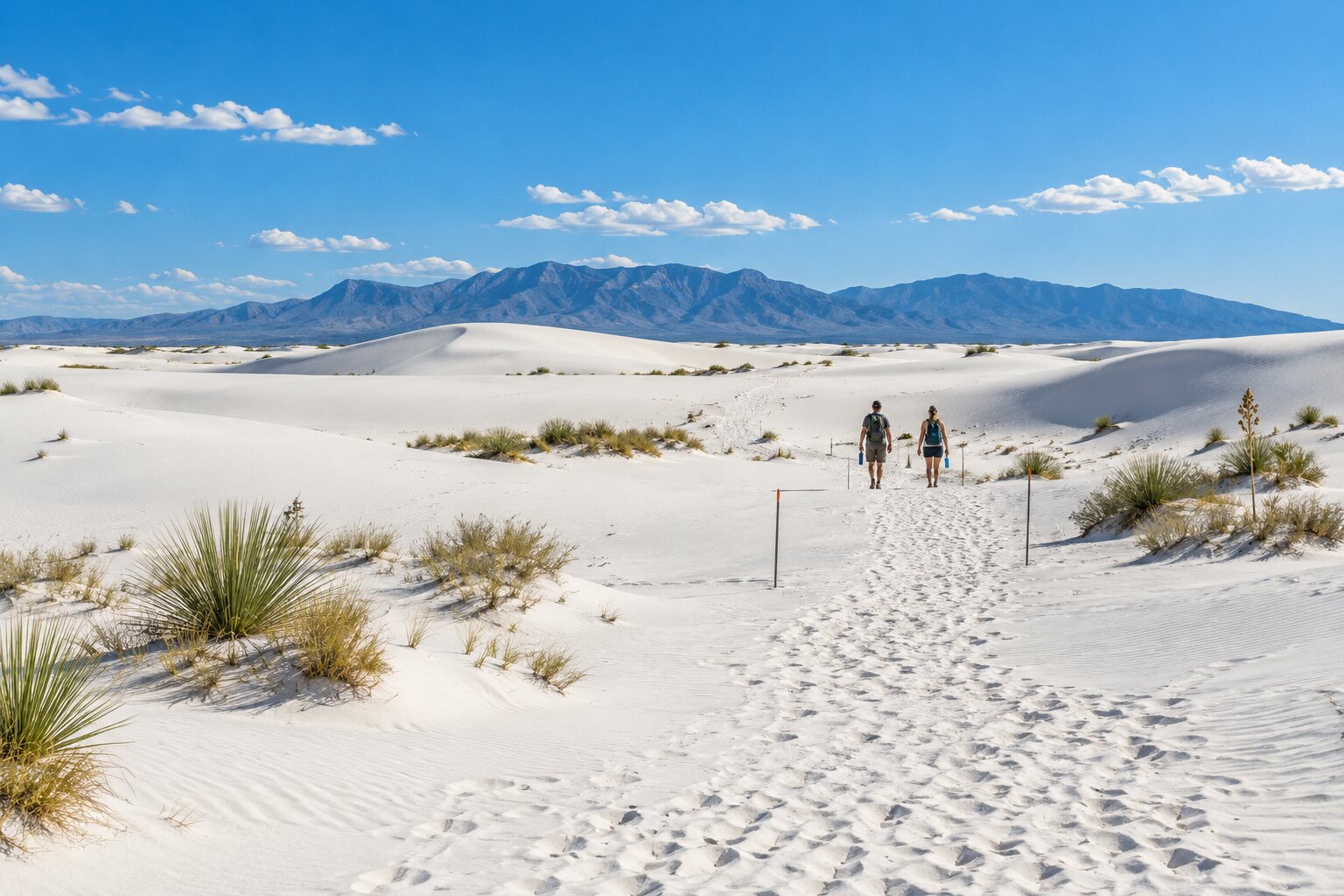
White Sands National Park invites visitors to walk directly across a gypsum dune landscape, but distance is difficult to judge in a place without familiar landmarks. Choose a short out-and-back, carry water, and use the park’s trail markers rather than wandering toward a distant ridge. Check for missile-range closures, which can temporarily close the road and park. If the main access is unavailable, do not attempt an improvised approach. This trip works best when you plan the walk during the cooler part of the day and leave generous time for the drive back to town.
7. Santa Fe to Bandelier for a short cultural-site walk
Pair Santa Fe with a half-day at Bandelier National Monument, choosing a short route that fits your interest in cliff dwellings, canyon scenery, or a visitor-center overview. The monument’s ladders and uneven terrain are not suitable for every visitor, so check trail details before promising a particular experience to the group. Treat the archaeological site with respect: stay on marked paths and follow park rules. This route is appealing for travelers who want cultural context as well as landscape, and Santa Fe provides an indoor or low-walking alternative if weather turns.
8. Moab’s scenic corridor with a short Arches National Park walk
Use Moab as a base and combine the park road with one short, well-matched walk rather than trying to see every arch in a single day. Some popular trailheads require timed entry or have crowded parking; check current reservation rules and alerts. Consider a lower-mileage route with a clear turnaround point, especially in heat, wind, or icy conditions. The drive itself offers multiple viewpoints, so a full itinerary does not need to be a long hike. If a trailhead is full, use an open viewpoint and enjoy the landscape without circling the lot.
9. Capitol Reef’s Fruita area with a short orchard or canyon walk
Capitol Reef’s Fruita area makes a good center for a short visit, with scenic road access and trails of different lengths. Pick a walk based on surface, shade, and current conditions; do not treat a narrow canyon route as an easy stroll if rain is possible. The park’s orchards and historic structures have seasonal rules and harvest timing, so check the park page before planning around them. Travelers who prefer a lower-key national-park day may find this area easier to pace than a sequence of long desert drives.
10. Flagstaff and Walnut Canyon for a short high-country history walk
Build a day from Flagstaff to Walnut Canyon National Monument and choose the visitor area or a trail only after checking the current conditions. The Island Trail includes a steep staircase and is not appropriate for every mobility level; the rim area gives visitors a way to learn about the canyon without descending. Higher elevation can feel tiring even when temperatures are comfortable. This route is a useful contrast to the region’s red-rock drives and suits travelers who want a shorter outing with a strong cultural and geological story.
How to compare a short hike before you commit
| Check | What to verify | Why it changes the choice |
|---|---|---|
| Exposure | Shade, sun angle, wind, and heat advisory | A short unshaded walk may be a poor afternoon plan. |
| Surface | Sand, slickrock, stairs, gravel, or paved path | Distance alone does not describe effort or footing. |
| Elevation | Starting elevation and climbing | High country can feel demanding even on a brief trail. |
| Access | Parking, shuttle, permit, timed entry, closures | Access constraints can dictate the day’s order. |
| Backup | Nearby viewpoint, visitor center, or town stop | A good alternate avoids pressure to hike when conditions change. |
For a group with different abilities, compare the day by its most restrictive need. A child who overheats, an older traveler with balance concerns, or a companion who dislikes steep stairs can make the “easy” route a poor fit. Choose a walk with a clear turnaround, shade or indoor relief nearby, and an enjoyable way to participate without completing the full path. That lets everyone take part in the trip without turning the hike into a test.
What to pack for a short desert walk
- Water for each person, with extra for hot or remote routes
- Sun hat, sunglasses, and sunscreen
- Closed-toe shoes with traction for sand or rock
- Light layers for wind, high elevation, or temperature changes
- Offline map and a charged phone, without relying on cell service
- Snacks and any required medication
- Small first-aid supplies and a way to signal for help
- Binoculars or a camera so a viewpoint can be rewarding without extra mileage
Short-hike road trips work because they leave room to notice the place. Plan a drive that gives you time to park, walk slowly, read signs, and return before the hottest or darkest part of the day. If you find that the ideal route is closed or too demanding, the landscape can still be the focus from a safe viewpoint. That is not a lesser version of the trip; it is the version that fits the conditions and your group.
Make the driving day kinder to your body
A common mistake is to put the longest drive and the longest hike on the same day. Instead, do the walk early and place the more flexible scenic drive afterward, when the group can decide whether to stop or head back. On a multi-day trip, alternate a more active day with a town, museum, or short-viewpoint day. This matters in the Southwest because a string of high-exposure days can feel draining even when every individual trail is short.
For families, agree on a turnaround signal before starting: a time limit, a heat threshold, or a point where the trail’s surface changes. Let the person who is most cautious set the pace, and do not split the group unless you have a clear meeting point and reliable communication. For travelers with medical or mobility concerns, check trail details with park staff and consult a clinician about individual needs. A roadside view or accessible path can be the right main event, not merely a substitute for a longer hike.
Short hikes need the same planning as long ones
A short trail can still be demanding when it is exposed, steep, sandy, or far from reliable help. Read the route description for surface, elevation gain, shade, and turnaround options instead of choosing by mileage alone. A half-mile climb in midday heat may be a poor match for a group that would happily walk two shaded miles near a creek. Let the least experienced or least heat-tolerant traveler set the pace, and treat turning around early as a successful decision.
Start the day early enough to avoid the hottest hours and the most crowded trailhead arrivals. Carry water appropriate to the conditions and the needs of your group; do not assume that a visitor center or trailhead faucet will be available. Protect skin from sun, wear shoes suited to loose rock or sand, and keep a lightweight layer in the car for wind or a cool evening. Check park alerts for road closures, construction, fire restrictions, and trail access changes on the same day you go.
Plan a second choice before leaving your lodging. It might be a shaded nature walk, a scenic overlook with a short path, a visitor center, or a town stop with indoor seating. This backup matters when parking fills early, a storm develops, or someone simply has less energy than expected. In desert and canyon country, avoid entering slot canyons or narrow washes when rain is forecast anywhere upstream. A beautiful trail is never worth ignoring a flash-flood warning; choose a safer activity and return when conditions allow.
Sources
- https://www.nps.gov/grca/planyourvisit/conditions.htm
- https://www.nps.gov/pefo/planyourvisit/conditions.htm
- https://www.nps.gov/sagu/planyourvisit/conditions.htm
- https://www.nps.gov/orpi/planyourvisit/conditions.htm
- https://www.nps.gov/whsa/planyourvisit/conditions.htm
- https://www.nps.gov/band/planyourvisit/conditions.htm
- https://www.nps.gov/arch/planyourvisit/conditions.htm
- https://www.nps.gov/care/planyourvisit/conditions.htm
- https://www.nps.gov/waca/planyourvisit/conditions.htm
- https://www.fs.usda.gov/recarea/coconino/recarea/?recid=55212