
25 Road-Trip Snacks That Stay Neat in a Warm Car
A snack that melts into its wrapper or crumbles between the seats can turn an easy drive into a cleanup stop. The best road-trip snacks are simple to portion, easy to reach when parked, and suited to the storage you can actually maintain.
The 25 ideas below are split between a pantry pouch and a cooler, with notes on mess, heat, and sharing. Build a mix of crunchy, filling, and fresh options rather than packing a dozen snacks that all solve the same problem.
“Warm-car friendly” describes portability and quality—not safe storage for perishables. Cheese, yogurt, cut produce, cooked foods, and similar items still need reliable cold storage. If your car will sit in the sun, make the cooler plan before choosing the menu.
Quick sorting rule: pantry pouch or cooler?
- Pantry pouch: sealed crackers, popcorn, pretzels, nuts, dry cereal, shelf-stable bars, and whole uncut fruit. Keep them out of direct sun and away from anything that can crush them. Some packaged items become soft or lose quality in heat even if they remain shelf-stable, so avoid leaving chocolate-coated snacks in a hot cabin.
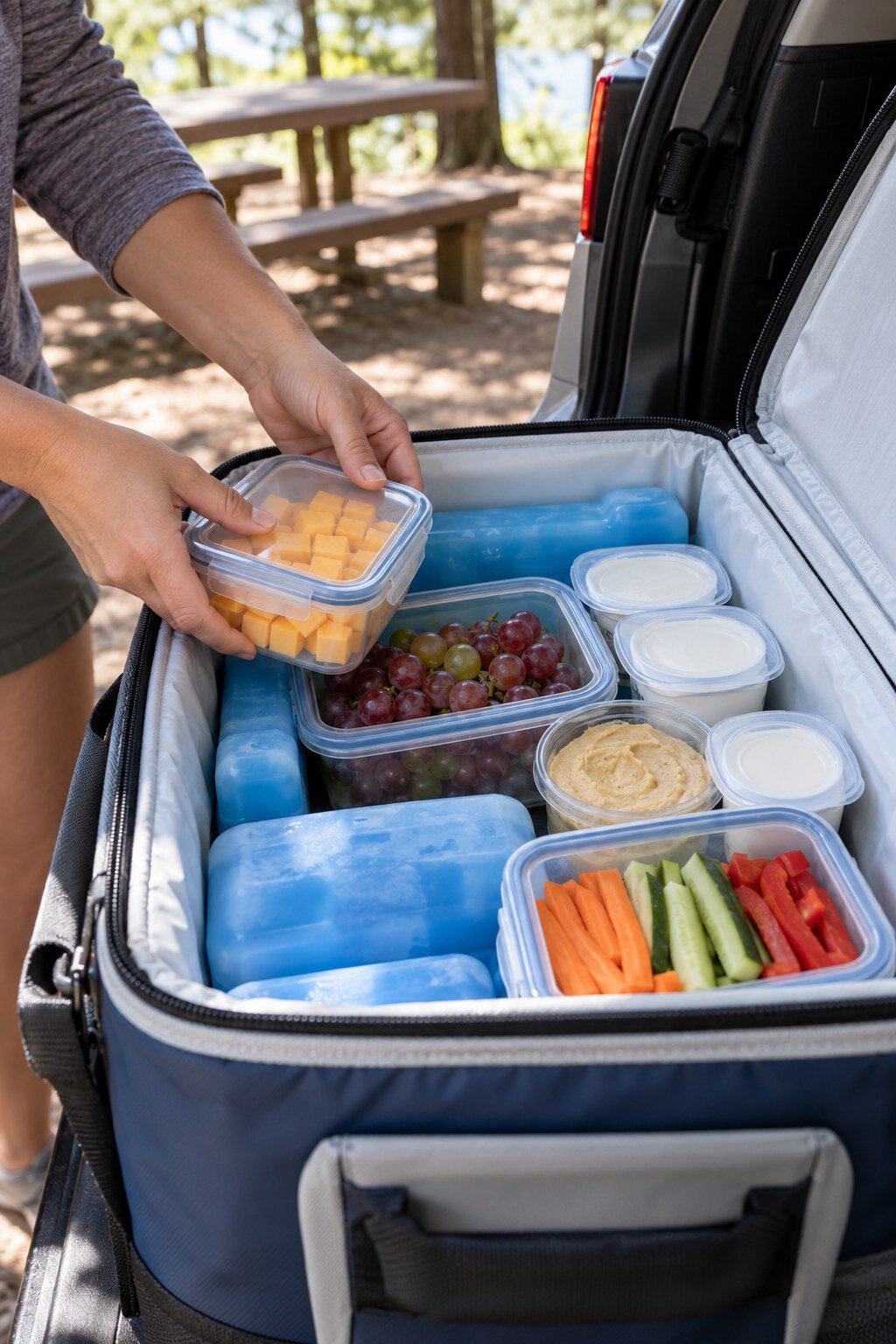
- Cooler: cheese, yogurt, hummus, sandwiches, cut produce, cooked eggs, deli meat, and leftovers. Use ice or frozen cold sources and, if possible, a thermometer. A cooler that warms above safe temperatures should not be treated as a refrigerator simply because it is insulated.
- Border check: fresh fruit, vegetables, meat, seeds, and other foods may be restricted when crossing an international border or entering certain protected areas. Check destination rules before you pack them.
14 pantry-pouch road-trip snacks
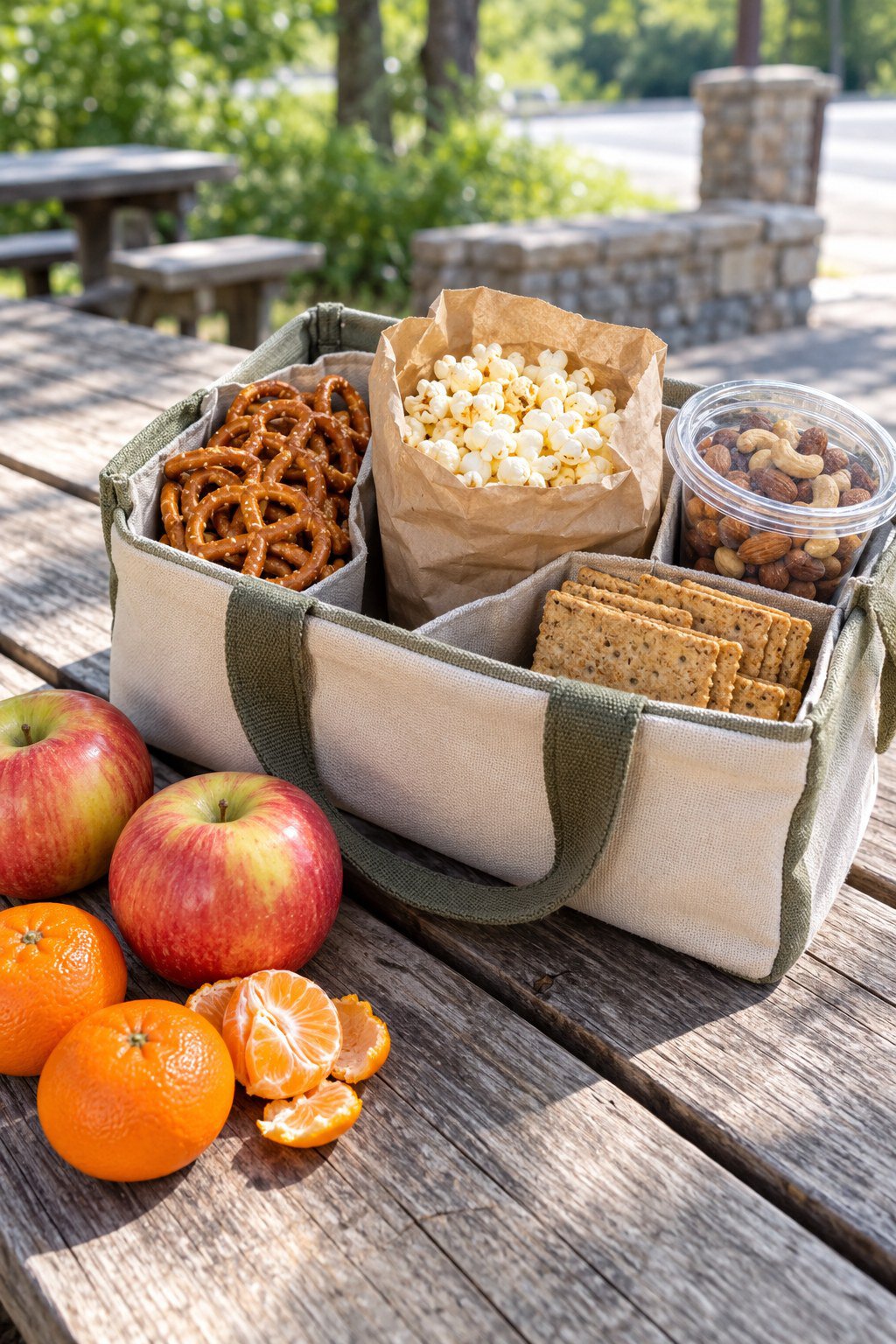
1. Roasted chickpeas
Roasted chickpeas are crunchy, compact, and less likely to leave a greasy coating than many fried snacks. Keep them in a sealed container so they do not soften, and choose a seasoning everyone can tolerate in a small car. Their main drawback is the dry texture: pair them with water and avoid handing an open bag to the driver.
2. Popcorn in individual bags
Popcorn is light, shareable, and easy to portion. Individual bags are simpler than passing a large bowl between seats, and they reduce the chance that a bag gets squeezed open. It can scatter, so it is better for a parked rest stop or passenger than for someone eating while navigating.
3. Pretzel twists or pretzel thins
Pretzels travel well in a lidded container and generally hold their shape. They are salty, crunchy, and easy to combine with a small serving of cheese kept cold in the cooler. Their weakness is that crumbs can collect in seat seams; put them into a cup or snack tub before the drive.
4. Plain crackers with a sturdy shape
Choose thicker crackers that do not crumble at the first bump. They are versatile on their own or with a refrigerated topping at a stop. Avoid building cracker sandwiches with perishable fillings for a long warm drive unless you can keep the complete snack cold.
5. Dry cereal in snack cups
Small cups of dry cereal work well for children and adults who like frequent small bites. They are easy to reseal and do not require refrigeration. Pick a shape that is easy to handle, and avoid pouring from a large bag over the seat where spills are harder to contain.
6. Trail mix without melt-prone pieces
Nuts, seeds, and dried fruit make a compact mix. For hot weather, skip chocolate pieces and anything that gets sticky in warmth. If traveling with children or anyone with allergies, keep the ingredient label and avoid sharing an unlabeled mixed container.
7. Roasted nuts or seeds
Pre-portioned nuts or seeds are filling for their size and do not need a cooler. They can be salty and are not suitable for every traveler, so consider allergies and choking hazards around young children. Keep a small trash bag nearby for shells or wrappers.
8. Shelf-stable granola or oat bars
Bars are useful when you want a snack that can wait in a day bag. Check the package for chocolate, yogurt coating, or other ingredients that can melt or become messy. A chewy bar may soften in heat, so store it in shade and avoid leaving it on the dashboard.
9. Fruit leather or dried fruit strips
Fruit leather has little crumble and takes up almost no room. It can become sticky if overheated, so keep it out of direct sun. Dried fruit is easy to portion but can be chewy and sweet; combine it with a more substantial option if you need a snack between long stretches.
10. Whole apples
Apples are a sturdy fresh choice when you do not have a cooler. They hold up better than cut fruit, but can roll around, bruise, or make a crisp bite noisy in a quiet car. Rinse them before travel and pack them where heavier objects will not crush them.
11. Clementines or mandarins
Small citrus fruit is naturally portioned and easy to share at a stop. The peel contains most of the mess, but citrus scent lingers in a closed car, so bring a sealable bag for peels. These are best when passengers can peel them without distracting the driver.
12. Bananas packed separately
Bananas can be a quick, filling option, but they bruise easily and their peels need a trash plan. Use a banana guard or keep them in a top layer, not under luggage. On very hot trips, choose firmer fruit and eat it earlier in the day.
13. Rice cakes or crispbread
Rice cakes and crispbread are light, dry, and easy to store. They can crumble, so use a rigid container. They are not very satisfying alone for everyone; pair them with a cooler-kept topping at a planned stop rather than carrying a soft topping loose in the car.
14. Shelf-stable applesauce pouches
Unopened shelf-stable pouches can be convenient for children or adults who want a soft snack without a spoon. Check package storage instructions and keep them out of extreme heat. Once opened, treat the remaining portion according to its label and refrigerate or discard as directed.
11 cooler snacks for a more filling stop
15. Cheese cubes or snack cheese
Cheese is easy to portion and pairs with crackers or fruit. Keep it in the cooler and serve a small amount at a time, returning the rest promptly. It is a good example of why a “snack for the car” needs a temperature plan, even when it comes in a convenient single-serving pack.
16. Yogurt cups or tubes
Yogurt is filling and often popular with children, but it is a cooler item. Freeze tubes only if the package permits it and there is time for safe thawing; use a leak-proof bag in case the package cracks. Keep a spoon and napkins with the cooler rather than searching for them at the rest stop.
17. Hummus with sturdy vegetables
Carrot sticks, snap peas, and bell-pepper strips pair well with hummus. The dip and pre-cut vegetables need cold storage, and the vegetables can leak moisture into a container if packed wet. Choose a small sealed tub and serve it while parked.
18. Grapes in a small container
Washed grapes are easy to share at a picnic table or rest stop. Keep them cold, dry them before packing, and use a firm container to prevent squashing. For young children, cut grapes lengthwise into small pieces and supervise eating; whole grapes can be a choking hazard.
19. Berries in a protective container
Berries are delicate, so they are best when you can keep them cold and avoid heavy items on top. Rinse close to departure, dry well, and pack in a shallow container. They can stain fabric, so keep the container sealed until the car is stopped.
20. Hard-cooked eggs
Hard-cooked eggs are a compact source of protein but need refrigeration and can smell strongly if opened in a small cabin. Keep them in their shells until a rest stop and store them in a sealed container inside the cooler. Do not rely on the car’s air conditioning to keep them safe.
21. Turkey or cheese roll-ups
Roll-ups are less crumbly than a full sandwich and can be portioned for a quick stop. They contain perishable ingredients, so keep them cold and eat them according to safe time limits. Use a small container to prevent them from being flattened by the cooler’s ice packs.
22. Mini sandwiches
Small sandwiches make a road-trip stop feel like a meal and are easier to portion than a large sub. Keep meat, egg, cheese, and other perishable fillings chilled. Pack sauces separately if they make bread soggy, and do not leave a lunch bag in a warm trunk for hours.
23. Pasta salad cups
Individual pasta salad cups are easy to hand out at a picnic area, but cooked pasta and add-ins should be refrigerated. Choose a fork-friendly shape and a leak-proof lid. Pack dressing lightly or on the side to reduce spills in the cooler.
24. Cut vegetables with dip
Pre-cut vegetables add crunch and can balance sweeter snacks. Store them cold, dry them after washing, and keep any dip in a separate sealed container. If the cooler is shared with drinks, use a dedicated food container so packages do not sit in meltwater.
25. Cold chicken or tofu bites
Cooked chicken or tofu can be a more substantial snack for a long travel day when properly chilled. Pack a small portion for one stop rather than repeatedly warming and cooling a large container. Keep raw and ready-to-eat foods separate during preparation and transport.
How to pack road-trip snacks without creating a cleanup job
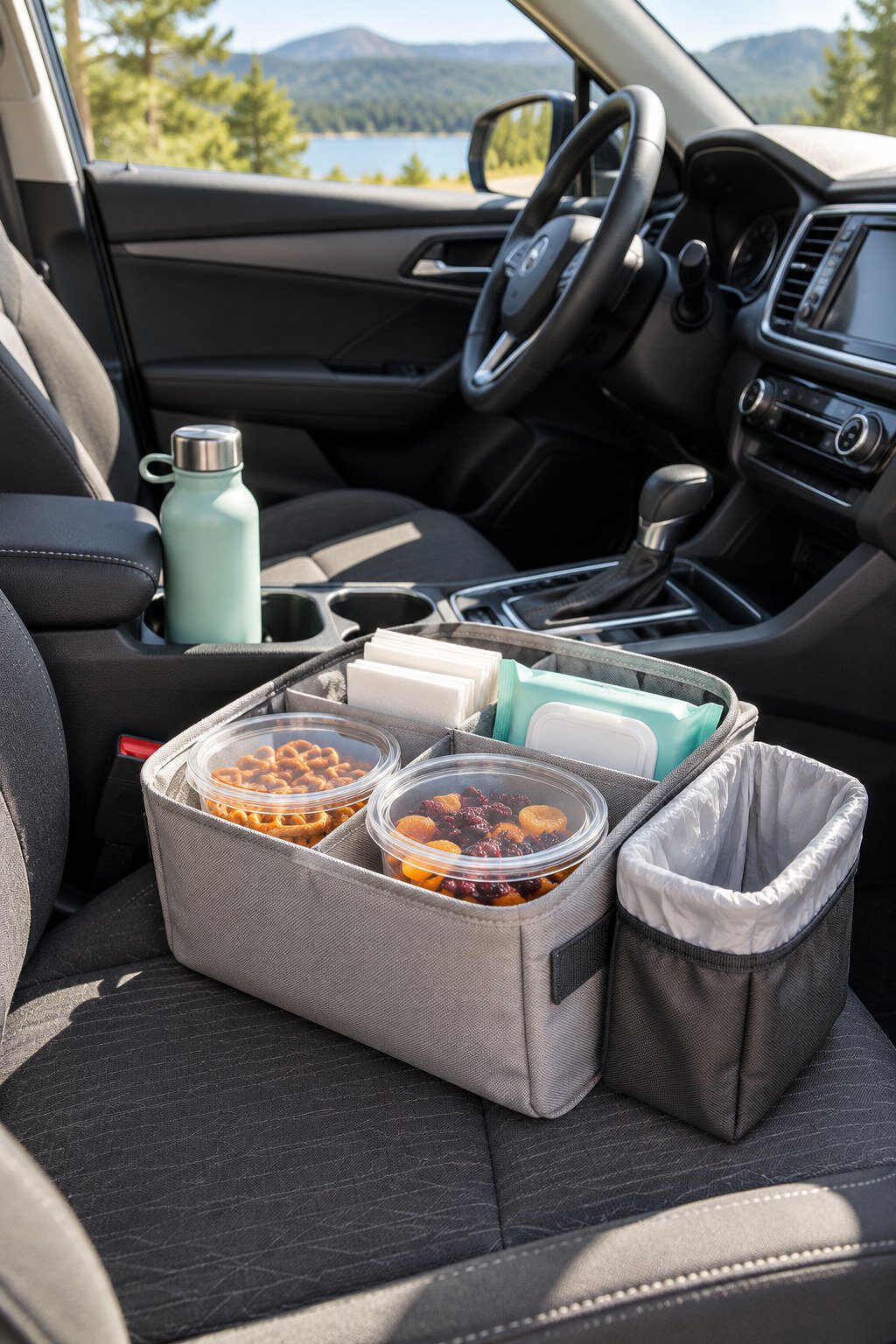
Use one small container for dry snacks and a separate cooler for perishables. Put the cooler where passengers can reach it at a stop, not where the driver must turn or stretch while moving. Pre-portion food at home so people are not sharing a large open bag. Keep wet wipes, napkins, and a small trash bag in the same pocket every trip; they solve more problems than an elaborate organizer.
Pack the cooler in layers: cold sources on the bottom and around food, ready-to-eat items in closed containers, then drinks if there is room. Keep it closed between stops. If the trip is long or the weather hot, use a thermometer instead of guessing. Never use a cooler as a way to keep food in a parked, hot car indefinitely.
For a low-mess mix, combine one crunchy pantry snack, one fruit, one protein-forward option, and one cooler item for a planned stop. The driver should not have to reach across the cabin, peel sticky fruit, or handle an open tub while driving. Make stops the moment food needs two hands.
A simple snack plan for different travelers
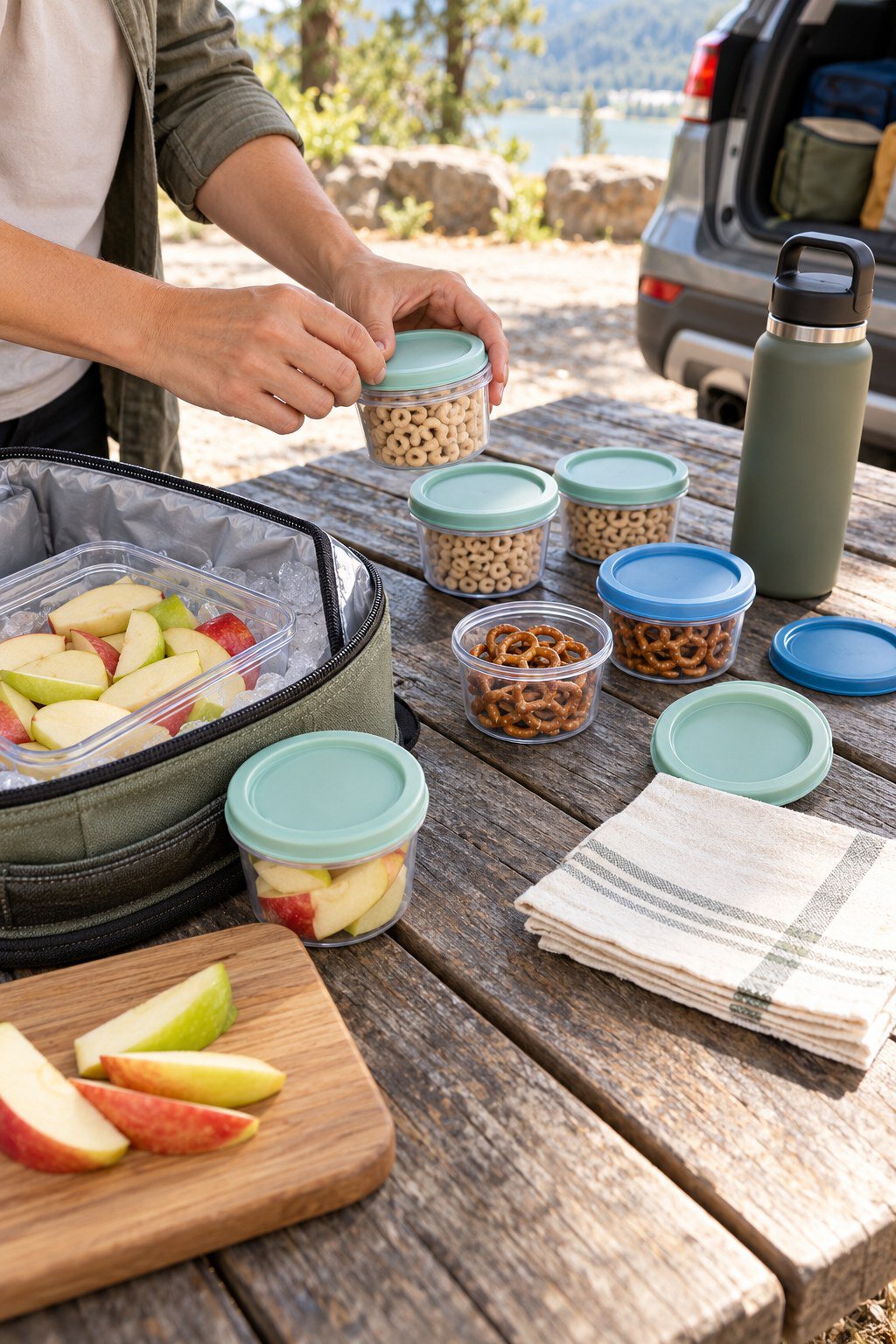
- Adults on a long highway day: pretzels or crackers, nuts if safe for the group, whole fruit, and a chilled sandwich or cheese snack for a rest stop.
- Families with children: small snack cups, dry cereal, fruit pouches, and a cooler with cut fruit or yogurt. Choose age-appropriate textures and supervise eating; do not hand snacks to the driver to distribute while the car is moving.
- Hot-weather trip: rely more on pantry items and keep cooler foods in a monitored cooler with cold sources. Avoid chocolate coatings and foods that melt into wrappers. Discard perishables that have exceeded safe time and temperature guidance.
- Scenic picnic route: pack a cooler meal with utensils and napkins, but plan where you will stop. A good picnic can be more comfortable than turning the front seats into a dining room.
The quick road-trip snack checklist
- Dry pouch: pretzels, popcorn, crackers, bars, dried fruit, whole fruit
- Cooler: cheese, yogurt, hummus, cut produce, eggs, meat, sandwiches, leftovers
- Pack: sealed containers, napkins, wet wipes, trash bag, water
- Plan: allergy-aware snacks, child-safe portions, rest-stop breaks, border rules
- Keep cold: at or below 40°F; follow the two-hour rule, or one hour above 90°F
The most dependable road-trip snack plan is a small, mixed kit: a few sturdy snacks for the cabin, one cold option for a proper stop, and an easy cleanup setup. Sort food by storage needs first, then by everyone’s preferences. That way the snack list stays convenient without asking a hot car to act like a refrigerator.
Sources
https://www.foodsafety.gov/blog/prevent-illness-c-perfringens
https://www.foodsafety.gov/keep-food-safe/4-steps-to-food-safety