
12 Long-Haul Flight Comfort Items Ranked by Space and Usefulness
A long-haul flight can make every inch of a personal item feel valuable. The usual packing advice says to bring a neck pillow, blanket, headphones, eye mask, snacks, and half a pharmacy. But once the bag is under the seat and the seat pocket is full, the real question is which comfort item changes the flight enough to justify its weight and volume.
This ranking weighs three things: how often an item helps, whether it solves a problem you cannot solve another way, and how much room it takes. The best setup is not the longest packing list. It is the small group of items matched to your seat, sleep habits, temperature needs, and arrival plans. Airline rules, cabin conditions, and personal medical needs vary, so check your carrier’s current guidance before packing.
How the ranking works
Each item gets a practical priority: high value for most travelers, situational, or low value unless it fits a specific need. “Space” means the space it occupies in a personal item after packing, not a precise measurement. A compressible layer may take little space but be bulky when worn; a phone charger is small but useless if its plug or cable does not fit your device. Use the ranking as a decision aid, not a universal prescription.
12 comfort items, from most useful to most optional
1. A familiar sleep layer
Pack a light scarf, wrap, or thin sweatshirt you already wear comfortably. It can add warmth, cover your shoulders, or soften a seat belt against your neck. Because you can wear it through the airport, its bag-space cost is low. Choose a fabric that does not itch and that can double as a modest cover or light blanket. This outranks a specialty travel blanket for most people because it solves several small problems without adding a separate bulky item.
2. Earplugs that fit your ears
A tiny pair of comfortable earplugs can reduce cabin noise, conversation, and the sound of nearby activity. Try them before travel; an unfamiliar fit can become irritating after several hours. Keep them in a small case so they do not disappear in the seat pocket. If you use hearing devices or rely on alarms, think through how you will hear announcements and wake-up cues. Their space cost is negligible, which makes them a strong choice even when you do not use them for the whole flight.
3. A reliable eye mask
Cabin lights, window shades, and screens can make it hard to rest. A soft eye mask is light and takes little room, but the right fit matters: avoid pressure on the eyes and check that it stays in place when you turn your head. If you already have a hood or scarf that blocks light comfortably, you may not need both. Keep the mask accessible before boarding rather than searching for it after the cabin lights dim.
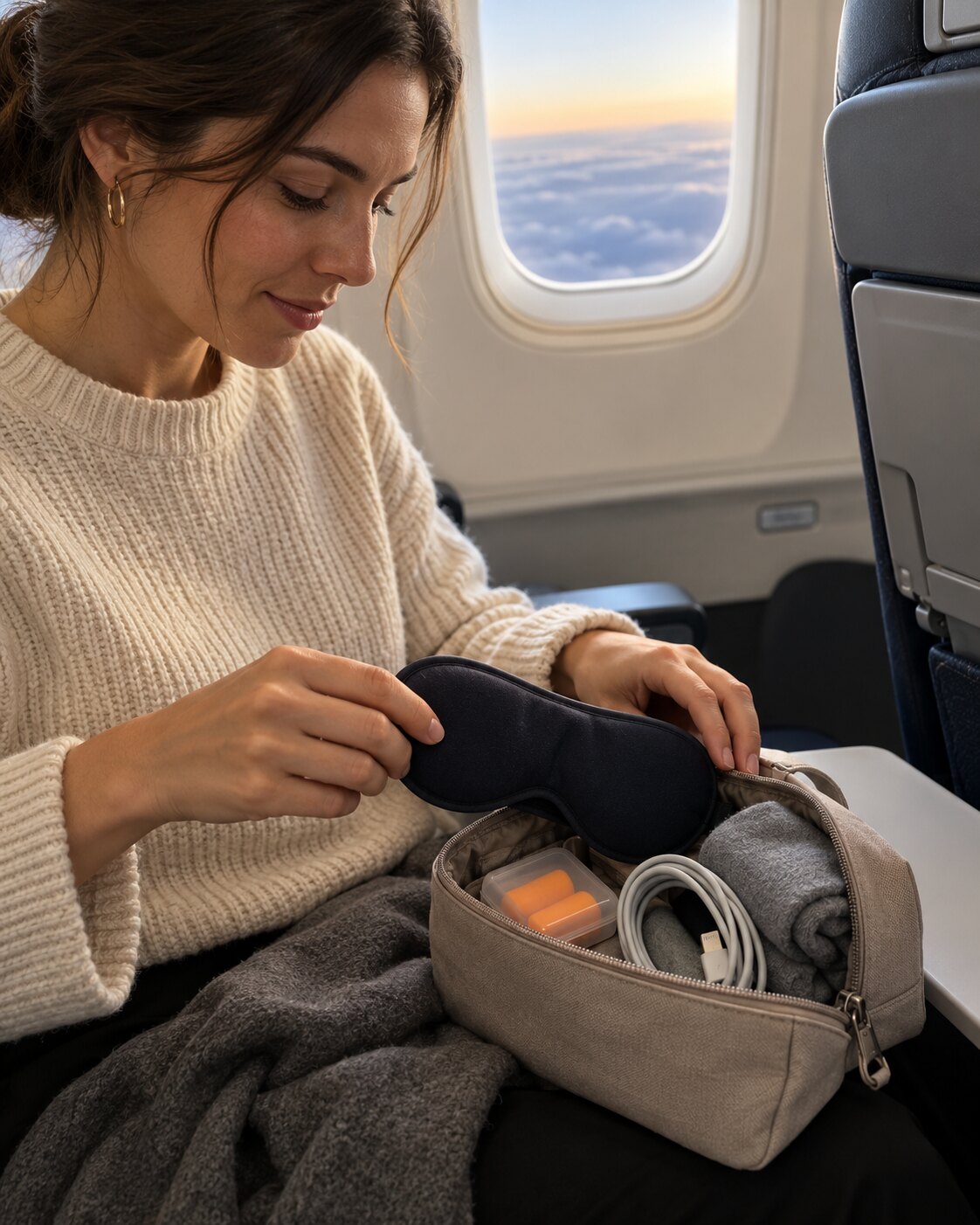
4. Your own charging cable and approved power bank
A cable that fits your phone and a power bank that meets your airline’s current battery rules can protect access to boarding passes, entertainment, and arrival directions. Check the device capacity and carry-on requirements before departure; lithium batteries are commonly restricted from checked baggage and airline rules can change. Bring only the cable length you need. A wall adapter is worthwhile if you expect a connection or airport wait, but a multi-plug kit is usually unnecessary for a single flight.
5. A refillable bottle that fits the seat pocket
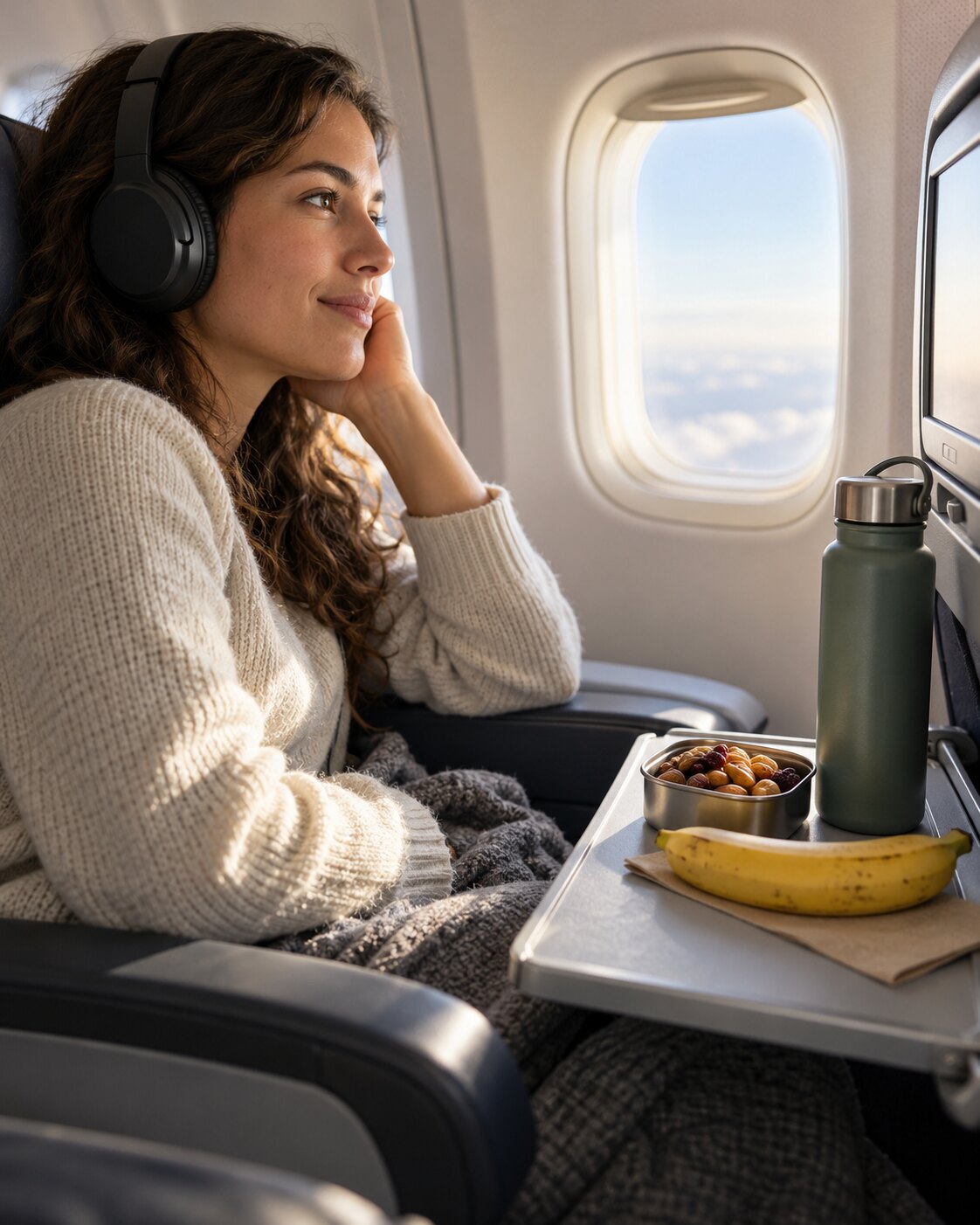
An empty bottle can be filled after screening where fountains or refill stations are available. Choose a leak-resistant shape that fits your bag and is easy to clean. A very large bottle may be inconvenient to carry and difficult to stow; a small or collapsible one can be more useful if space is tight. Follow airport screening rules and airline instructions, and ask crew for water rather than reaching across the aisle with an open container. Hydration needs differ, so use the bottle as a convenient option rather than a rigid target.
6. Necessary medication and a short wellness kit
Bring medication you need during the travel day in its original packaging when practical, plus a small number of items that address your known needs. Keep it in the personal item, not in checked luggage. Destination laws can differ for some medicines, so check official guidance for international travel. Instead of packing a full toiletry pouch, choose the few products you actually use: lip balm, tissues, or hand lotion if dry cabin air bothers you. Avoid decanting essential medication into unlabelled containers.
7. A compact snack that suits the flight
A familiar snack can help when meal service is delayed, limited, or not aligned with your appetite. Choose a low-mess item that travels well and fits dietary needs. Check customs rules before carrying food across borders, and keep allergens in mind when sharing space. A full meal box takes room and may be awkward to manage; a small snack is insurance. If you have a medical dietary requirement, plan from your own needs rather than assuming the airline meal will cover it.
8. Compression socks, when they are right for you
Some travelers prefer compression socks on long journeys, particularly if they expect to sit for extended periods. Fit and medical suitability matter; ask a clinician if you have a condition, circulation concern, or uncertainty about using them. They take little space if worn, but they are not a substitute for moving when safe, following medical advice, or seeking help with symptoms. Pack a familiar pair rather than testing a new size during a long flight.
9. A slim seat-back organizer
A small pouch can keep earplugs, tissues, a pen, and charging cable from spreading around the seat. It is useful when the seat pocket is dirty, too small, or already occupied, but it can become one more thing to unpack. Use a pouch that closes and can be reached without leaning across a neighbor. A bulky organizer with many compartments is rarely necessary; one clear pocket or zip pouch is often enough.
10. A neck pillow that matches how you sleep
A neck pillow earns its space if you have tested it and it supports your usual sleeping position. Some travelers rest better with a compact inflatable or compressible model; others find the pillow awkward and prefer a rolled scarf. Do not buy one because a packing list ranks it first. Try it at home and check how it attaches to your bag. If it hangs outside your personal item, it may be counted as an extra item by some carriers, so verify the allowance.
11. Noise-cancelling headphones
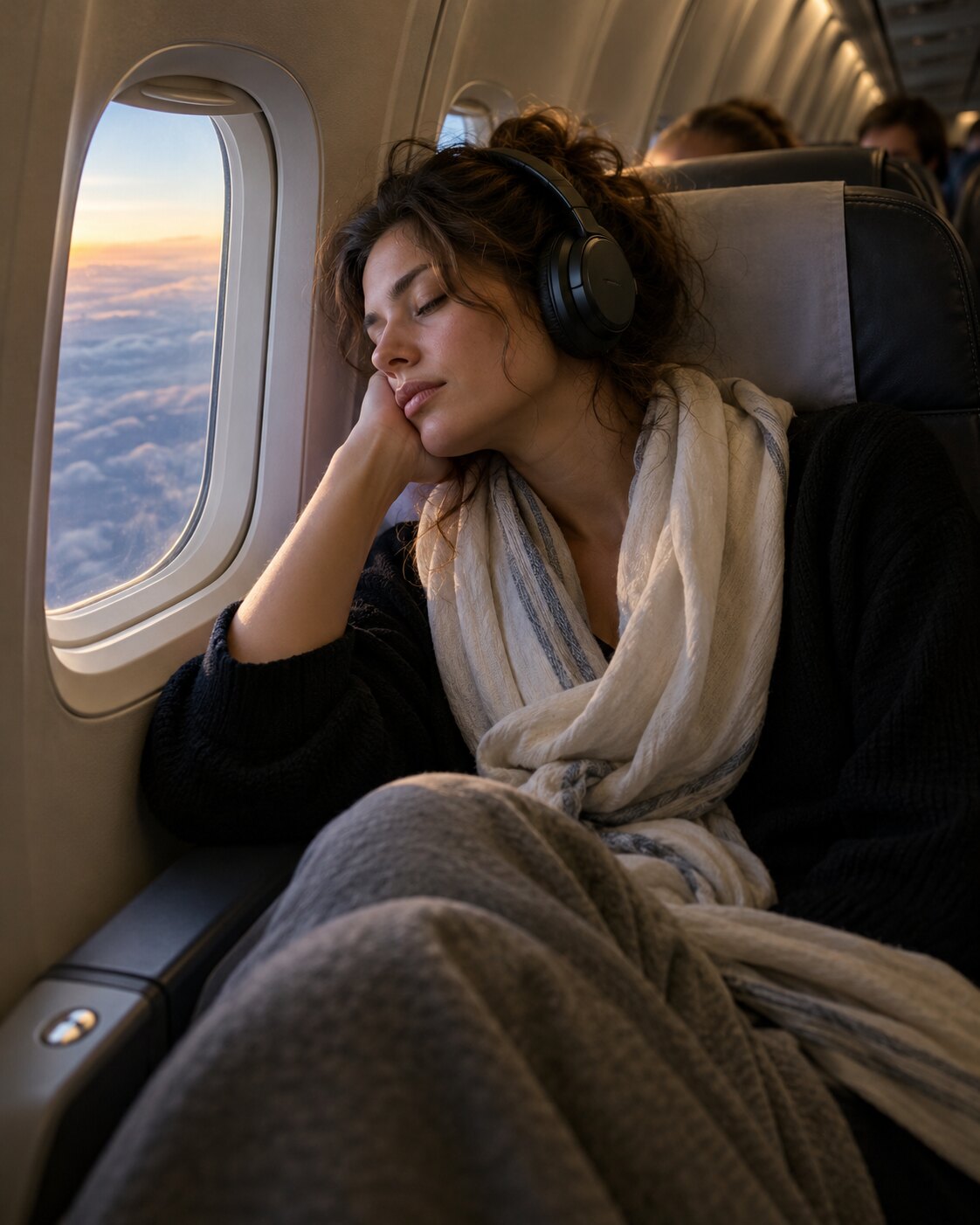
They can make engine noise and shared cabin sound easier to manage, but the value depends on whether you already own a comfortable pair and plan to use them. Over-ear headphones occupy more space than small earbuds. Bring the option you can wear for hours, and keep one ear available when you want to hear announcements. A small wired backup can help if the battery runs low, but avoid carrying several overlapping audio devices.
12. A full-size travel blanket
A blanket can feel comforting, but it usually takes the most volume in this list. Consider it if you get cold, if the airline does not provide one, or if a familiar blanket meaningfully improves rest. Otherwise, wear a layer that serves the same purpose and saves the space for medication, a snack, or arrival clothing. If you bring one, choose a thin layer that compresses and can be washed easily; avoid fastening it in a way that blocks the aisle.
Build a small comfort kit by travel style
For a light packer: wear the layer, add earplugs, an eye mask, medication, cable, and one snack. This setup covers the most common discomforts while leaving room for documents and essentials.
For a sleeper: start with the eye mask, tested earplugs, familiar layer, and a neck pillow only if you know it works for you. Keep medication and charging gear accessible. Decide whether the pillow replaces a layer or is worth extra carry volume.
For an arrival-ready traveler: add a clean top, compact toiletries allowed by your route, and any device or item you need immediately after landing. Skip duplicates that only improve comfort marginally. If you are transferring straight to a meeting or tour, protect the items that make that handoff easy.
How to make the final space decision
- Would I use this on most of the flight, or only if one specific thing happens?
- Can a clothing layer, phone setting, or item already packed do the same job?
- Does it need to stay accessible during boarding or after landing?
- Will it fit inside the airline’s personal-item allowance?
- Have I tested it before relying on it for sleep or medical comfort?
Put documents, medication, valuables, and required devices first. Next add the small items that solve a known comfort problem. Only then decide whether a pillow, blanket, or organizer deserves the remaining space. The right long-haul flight kit is the smallest set that makes the trip more comfortable for you, while still fitting the airline’s current baggage rules.
What to do with comfort items you can get onboard
Some items are easier to borrow or request than to carry. A blanket or pillow may be available on some routes and fare classes, but availability, cleanliness, and timing differ; do not count on a specific item unless the airline confirms it. Ask crew politely if you need help, and use your own layer as the dependable backup. The same applies to water: cabin service may be delayed, so an empty refillable bottle after screening is useful, while an oversized bottle adds weight for little gain.
Entertainment can also be handled without a special gadget. Download a film, book, podcast, or offline game to a device you already carry, then bring the charging cable that fits it. A separate tablet stand, reading light, or foot hammock may be useful for a traveler who uses it regularly, but check airline and seat rules before relying on accessories that attach to a tray or seat. Test comfort gear at home. If it creates pressure, tangles with a seat belt, blocks the aisle, or takes several minutes to install, it may not improve the trip.
Choose based on the problem you expect
If noise keeps you awake, prioritize earplugs or headphones rather than packing both plus a speaker. If you run cold, wear the layer and only add a blanket when the layer does not cover your need. If you often wake with a dry mouth, carry a small bottle and lip balm. If you are anxious about lost luggage, place the medication and first-arrival essentials in your personal item rather than adding extra comfort products. This problem-first approach keeps the kit personal and prevents the generic list from crowding out necessities.
Pack the kit where you can use it
Place the items you need before takeoff at the top of your personal item: earplugs, mask, medication, charging cable, and a small snack. Keep documents in their own secure pocket. Put the layer on before boarding if the cabin is cool, and store anything you will not use until the connection deeper in the bag. This simple order avoids unpacking everything in a narrow aisle. After landing, put used items back in one pouch so a mask or earplug does not disappear under the seat.
Before leaving home, do one final test: close the bag, lift it, and check that it fits your airline allowance without forcing the zipper. Remove one low-priority item if the bag is crowded. Comfort is useful only when you can still reach your passport, medicine, and boarding details quickly. A compact kit is easier to manage through security, connections, and the first hour at your destination.
Make the kit work through connections
A comfort item should earn its place across the whole itinerary, not just the longest flight. If you have a connection, choose a pouch that can move from the main bag to your seat without spilling. Keep essentials together so you can use them during a gate change, a delayed departure, or a long walk between terminals. Avoid unpacking a collection of loose objects each time you sit down; one small kit is easier to check before leaving a lounge or boarding area.
Consider the return trip too. A clean shirt or small snack may be more valuable on arrival than a second sleep accessory. Leave room for items you may pick up during the journey, and do not pack anything that creates a security or airline-rule question unless you have checked the current instructions. The best comfort kit travels quietly: you know where everything is, you can reach it without disturbing a neighbor, and it leaves space for the essentials that matter after landing.