
15 Accessibility Questions to Ask Before Booking a Hotel
A room labeled “accessible” can still be the wrong room for a particular traveler. One person needs a roll-in shower; another needs a bathtub, visual alerts, a lower bed, room for a mobility device, or a quiet route away from a noisy elevator. The label is a starting point, not a complete description of how the stay will work.
Before paying, describe the features you rely on and ask the hotel to confirm the specific room and route in plain language. These questions help you compare properties, uncover gaps that photos and filters miss, and keep a written record of the answers. Accessibility needs vary, so use the list as a prompt for your own requirements—not as a universal checklist.
Start with the route from arrival to the room

1. Is there an accessible passenger drop-off or parking space, and what is the route from it to check-in? Ask whether the route is step-free, paved, covered, and open during your arrival hours. If you are driving, confirm the location of accessible parking and whether it connects to the entrance without crossing a steep curb or uneven surface. A curbside drop-off may solve the first few minutes but not the rest of the arrival path.
2. Are the main entrance, lobby, and check-in desk on one continuous step-free route? Ask about ramps, automatic doors, door weight, elevators, and any temporary entrance used after hours. If the hotel has more than one building, request the route between them. “There is a ramp” does not explain whether it is open, where it begins, or whether staff must unlock it.
3. Can you describe the route from check-in to the exact room? Confirm whether it uses an elevator, how many doors are involved, and whether there are thresholds or long corridors. Ask if the room is in the same building as reception, breakfast, and the accessible entrance. If the answer relies on a shuttle or staff escort, find out its hours and how to request it.
Confirm the room’s usable features
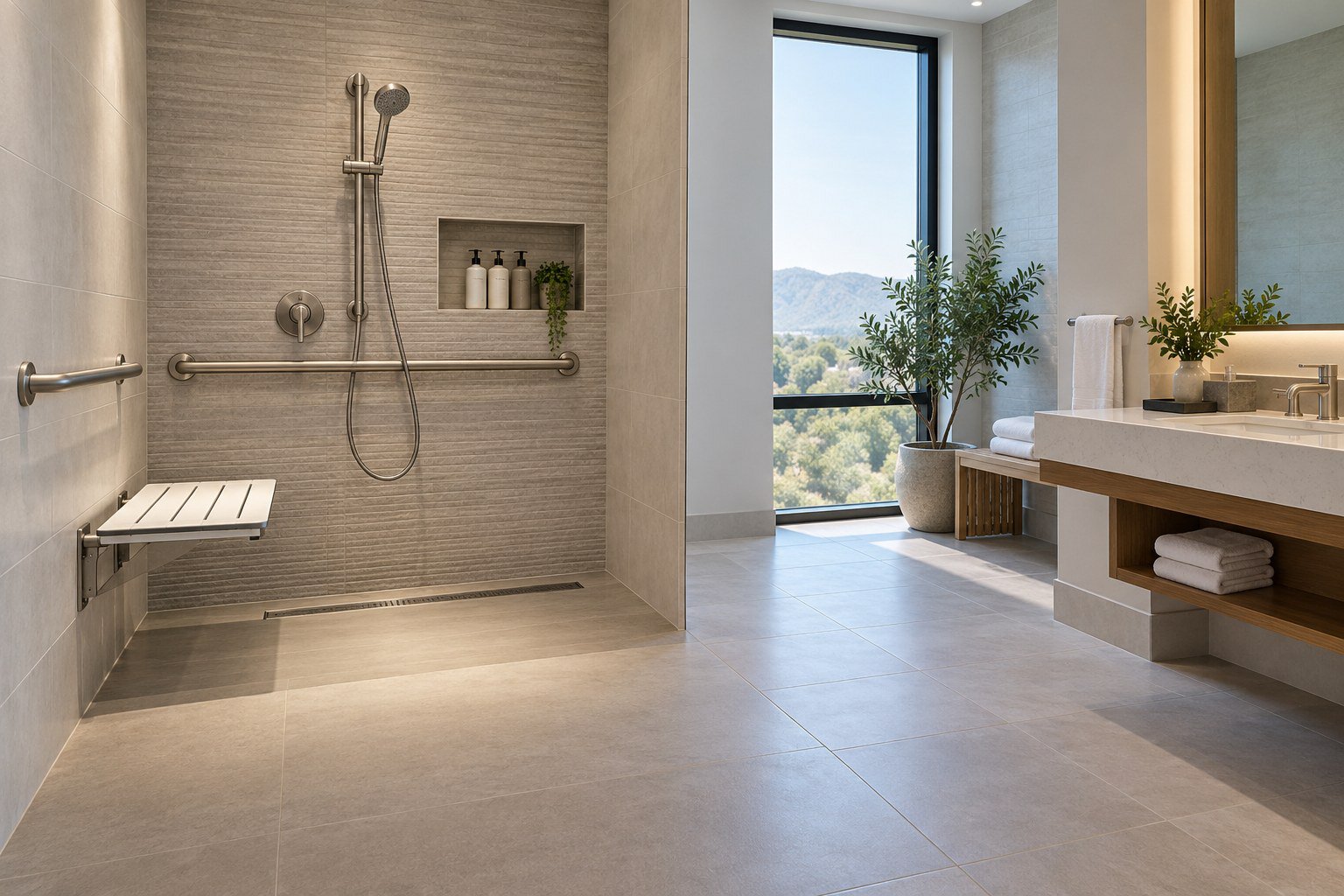
4. What are the clear opening widths of the guest-room and bathroom doors? If a mobility device must pass through, share its width and ask the hotel to check the actual opening rather than quote a general room label. Ask whether doors stay open independently or close quickly. A few inches can determine whether the bathroom, closet, or balcony is usable, so request measurements when they matter to you.
5. What is the bathroom layout, and which bathing option is in this room? Ask whether it has a roll-in shower, transfer shower, or tub; whether a fixed or portable seat is available; and where grab bars are placed. Find out whether the shower has a handheld attachment, reachable controls, and a curtain or door that keeps water contained. Do not infer the layout from a stock photo or the phrase “accessible bath.”
6. Is there enough clear floor space beside the bed and at the bathroom fixtures? Ask whether furniture can be moved and whether the room’s actual layout matches the pictures. Bed height, under-bed clearance, and the position of nightstands can matter as much as the overall room size. If you need to transfer from a chair or use a lift, share the equipment dimensions and ask for a direct answer about the usable space.
7. Which controls, outlets, and storage are reachable from the bed and seated position? Confirm the location of light switches, thermostat, curtains, outlets, closet rail, safe, and minibar. Ask whether lamps are controlled at the wall or only by a small switch on the fixture. A room can have a helpful floor plan but still require repeated reaching or assistance for ordinary tasks.
8. What communication or alert features are available in the room? Depending on your needs, ask about visual notification for a door knock, phone, or alarm; captioning or accessible television controls; text-based ways to contact the front desk; and an accessible alarm device. Confirm whether equipment is already in the room, provided on request, or shared across the property. Ask how quickly staff can deliver it and whether you can reserve it by name.
9. Can the room accommodate a service animal, care equipment, or a support person? Explain only the practical arrangements you need: floor surface, relief route, refrigerator for supplies, extra space, adjoining room, or a second bed. Confirm the hotel’s current policies and fees directly. If a service animal is part of your travel plan, ask about nearby outdoor access and the most direct route without assuming every green space is open at all hours.
Check the rest of the stay, not just the bedroom
10. Can you reach the breakfast area, restaurant, pool, meeting space, and restroom independently? Ask about the route and operating hours for each amenity you expect to use. A step-free hotel entrance does not guarantee that every facility is on an accessible route. If a restaurant has two entrances, confirm which one is open when you arrive and whether staff can explain the route without making you search the building.
11. What is the layout of the dining area, and can staff accommodate your timing or seating needs? If crowded spaces, high tables, narrow aisles, or long lines create a barrier, ask about quieter seating, accessible table options, room service, or a less busy breakfast window. Verify that any promised option is available on your travel dates. A simple answer such as “we can seat you near the entrance” is more useful when the hotel confirms the route and table type.
12. Are elevators, automatic doors, and other key features operating during my stay? Ask whether planned maintenance could affect the route to your room or essential services. If there is only one elevator, find out what happens during an outage and whether the hotel can move you to a suitable room. This is especially important when a room’s location, not just its interior, determines whether you can safely leave or return.
13. Can you explain the fire-alarm and evacuation arrangements for this room? Ask how guests receive emergency alerts, where the nearest exit is, and what assistance is available if the elevator cannot be used. The hotel should explain its procedures clearly; you should not have to guess whether staff will know your location or needs. If a particular device or communication format is important, ask how it is provided overnight.
Turn answers into a reliable reservation
14. Can you confirm the specific accessible room type and features in writing? Ask the property to identify the room category, bathing configuration, communication features, and any other essentials you named. Request that the reservation notes list the features, not only the word “accessible.” If you book through a third-party site, contact the hotel directly afterward and ask it to confirm the same details in its own reservation record.
15. What should I do if the assigned room or promised feature is unavailable at check-in? Ask for the name or department to contact and how the hotel will handle a mismatch. Confirm that a suitable room is being held for your reservation and what alternatives are available if a repair or maintenance issue occurs. A useful contingency is specific: another room with the same bathing setup, a comparable property nearby, or a manager who can resolve the issue before you arrive.
A short message you can send before booking
“I’m considering a stay from [dates]. I need [name the features that matter]. Could you confirm the room type and describe the route from the accessible parking or drop-off to the room, including the entrance, elevator, and bathroom door? Please confirm the bathing setup, grab-bar placement, available communication or alert equipment, and access to [amenities]. Can these features be noted on the reservation for the specific room category? If anything is unavailable, please tell me the closest alternative before I book.”
Keep the reply with your confirmation and call again if the hotel provides only a general assurance. Ask for a staff member who can inspect the room or access information if the front desk cannot answer. You do not need to disclose a diagnosis to ask for practical details. Share the minimum information needed to verify fit, then decide whether the hotel’s answers are clear enough for your trip.
How to compare two hotels fairly
Make a small comparison sheet with three columns: essential features, confirmed details, and unresolved questions. Mark a feature “confirmed” only when the property describes what is present in the room or route you will use. “Available on request” needs a second check: ask whether it can be reserved, how it is delivered, and whether the reservation team can see the request. A feature that is not essential for one traveler may be decisive for another, so do not score hotels with a generic accessibility rating.
Compare the full trip chain: arrival, check-in, room, meals, activities, and emergency exit. A beautifully equipped bathroom does not compensate for a step at the only entrance if that step blocks arrival. Likewise, a longer corridor may be workable if there are places to rest, while a short but steep route may not be. Think about the times you will use each space, how much help you want, and what happens if the first plan fails.
For an important feature, ask the hotel to verify details with the person who knows the room rather than rely on generic booking copy. Request a recent photo or simple floor plan when it would help, but treat it as supplemental evidence. Confirm the reservation directly after booking, save the name and date of the person who confirmed it, and recheck a few days before travel if the stay is high-stakes or the property has recently changed its facilities.
What to do when an answer is vague
Translate broad words into observable details. If someone says “the shower is accessible,” ask whether it has a step or lip, a seat, a handheld showerhead, and grab bars—and where each is positioned. If the room is “close to the elevator,” ask how many doors and turns lie between them. If staff says “we can help,” ask who is available, when, and how to request help after the front desk changes shifts.
When the hotel cannot verify a feature, treat it as unknown rather than assume it will work. You can ask for a call back, choose a different room type, or compare another property. If the answer changes between the reservation desk and the hotel, request a written confirmation from the property manager. These steps do not guarantee a perfect stay, but they reduce surprises and let you decide with better information.
A practical confirmation checklist for the final call

Use a consistent sequence when you call so you can compare answers instead of relying on memory. Begin with the room category and ask the employee to read back the notes already attached to the reservation. Then move through the route in order: drop-off or parking, entrance, lobby, elevator, corridor, room door, and bathroom. Ask about each turn, door, threshold, and change in surface that could affect your route. If you need to pause or sit along the way, ask whether there is a bench or chair in a practical location.
Next, confirm the features that support your everyday routine. For a shower, note the threshold, seat, grab-bar locations, controls, and how the handheld hose is stored. For communication, confirm whether an alert device is installed or delivered, how it signals, and who can troubleshoot it. For room space, describe the equipment you bring and ask whether the hotel can check the actual room layout rather than a floor plan for a similar room. Record answers in simple terms, such as “no step at entrance,” “roll-in shower,” or “visual door alert confirmed.” Avoid writing only “accessible,” because that label will not help you resolve a mismatch later.
Finally, ask who will be able to see the notes at check-in and how to reach a manager if the assignment is wrong. Save the confirmation email, reservation number, date of the call, and the staff member’s name. A few minutes spent making the details concrete can prevent the tiring work of explaining everything again after a long journey. It also gives you a clear point to revisit if the hotel changes the room or a facility closes.
Sources
https://www.ada.gov/law-and-regs/regulations/title-iii-regulations/
https://www.ada.gov/resources/lodging-guide/