
20 Hotel Accessibility Details to Confirm in Writing
An accessible-room label can start a booking conversation, but it cannot tell you whether the actual room will work for your trip. Bed height, transfer space, bathroom layout, shower controls, door clearance, and the route from parking can all shape whether a stay feels manageable. Booking sites often compress those details into a single filter, so the safest planning step is to ask the property direct questions and save its answers before you pay.
Use these 20 details to compare hotels and build a written record of what the property says it can provide. Requirements differ from traveler to traveler, and a written confirmation is useful for clarity but is not a substitute for checking your room when you arrive. Ask for measurements or a description where they matter, share only the personal information needed, and reconfirm the essentials before travel. If a hotel cannot answer a question, decide whether that uncertainty is acceptable or whether another property is a better fit.
20 hotel accessibility details to confirm in writing
1. The exact room type and location
Ask the hotel to name the room category, building, floor, and any relevant location details rather than confirming only that an accessible room is available. If you need a room close to the elevator or away from noise, state the reason in practical terms and ask whether the assignment is guaranteed or merely noted as a preference. Save the confirmation and booking number together. A room description can change between reservations and arrival, so make sure the answer refers to your dates and specific reservation.
2. The route from arrival to the room
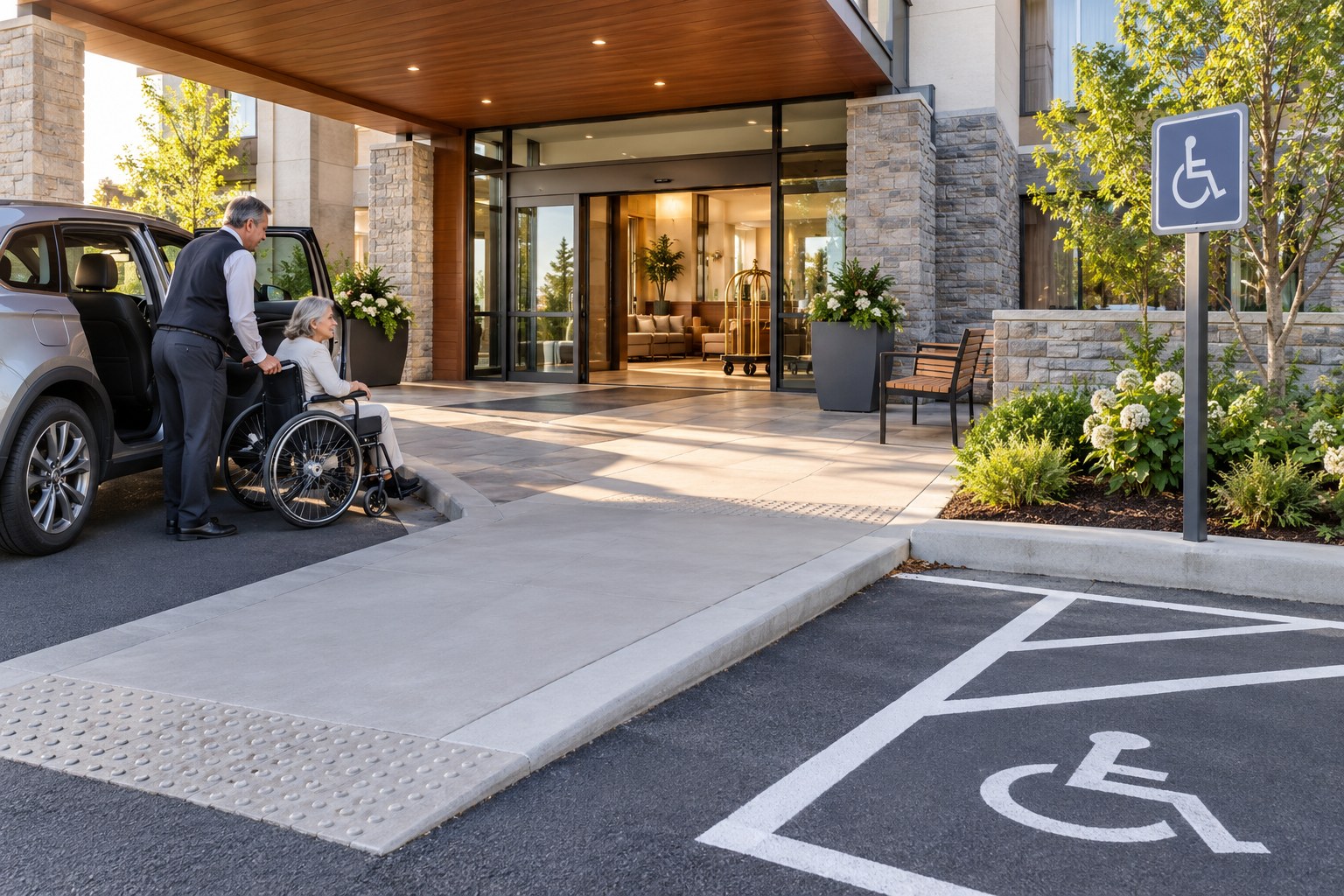
Ask whether there is a step-free route from the drop-off or parking area to reception and onward to the room. Confirm whether a ramp, elevator, or alternate entrance is involved and whether it remains open at night. If you use a mobility device, ask whether the route has any narrow doors, steep sections, or temporary barriers. A hotel may have accessible rooms in a separate building or across a long courtyard. Knowing the route helps you decide whether the room is suitable before you arrive with luggage.
3. Door and hallway clearance
If width matters for a wheelchair, walker, or other device, request the clear opening measurements for the entry door, bathroom door, and tightest hallway turn. Ask whether the measurement refers to the actual usable opening with the door fully open. A brochure’s overall room size does not answer this question. Compare the information with the device and movement needs of the traveler, and ask whether furniture can be moved. Do not assume a room meets your requirements based on a generic accessibility icon.
4. Space beside and in front of the bed
Confirm the available floor space on the side of the bed you use and whether a device can turn or park there. Ask which side of the bed is clear and whether a nightstand, luggage rack, or desk narrows the approach. If there are two beds, request the configuration that leaves the needed space. A floor plan or photo can help, but ask whether it represents the exact room type. If the hotel cannot provide measurements, ask for a staff member to describe the layout and save the response.
5. Bed height and transfer support
Ask how high the top of the mattress is from the floor and whether the hotel can provide a room with a specific bed configuration. Confirm whether bed risers or other equipment are permitted and who is responsible for bringing them. Do not assume staff can assist with transfers. If bed height is essential, compare the answer with the traveler’s own needs and backup plan. A low platform bed, thick mattress, or box spring can make a difference that is difficult to judge from a listing photo.
6. Bathroom entry and turning space
Request the bathroom doorway width, the space in front of fixtures, and whether the room layout leaves enough room to maneuver. Ask whether the door opens inward or outward and whether it can be removed or held open. If the bathroom is compact, find out whether the toilet, sink, and shower are arranged as shown in the hotel’s photos. A room may be officially accessible while still not matching every individual’s movement pattern, so describe the exact maneuver you need rather than asking only for a compliant room.
7. Shower type, threshold, and controls
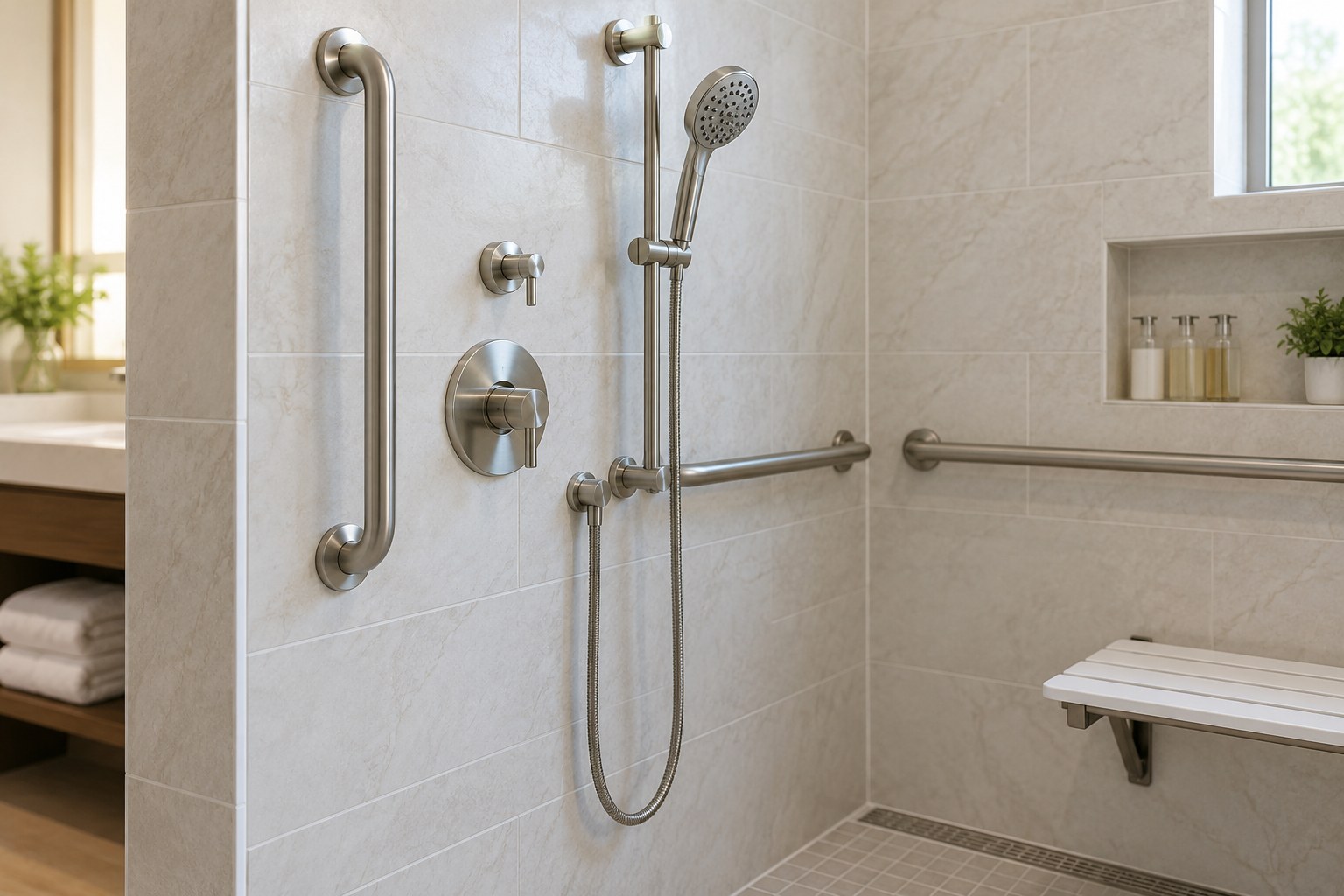
Confirm whether the room has a roll-in shower or a tub, what the threshold is, and where controls are positioned. Ask if the shower includes a handheld wand, grab bars, a fixed seat, or a removable bench. Verify that the seat is installed and whether it supports the traveler’s needs. If you require a transfer bench, ask whether the hotel has one and whether it can be reserved. A “walk-in shower” may still have a lip or narrow entrance, so ask for a clear description.
8. Grab bars and toilet arrangement
Ask where grab bars are located relative to the toilet and shower, whether they are fixed or temporary, and whether the toilet height can be confirmed. If the position matters, request a photo or a short written description. Confirm that the bars belong to the room rather than being equipment a traveler must request after check-in. Avoid assuming a grab bar is weight-bearing based on appearance. You are checking the room’s configuration and deciding whether it fits your transfer and support needs.
9. Sink, mirror, and reachable amenities
If you need seated access to the sink, ask about knee clearance, faucet controls, mirror height, and the placement of towels, toiletries, and switches. Confirm that a waste bin or cabinet does not block the approach. For a traveler who can stand but has limited reach, ask where hair dryers, outlets, and shelves are located. Details that seem small can create repeated work over a multi-night stay. Make a concise list of the items you rely on and ask which ones the room actually includes.
10. Visual or audible alerts
If you need a visual doorbell, phone signal, smoke alarm alert, or other communication feature, name the specific device and ask how it works in the reserved room. Confirm whether the hotel provides it, whether it must be requested in advance, and who will install or test it. Ask about the emergency alert system and the procedure for contacting the front desk. A hotel may use different equipment in different room types. Save the answer and confirm again at arrival before relying on it overnight.
11. Emergency evacuation instructions
Ask what emergency instructions apply to the room and how a guest who cannot use stairs should receive assistance. Do not assume an elevator will operate during an emergency. Request the hotel’s written procedure and identify the staff contact or meeting point. If the traveler has a personal emergency plan, decide how it fits the hotel’s process. The property may not be able to guarantee a particular response time, but knowing the steps ahead of time is more useful than trying to learn them during an alarm.
12. Parking, charging, and vehicle access
Confirm the number and location of accessible parking spaces, whether they are reserved, and how the hotel handles full lots. If you need room to deploy a ramp or transfer beside a vehicle, describe that requirement and ask about the space layout. For an electric vehicle or mobility device, confirm charging availability, outlet rules, and whether cords can reach without creating a trip hazard. A reservation note does not necessarily reserve a specific parking stall, so ask what the hotel can guarantee and plan a backup.
13. Elevator access and operating hours
Ask whether all guest floors are served by an elevator and whether it operates around the clock. Find out what happens if it is out of service and whether a room can be moved to a reachable floor. If you use a mobility aid or have difficulty with long corridors, ask for the approximate distance from the elevator to the room. A hotel may have an elevator but still require another stair or exterior path. Clarify the full route, not just the presence of an elevator.
14. Restaurant, breakfast, and common-area routes
If you plan to use the hotel restaurant, breakfast area, lounge, or pool, ask how to reach each space and whether its hours match your schedule. Confirm table clearance, seating options, and any route through steps or a crowded lobby. If breakfast is included, ask whether staff can accommodate a quieter time or a take-away option. Common facilities can be more important than the room itself for a longer stay. Check which amenities are open on your dates and whether reservations are required.
15. Service animal and support policies
Ask the hotel for its current policy on service animals or other support needs that apply to your trip, including any documentation or access procedure it may require. Explain the relevant need without sharing more personal information than necessary. Confirm whether the animal can accompany you in the room and through the route to essential facilities, and ask about nearby relief areas. Policies differ by country and applicable rules, so review the property’s current written terms and follow the requirements that apply to your situation.
16. Furniture, room features, and moving items
Ask whether the hotel can remove a chair, move a table, or place the bed differently to create clear floor space. Confirm whether the change can be made before arrival and whether it will remain in place when housekeeping services the room. Do not assume a staff member can safely move heavy furniture or that the hotel allows it. If a mini-fridge, kettle, or desk is essential, check where it is located and whether it blocks the route. A simple room diagram can expose conflicts before you book.
17. Noise, lighting, and room placement
For sensory or sleep needs, ask where the room is in relation to elevators, ice machines, service areas, street traffic, bars, event spaces, and the pool. Request a room with controllable lighting or a blackout curtain if that matters, and ask whether this is a guaranteed feature or a preference. The hotel may not promise silence, but it can sometimes describe the likely noise pattern. If your trip includes a special event, ask whether the property expects unusually busy corridors or late-night activity.
18. Check-in, key access, and communication
Ask whether check-in can be completed without a long standing queue and how staff can communicate with you if you need an alternative format. Confirm the height and operation of the key-card reader, the process for a lost key, and who can help if the room lock fails. If you arrive late, make sure the accessible entrance and reception process are available. Written confirmation of the access plan can reduce the need to repeat your needs to several employees at the desk.
19. Fees, deposits, and cancellation terms
Confirm whether the requested room category carries a different rate, deposit, parking fee, or cancellation rule. Ask what happens if the property cannot provide the confirmed room type on arrival and whether you can cancel without penalty. Keep the response with your booking confirmation and note the date of the conversation. A vague promise to “do our best” is not the same as a clear commitment. If the answer leaves an essential need unresolved, compare another property before you pay rather than waiting until travel day.
20. A backup if the room is not as described
Ask who you should contact if the assigned room differs from the confirmed details and what alternatives the hotel can offer. Save the reservation number, the written description, and the name or role of the person who confirmed it. At check-in, verify the room before unpacking. If a key feature is missing, explain the specific mismatch and ask for a solution that fits your needs. A written trail cannot guarantee an outcome, but it gives staff something concrete to review and makes the conversation clearer.
How to ask without sending an overwhelming email
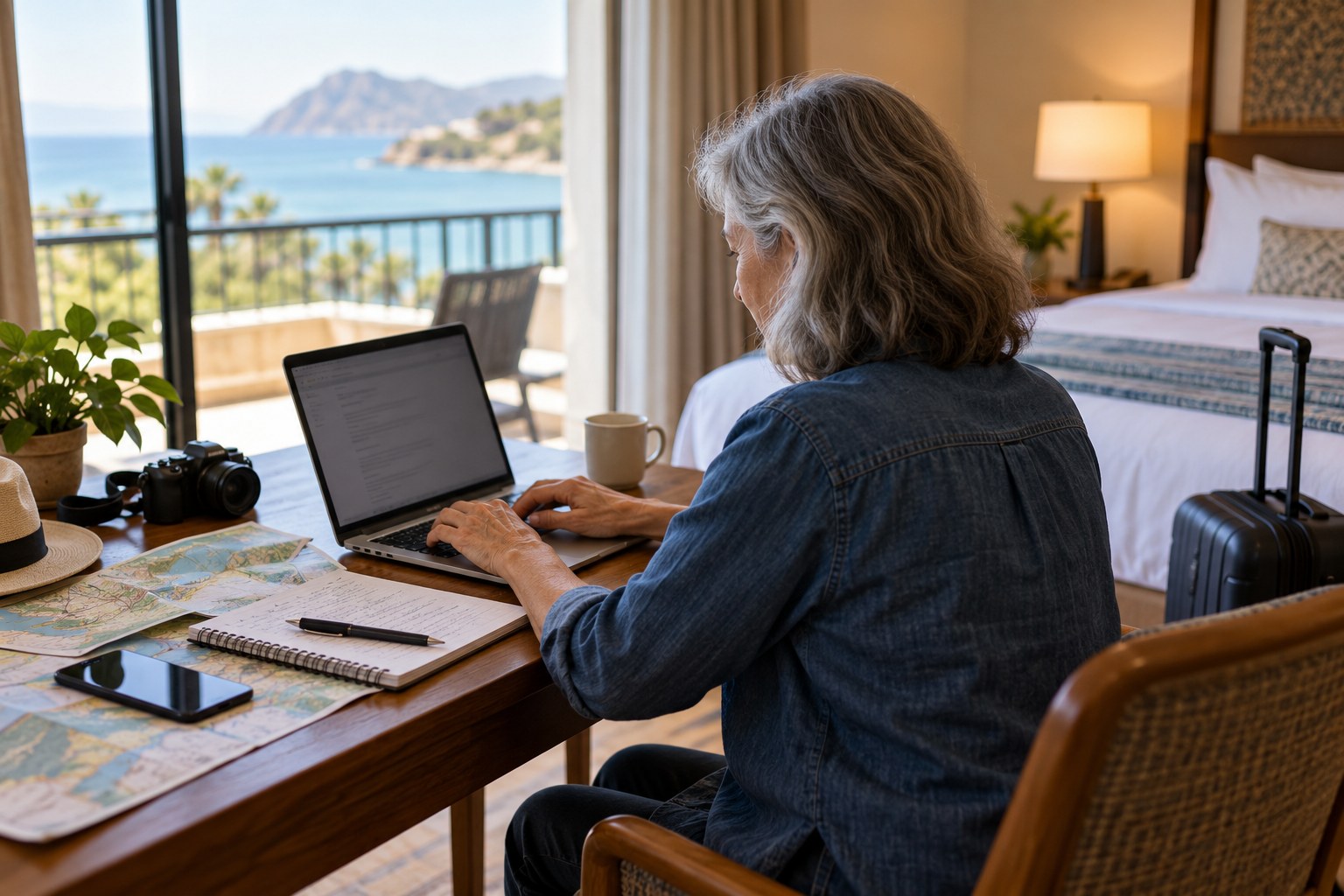
Group your questions into short sections: arrival route, room layout, bathroom, alerts, and backup plan. Include your dates, reservation name, and the two or three features that are essential. A sample message could say: “I am considering booking for these dates. Could you confirm whether the accessible room has a roll-in shower, fixed grab bars, and a step-free route from the accessible parking area? Please also share the bathroom doorway width and whether the visual fire alert is available in that room type.” This is clearer than a long description of every possible concern.
When you receive a response, check that it answers your exact question and applies to the correct room. If a hotel uses a standard answer, politely ask for the detail that remains unclear. Save the reply as a PDF or email and add a reminder to reconfirm shortly before arrival. If staff cannot measure or verify a feature, ask for a photo or a contact who can help. You are not trying to test the hotel; you are making an informed choice about whether its room will work for your travel party.
A compact confirmation checklist
- Room name, dates, floor, and route confirmed.
- Doorway, bed, bathroom, and shower details match the need.
- Required alerts or equipment are assigned to the room.
- Parking, elevator, and common-area routes are understood.
- Fees, cancellation terms, and backup options are clear.
- Written reply and reservation number are saved together.
- Essential details will be reconfirmed before arrival.
Choose clarity over the label
Accessible-room terminology can be useful for finding options, but the final decision depends on how the room works for the person staying there. Ask for the details that affect sleep, bathing, moving around, communication, and arrival. Make the hotel’s answer part of your booking record and keep a backup in mind. A clear exchange before travel cannot remove every uncertainty, yet it gives you a much better basis for choosing a property than a filter or promotional photo alone.
121