
20 Grocery-Store Picnic Meals for Travel Days
Airport food and roadside snacks can be expensive, rushed, or simply not what you feel like eating. A grocery-store picnic gives you another option: choose a few foods that travel well, find a place to sit, and make a proper pause in the day. It works on a road trip, before a train, or during a long layover when you have time and access to a safe place to eat.
The best travel picnic is built around your route, storage, and appetite. Some foods need refrigeration; some are messy to eat in a car or crowded terminal. Use the ideas below as flexible combinations, not a guarantee that a particular product is available or safe for every traveler. Check ingredients and allergens, follow food-safety guidance, and keep perishables cold. USDA guidance says perishable food should not remain at room temperature more than two hours, or one hour when the temperature is above 90°F.
Build a travel picnic in three steps
First decide where you will eat: a rest area, park, hotel room, station seating area, or airport before security. Then choose a main item, a fruit or vegetable, and one snack or treat. Finally, decide whether you can keep the meal cold. If there is no refrigerator or cooler, use shelf-stable foods and eat them soon. Carry hand wipes, napkins, a small bag for rubbish, and water. If you are flying, check airport security rules before bringing liquids, dips, or spreads through screening.
20 easy grocery-store picnic combinations
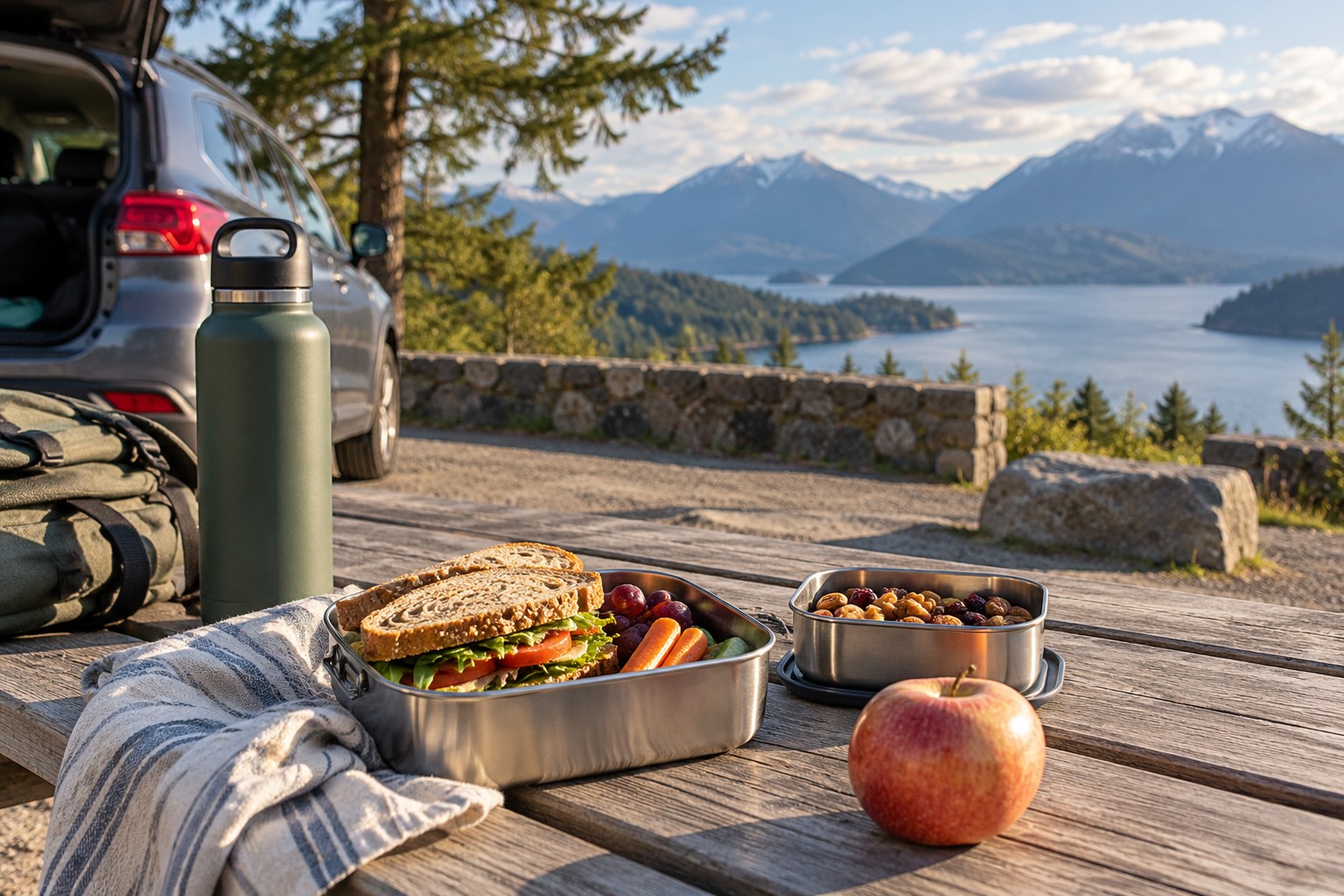
1. Hummus, pita, cucumbers, and olives
This is a good no-cook meal when you have a cooler or can buy and eat it right away. Choose a small hummus tub, pre-cut cucumber only if it can stay cold, and a single-serving pack of olives. Add pita or crackers and a piece of fruit. At an airport, remember dips and spreads count as liquids or gels for carry-on screening; buy them after security if you want to keep the meal simple.
2. Crackers, cheddar, apple, and dried fruit
Hard cheese still needs safe storage, so keep the portion chilled and eat it within a reasonable window. Pair it with sturdy crackers, a whole apple, and a small packet of dried fruit. This combination avoids cutlery and can be portioned for one or two people. If you cannot keep the cheese cold, swap it for shelf-stable nut butter or another packaged spread that meets your route’s security rules.
3. Rotisserie chicken, rolls, and crunchy vegetables
Buy cooked chicken only when you can keep it hot or chilled and eat it promptly. Pair a small portion with rolls, carrots, and a condiment packet. This is better for a hotel-room or park picnic than for a long stretch in a warm car. Keep raw foods separate and discard leftovers that have been out too long. If you are traveling with a cooler, use ice packs and do not rely on a soft bag alone for hours of storage.
4. Peanut or sunflower butter, bananas, and bread
This is a dependable shelf-stable option, though allergies may make peanut butter unsuitable in a shared group. Choose single-serve packets if you do not want to carry an open jar. Add bananas and a loaf or rolls that will not crush easily. Make sandwiches when you are ready to eat so bread does not become soggy. For flights, check current rules for spreadable items before packing them in carry-on bags.
5. Bagels, smoked salmon, and cream cheese
This feels like a treat but needs cold storage. Buy small sealed portions, keep them chilled, and assemble just before eating. Bring a napkin because the toppings can be messy. It is an excellent picnic in a hotel room or a park near a grocery store, but it is not ideal if you have several hours of sightseeing before lunch. Check labels for allergens and follow the package’s use-by and storage directions.
6. Grain bowl kit with chickpeas and dressing
Look for a prepared grain bowl or combine a shelf-stable grain pouch with canned chickpeas and a small dressing. If the bowl is refrigerated, keep it cold until you eat. A dressing cup may be restricted through airport security before screening, so plan to buy it after security or choose a dry seasoning. This is a more substantial vegetarian meal than a snack pack and works well when you can sit down with a fork.
7. Tortillas, canned beans, salsa, and shredded cheese
For a hotel-room picnic, tortillas and a small can of beans create a quick meal if you have a microwave or can eat the ingredients cold. Salsa and cheese need sensible storage once opened. Check can-opening options and avoid carrying heavy tins on a walking day. A small packet of seasoning makes the meal more flavorful without extra equipment. This combination is best when the grocery store is close to your lodging.
8. Pasta salad, cherry tomatoes, and fruit
Prepared pasta salad belongs in the cooler and should be eaten promptly. Choose a small tub rather than a family-size container, add whole cherry tomatoes, and finish with a peach or orange. Carry a fork and a rubbish bag. The meal is easy to eat at a rest stop table, but avoid leaving it in a parked car while you explore. If you are uncertain how long it has been unrefrigerated, choose a shelf-stable alternative.
9. Shelf-stable tuna pouch, crackers, and pickles
A sealed tuna pouch can be convenient when you do not have refrigeration, but be considerate about where you open it because the smell carries. Add crackers, a small pack of pickles, and a whole fruit. Keep the pouch unopened until you are ready to eat. If you are on a plane or train, choose a less aromatic meal and check any destination restrictions on fish products. This is most comfortable outdoors or in a private room.
10. Hard-boiled eggs, crackers, and grapes
Eggs are perishable, so this combination requires a cooler and a short time between purchase and eating. Keep shells intact until meal time, wash hands, and use a clean surface. Crackers and grapes make the meal feel complete without much preparation. If you cannot keep the eggs cold, swap them for a shelf-stable protein snack and retain the fruit. Pack only what you can finish; picnic leftovers are difficult to store safely on the move.
11. Yogurt, granola, and berries
Yogurt and berries need refrigeration, so plan this as a breakfast picnic near the time of purchase. Buy a single portion and a sealed granola packet to keep it crunchy. A spoon and napkin are essential. This option is better for a hotel or park than a vehicle, where spills are likely. If you want a no-cooler version, replace yogurt with an unopened shelf-stable alternative and choose whole fruit.
12. Deli turkey, roll, mustard, and lettuce
Make a simple sandwich only if you have a way to keep deli meat cold. Buy a small package, assemble at lunch, and keep mustard in a sealed portion. Lettuce can be washed and dried at home, but on the road it is easier to use packaged greens or skip them. Check the use-by date and do not save an opened package in a warm bag. If there is no cooler, choose a shelf-stable vegetarian sandwich filling instead.
13. Instant oatmeal, banana, and trail mix
This is useful when your room has a kettle or microwave. Add hot water to a cup of oatmeal, then top with banana and a small amount of trail mix. Choose a trail mix without ingredients that create allergy concerns for your group. It is a filling, low-mess breakfast and does not depend on refrigeration. Pack a spoon and check whether your accommodation provides hot water before relying on the plan.
14. Pita chips, shelf-stable bean dip, and peppers
Some packaged dips are shelf-stable until opened, while others require refrigeration; read the label carefully. Pair a sealed dip with pita chips and whole mini peppers you can wash before eating. Open the container only when you are ready and finish it promptly. This is an easy snack spread for a rest area or hotel room, especially when several people want to graze instead of eating one formal meal.
15. Fresh mozzarella, tomatoes, bread, and basil
This simple picnic can be lovely in a park, but mozzarella needs to stay cold and tomatoes bruise easily. Buy a small amount close to the meal and bring a knife only if it is allowed on your transport route. Tear bread by hand and use a small container for basil. A cooler is important in warm weather. If keeping dairy cold is inconvenient, choose a firm shelf-stable cheese alternative or a different picnic combination.
16. Crackers, canned sardines, and lemon
For an outdoor stop, a small tin of sardines makes a compact protein option. Pack a napkin, a fork, and a bag to contain the tin afterward. Add crackers and a lemon wedge if you can keep it clean. This is not the best choice in a shared vehicle, but it can be satisfying at a picnic table. Check that the tin opens easily and do not leave the opened container in the car.
17. Ready-to-eat sushi only with careful timing
Sushi is highly perishable and should be purchased close to when you will eat it. Keep it cold, follow the package guidance, and do not carry it through hours of sightseeing. Choose a reputable retailer with clear refrigeration and labeling. If the trip includes a long drive or a flight, select a less delicate meal. A picnic is a good setting only when you can get from the refrigerator case to your table promptly.
18. Cheese, salami, and whole fruit
Some cured meats and cheeses are more resilient than fresh counterparts, but package storage instructions still apply. Choose small sealed portions, keep them cool if required, and pair with whole fruit that will not bruise easily. Add crackers and a small mustard packet. This combination can feel special without utensils, but check customs and border rules before carrying meat or dairy internationally. Keep ingredient labels until everyone has eaten.
19. Rice cakes, hummus, and whole carrots
Rice cakes are light and less likely to crumble than thin crackers; pair them with a small hummus portion and whole carrots. Because hummus is perishable, buy it close to the picnic and keep it cold. If there is no cooler, substitute a sealed shelf-stable spread or eat the snack before leaving the store area. This works well for a short park stop and is easy to divide into small portions.
20. Bakery rolls, fruit, and a small chocolate bar
For the simplest picnic, choose fresh bakery rolls, whole fruit, and a chocolate bar that will not melt in the weather. Add a shelf-stable packet of nut butter if you need more protein and it suits the group. This is convenient for a travel day because it needs little preparation and no cutlery. Keep the chocolate away from sunlight, and buy only what you can eat before departure.
Match the meal to the place
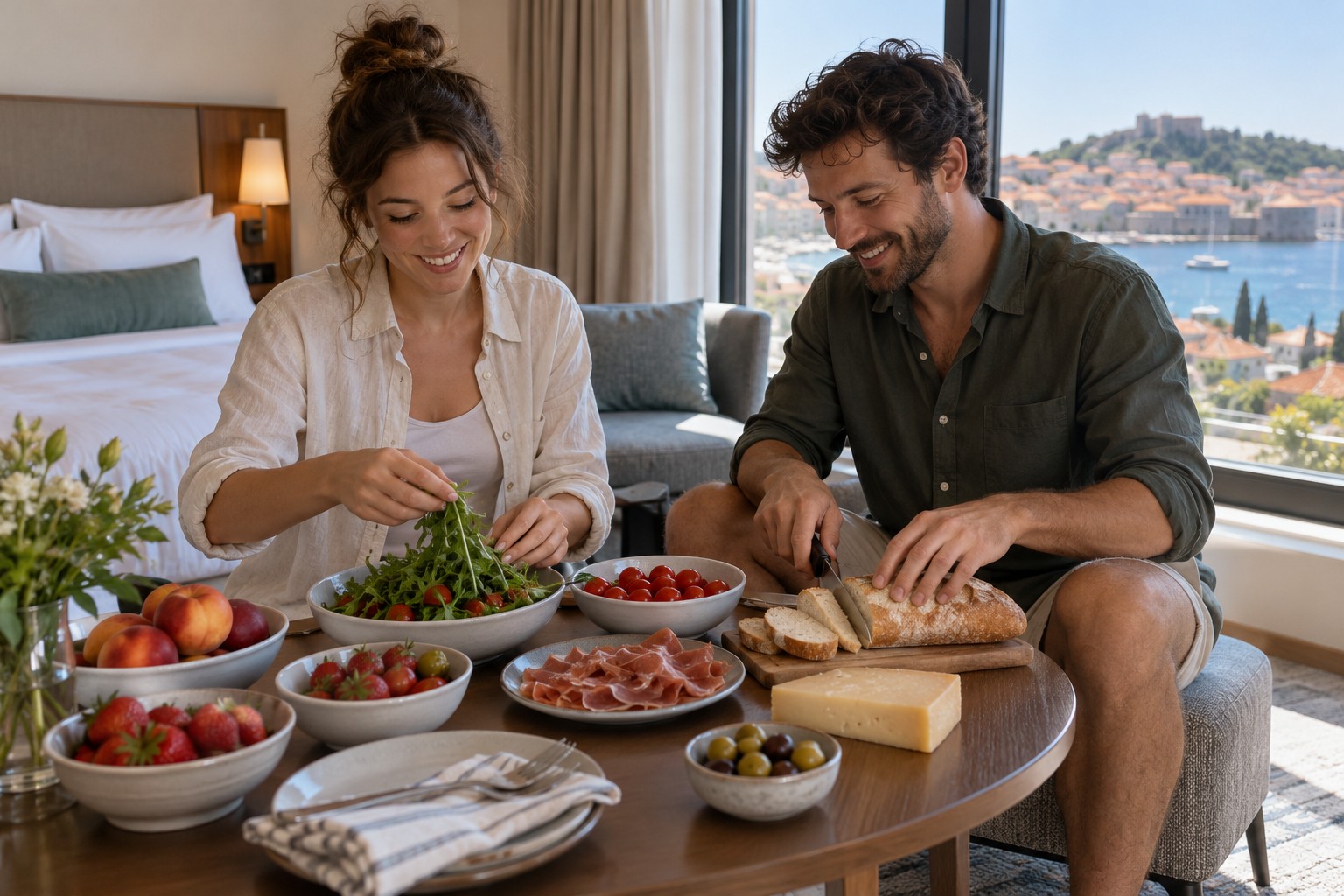
- At an airport: purchase liquids, dips, and refrigerated food after screening when possible.
- At a rest area: choose food that does not need a knife and use a table away from traffic.
- In a hotel room: check for a fridge, microwave, kettle, dishes, and a rubbish bin.
- On a train: avoid strong odors, messy sauces, and foods that need careful temperature control.
- On a road trip: park before eating, and do not handle food while driving.
Food safety and packing
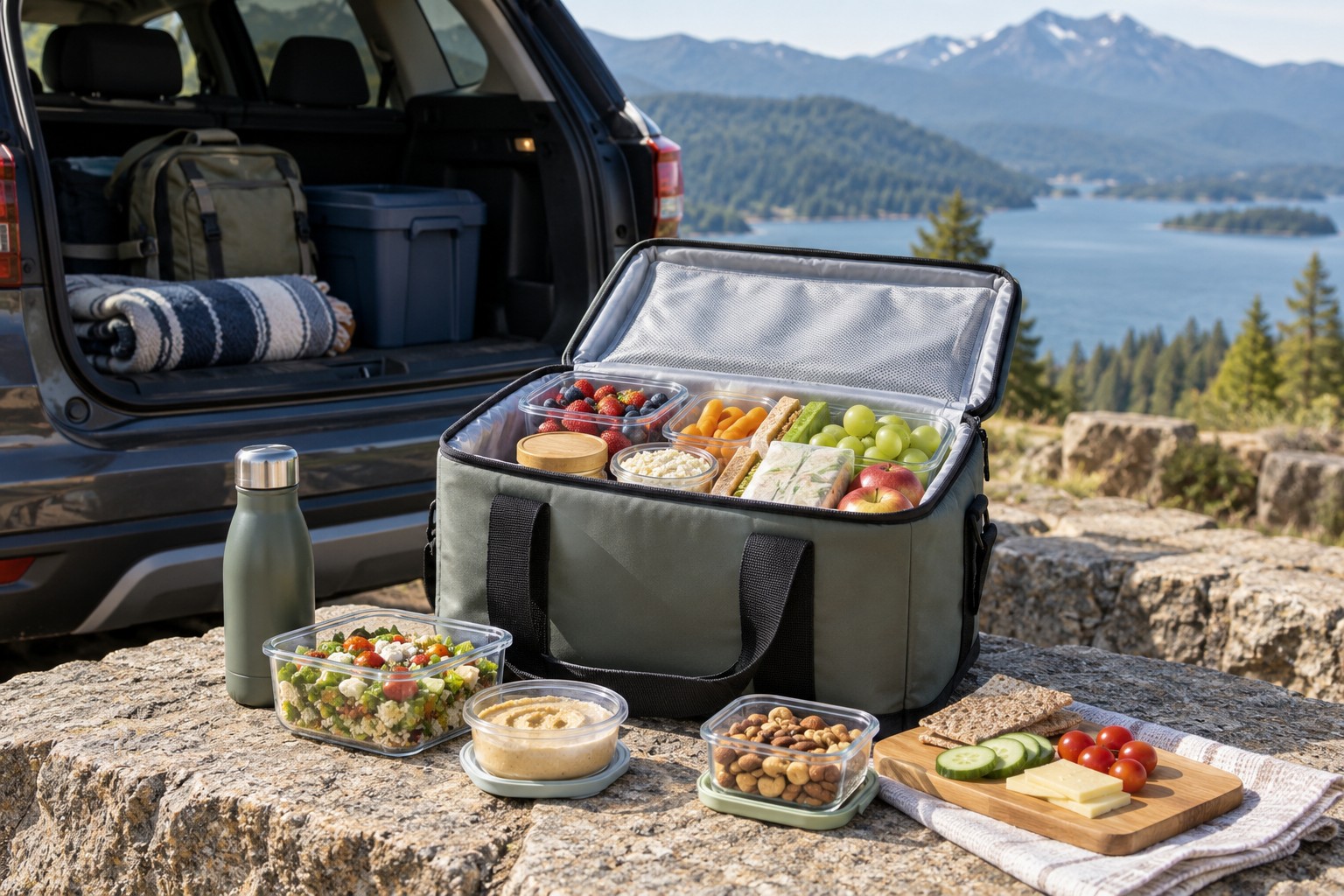
Use an insulated cooler and frozen packs for refrigerated foods. Keep the cooler closed and out of sunlight, and separate ready-to-eat foods from raw items. USDA guidance sets a two-hour room-temperature limit for perishable foods, reduced to one hour when the air is above 90°F. When in doubt about time or temperature, discard the food. TSA rules for liquids and gels apply to many spreads and dips in carry-on bags; check the current list for your route.
A good travel picnic is less about assembling a perfect spread than taking a real break. Choose combinations that fit the storage you have, buy only what you can eat safely, and sit somewhere you can relax. Even a roll, fruit, and a drink can make a long travel day feel more like a trip and less like a sequence of queues.
Sources
https://ask.fsis.usda.gov/article/What-is-the-2-Hour-Rule-with-leaving-food-out
https://www.fsis.usda.gov/food-safety/safe-food-handling-and-preparation/food-safety-basics/food-safety-while-hiking-camping
https://www.tsa.gov/travel/security-screening/whatcanibring/all-list?pubDate=20250608