
9 Cruise Cabin Locations Compared: Noise, Motion, and Convenience
Two cabins can carry the same price and category name yet deliver very different trips. One puts you steps from the pool and the late-night show; another gives you a quieter hallway, less movement underfoot, or a shorter route to the elevator. The deck plan is where those differences start to show. Before choosing the cabin with the prettiest photo, match its location to the way you sleep, move around the ship, and spend your days.
This guide compares cruise cabin locations by noise, motion, and convenience—not by a single supposedly perfect deck. It is a decision tool for narrowing a shortlist. Ship layouts vary, so use the current deck plan for your exact vessel and sailing, then verify the cabin number and any accessibility details with the cruise line before paying.
Start with the trade-off that matters most to you
Cabin selection is easier when you name your priority before browsing room photos. Most travelers are choosing among three things: how much motion they are comfortable with, how sensitive they are to noise, and how much walking or elevator use they want to do. A fourth question—how much time you expect to spend in the cabin—helps decide whether a window or balcony earns its extra cost.
- Motion-sensitive: start around the ship’s middle and compare lower passenger decks; ask a clinician about motion-sickness prevention before travel if needed.
- Light sleeper: prioritize what is directly above, below, and beside the cabin as much as the cabin’s own deck.
- Mobility or stamina concern: map the route to elevators, dining, medical facilities, and the gangway, then check the ship’s accessible-cabin rules.
- View-focused: compare the view and privacy of a balcony with a less expensive ocean-view cabin, and check for lifeboat or structural obstructions.
- Budget-first: price the cabin category and location together. A cheaper room can cost less in cash but more in sleep, walking, or time.
What each part of the ship tends to trade
Midship: the balanced starting point
Cabins near the ship’s center are often the first shortlist for travelers who want a compromise. The middle is generally closer to the ship’s balance point than the far ends, so it can feel less dramatic in rough conditions than a cabin near the bow or stern. That is a tendency, not a guarantee: vessel design, weather, itinerary, and a person’s sensitivity all matter. A central cabin can still be noisy if it sits beside a busy venue or under a deck that is set up before dawn.
Midship can also reduce the distance to some public spaces, but it does not automatically make a ship easy to navigate. A large vessel may have several elevator banks, long corridors, and venues concentrated at opposite ends. Mark the cabin on the deck plan and trace the actual route to the places you expect to visit most. If your group is split between a kids’ club and an adults’ lounge, a location that seems central to one person may be inconvenient for another.
Forward: useful for some routes, less forgiving for others
Forward cabins can put you near the bridge viewing area, a theater, or venues located at the front of the ship. They may be attractive when the itinerary’s scenery is part of the point. The trade-off is that movement can feel more pronounced at the bow, especially in unsettled seas. The route to aft dining rooms or central pools may also involve a long walk. A far-forward cabin is a less comfortable gamble for someone who already knows that motion affects them.
Inspect the space around the cabin, not just the direction it faces. A room near a forward service area, crew door, or stair landing can hear activity that a promotional cabin photo cannot reveal. Look for symbols and labels on the line’s current plan, and ask the line directly if the plan does not explain a nearby gray or blank area.
Aft: views and venue access with a walk attached
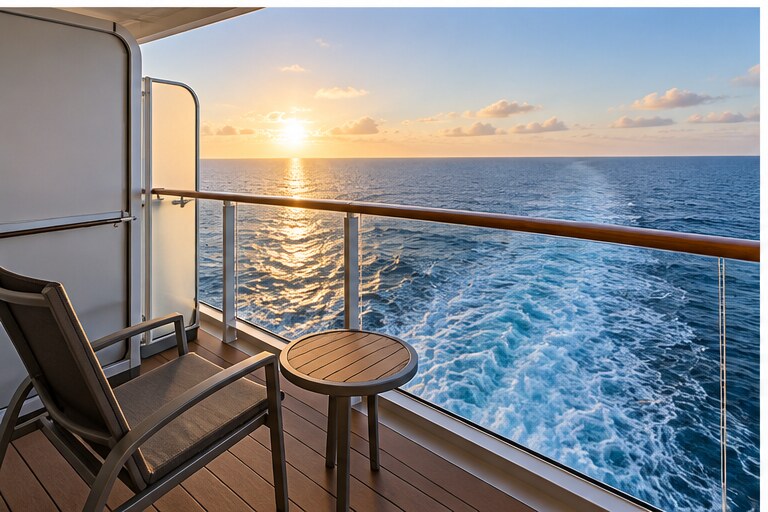
The aft can reward travelers who like wake views or want to be near restaurants and entertainment grouped toward the back. On some ships, aft-facing balconies are a special draw. But cabin shape, balcony size, vibration, and nearby public spaces vary by ship. A room at the end of a corridor may mean more quiet from passersby, yet it also adds walking distance. Check the precise cabin listing for any obstruction, unusual layout, or limited-view note rather than assuming every aft room is alike.
Lower decks: closer to some essentials, farther from the view
Lower passenger decks can put you near the gangway, some dining areas, or the medical center, depending on the vessel. They may also feel more stable to some passengers than cabins high above the waterline. The downside is less of the open-sky feeling, fewer direct routes to top-deck pools, and a greater chance that a window or balcony view is limited by the hull or equipment. “Lower” is not a synonym for quiet: a cabin can sit beside a theater, galley, laundry, or machinery space.
Upper decks: convenience is only real if you use what is nearby
A cabin near the pool deck can make a morning swim easy and reduce elevator dependence. It can also place you under chair movement, deck cleaning, music, or early setup. An upper cabin may shorten trips to outdoor spaces but lengthen the trip to lower-deck dining or the gangway. If you want a high deck, compare the room’s ceiling neighbors and the venue schedule. The quietest-looking cabin can be under a space that wakes up before the first passenger does.
Use the deck plan as a noise map
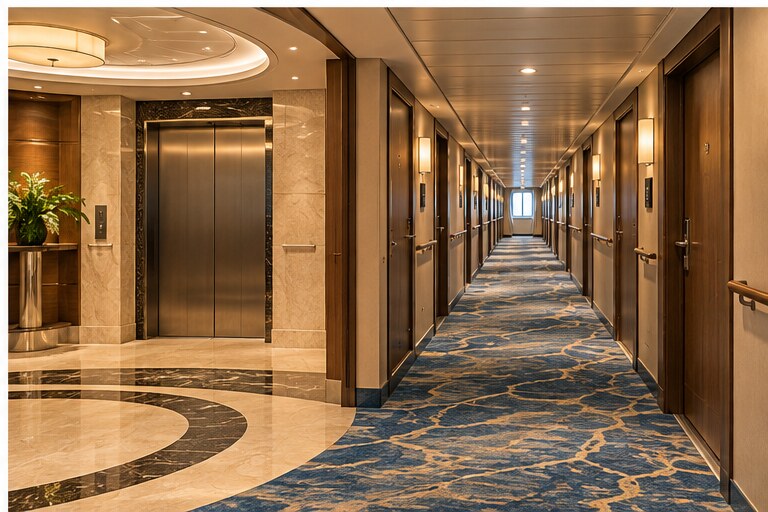
A useful check is to inspect three directions: above, below, and beside the cabin. A stateroom under a pool, sports court, buffet, or public promenade may hear foot traffic, dropped items, chairs, or setup work. A room next to a theater, bar, nightclub, elevator bank, stairwell, or laundry can hear late guests and operational activity. A cabin near a crew passage or service door can be busier than its corridor position suggests.
Look for a buffer floor whenever possible. A passenger cabin above and below is often a more reassuring arrangement than a cabin directly next to a venue, though ship construction and room placement still matter. Search the ship name plus the cabin number for recent, specific reports, but treat forum posts as clues rather than proof. A report about one sailing may reflect an unusual event, a changed layout, or a different cabin category.
Choose a cabin category after choosing a location
Interior, ocean-view, balcony, and suite are room categories; forward, midship, aft, and deck number describe location. Keep the two decisions separate. First identify a set of locations that fit your sleep, motion, and walking priorities. Then decide how much daylight, outdoor space, and room size are worth to your group.
- Interior: the practical choice for travelers who plan to be out most of the day and are comfortable without natural light. It can also help a group keep a lower fare, but confirm the bed layout and storage for everyone sharing.
- Ocean view: adds daylight and a view without making a private balcony the price anchor. Check whether the window is fixed, partially obstructed, or positioned for privacy.
- Balcony: suits travelers who will use outdoor space for quiet mornings, scenic sailing, or room to spread out. Consider sun, wind, privacy, and whether the itinerary actually includes long scenic stretches.
- Suite: can buy more space, extra sleeping separation, or line-specific benefits. Compare those benefits with the difference in total trip cost; a larger room is not automatically better value if you will rarely be in it.
Special situations worth checking before you book
Families and adjoining rooms
When a family needs adjoining cabins, confirm that the doors actually connect and that both rooms suit the people sleeping in them. A category may have a family label while the specific cabin layout still has limited storage or an awkward bed configuration. Ask whether the connecting door changes available wall space, and whether the ship allows the children’s ages in the room arrangement you want. For a stroller or mobility device, check corridor and doorway dimensions with the cruise line.
Accessible cabins and step-free routes
Do not infer accessibility from a cabin’s location on a map. Features such as doorway width, bathroom configuration, turning space, and threshold height are cabin-specific. Ask the cruise line what is included, whether the cabin fits your equipment, and what route connects it to dining, the gangway, and elevators. If you need assistance at embarkation or in port, confirm how requests are handled for each sailing. Book the exact accessible room rather than assuming a standard cabin can be adapted.
Guaranteed cabins and cabin assignment
A guarantee fare may let the cruise line assign your room later within a category. That can suit flexible travelers who care more about price than a precise location. It is a poor fit when motion, noise, accessibility, connecting rooms, or a particular deck is a major requirement. Before choosing a guarantee, read the current terms, find out when assignment occurs, and understand whether the assigned cabin can be changed for a fee or at all.
A 10-minute cabin shortlist method
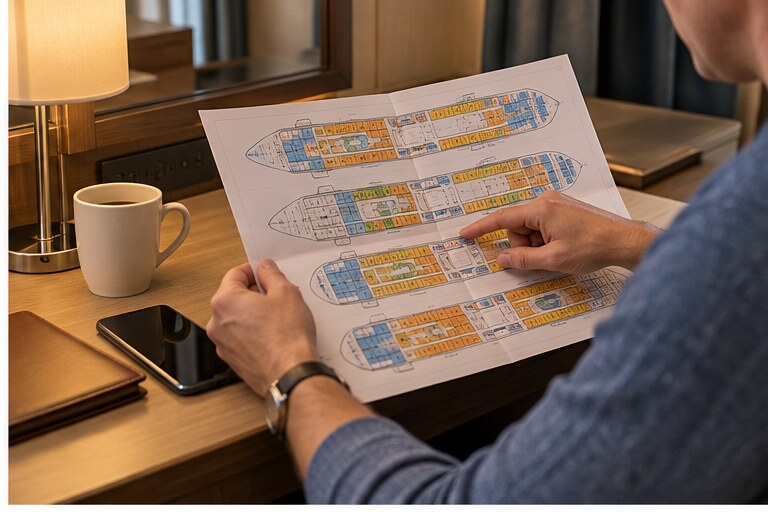
Use this sequence before comparing fare totals. It prevents the room’s attractive photo from deciding the trip for you.
- Write your top two needs. Examples: uninterrupted sleep and a short route to the elevator, or lower cost and a private balcony.
- Open the exact ship and sailing’s deck plan. Deck plans change between ships and after renovations, so avoid selecting from an old screenshot.
- Mark three candidate cabins. Include one balanced option, one lower-price option, and one location that prioritizes your strongest need.
- Check vertical neighbors. Identify the venue above and below each room. If labels are unclear, ask the cruise line what occupies that space.
- Trace the route. Count the turns and elevator changes to the places your group will use daily, not just the closest venue.
- Check room-specific notes. Verify obstruction, balcony configuration, bed setup, connecting-door status, accessible features, and guarantee terms.
- Compare the final price. Include taxes, port charges, and any included benefits before deciding whether a higher category is worth it.
Quick match: which cabin location is the best starting point?
- You are worried about ship motion: begin your search near midship and compare lower decks, while recognizing that no cabin location can guarantee comfort.
- You wake easily: look for passenger cabins above and below, away from late-night venues, elevators, and service spaces.
- You want the shortest pool trip: compare cabins near the pool deck, then inspect the overhead area for early activity.
- You want a scenic balcony: compare the specific view and privacy notes for forward, aft, and side-facing rooms on your ship.
- You want fewer long walks: map the elevator route to your most-used venues and consider where your group boards in port.
- You want the lowest price: consider an interior or guarantee room only if its location uncertainty will not undermine the trip.
The best cruise cabin is the one whose daily trade-offs you have already accepted. Use the ship’s deck plan to eliminate rooms that conflict with your sleep, mobility, or motion needs, then compare room categories by how much time you will truly spend inside. If you have a medical or accessibility concern, confirm details directly with the cruise line and your health professional before booking.
Questions to ask before you lock in the room
Before you pay, ask the cruise line or your travel adviser to confirm the details that the deck plan cannot settle. Is the cabin directly above a passenger room or a public venue? Does a nearby blank space represent a crew area, service room, or something else? Is the view fully open, partly obstructed, or different from the category photo? If you need a connecting room, accessible features, or a specific bed arrangement, can the exact cabin be held in writing? For a guarantee booking, when will your cabin be assigned, and what options exist if the location does not fit your needs?
Save the answer together with the cabin number and sailing date. That simple record makes it easier to compare alternatives if the ship changes, the cabin is reassigned, or a question comes up later. A cabin choice becomes much less stressful when it is based on the exact room rather than an attractive category label.
Sources
- https://www.royalcaribbean.com/guides/cruise-deck-plans
- https://www.royalcaribbean.com/guides/what-are-the-best-rooms-on-a-cruise-ship
- https://www.cdc.gov/yellow-book/hcp/travel-air-sea/motion-sickness.html
- https://wwwnc.cdc.gov/travel/page/cruise-ship