8 Crowd-Avoidance Plans for Popular Attractions
A popular attraction can be worth the visit, but standing in a dense queue or moving through packed rooms may make the experience harder than expected. The useful goal is not to find a magical empty hour. It is to choose a time, route, ticket, and exit plan that reduce the parts of the crowd experience you find most draining—and to know what you will do if the site is busier than predicted.
These eight crowd-avoidance plans work for museums, historic sites, observation decks, markets, gardens, and other popular places. Crowd levels change with weather, events, school breaks, and operations, so a quiet forecast is never a guarantee. Check the venue’s current schedule, accessibility details, timed-entry rules, and transit conditions, then choose the plan that offers the best balance of lower crowd exposure and flexibility.
8 ways to make a popular attraction feel more manageable
1. Choose the first entry slot that fits your morning
The earliest admission may mean fewer visitors have entered, but it only helps if getting there does not create a rushed or tiring start. Check the venue’s opening time, ticket instructions, security line, and transport schedule. Arrive with enough time to use the restroom and orient yourself without waiting outside for a long period. Some attractions release early tickets in timed waves, while others let people queue before opening; confirm which process applies. If the entrance area is the most stressful part, plan where to wait and what to do if the line forms early.
Once inside, go first to the exhibit or viewpoint you care about most, then move to a quieter section or take a break. Avoid racing through a long list of highlights simply because the building is temporarily less crowded. A priority order—must-see, nice-to-see, skip-if-busy—lets you make a quick decision when a room fills. If you are traveling with children or someone who needs a slower pace, agree beforehand that the first hour is not a competition to cover everything.
2. Compare weekdays, school holidays, and event calendars
A weekday can be calmer than a weekend, but school groups, local holidays, or special events may change the pattern. Check the venue calendar, city event listings, school break periods, and any performance or exhibit schedule. If the attraction is outdoors, weather can shift crowds toward the same sheltered spaces. Use recent visitor information as a clue, not a promise. The best date may be the one when the attraction has regular hours and transport is reliable, even if it is not theoretically the quietest day.
For a multi-day trip, place the attraction on a day with a flexible afternoon. If crowds are heavier than expected, you can leave early and use a nearby lower-key alternative. Avoid pairing the attraction with a timed dinner, long transfer, or another high-demand site. That gives the group a chance to rest and makes the visit feel like one meaningful part of the day rather than an obstacle course between reservations.
3. Use timed entry strategically
A timed ticket can reduce uncertainty about when you enter, but it does not guarantee a quiet interior or a short security line. Read the terms carefully: check how early to arrive, whether late entry is allowed, if re-entry is possible, and what happens when an exhibit is delayed. Choose a time that leaves a buffer for transit and a restroom stop. If you need an accessible entrance or assistance, ask how that works with timed admission before purchasing a nonrefundable ticket.
If a venue offers several time windows, compare the activity schedule with expected crowd movement. A popular show or tour may release visitors into a gallery at once. Ask staff whether there are typically busier moments and whether there is a route to wait away from the main queue. Treat staff guidance as useful local context rather than a guarantee. Save the ticket and entry instructions offline so you do not have to navigate a phone in a busy line.
4. Visit one anchor, not the entire attraction
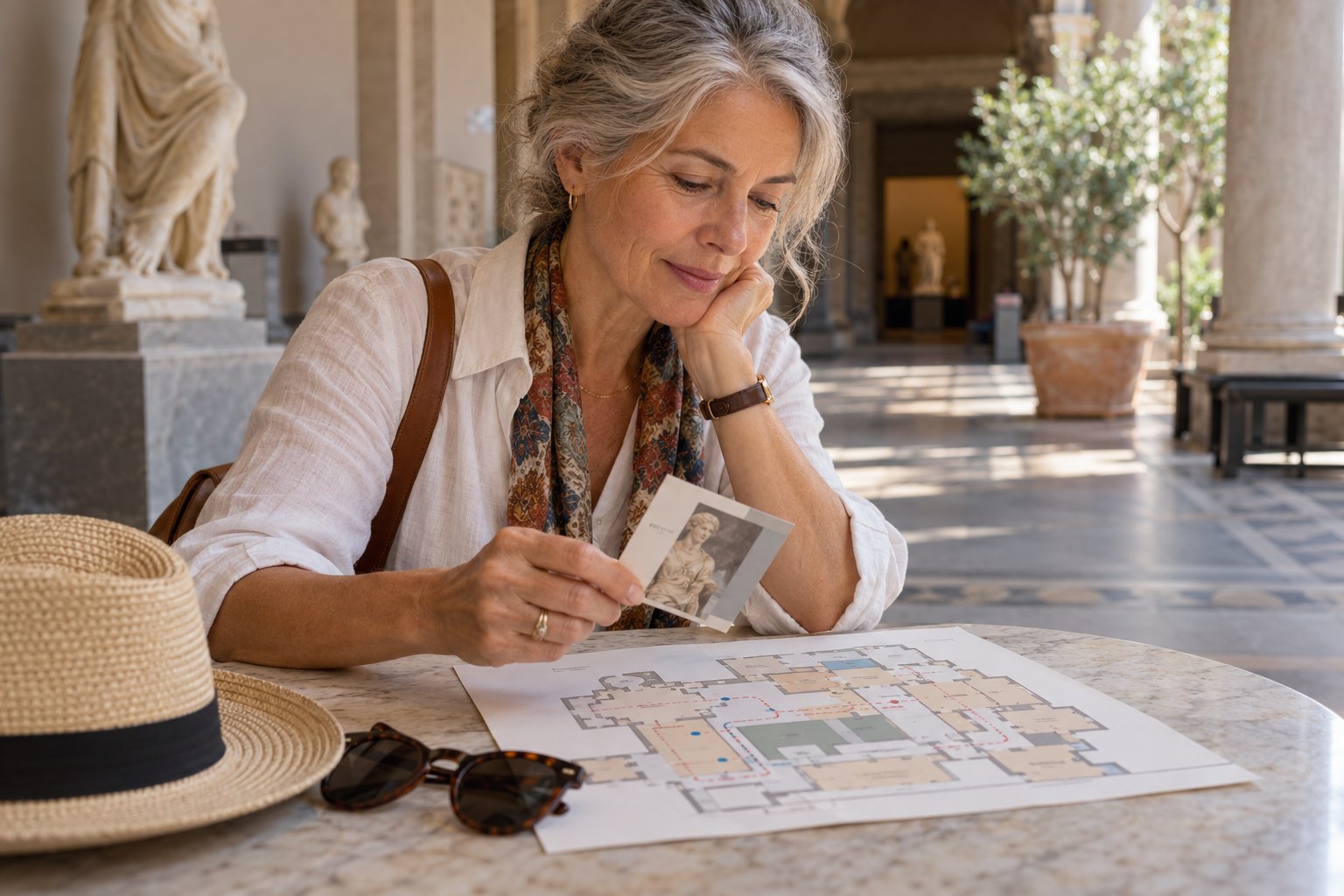
Pick one room, exhibit, ride, market section, or viewpoint as the reason for the visit. Add only nearby extras that can be skipped without regret. This reduces the chance of crossing the busiest corridors repeatedly and gives you permission to leave once the priority is complete. Look at the floor plan before arrival and map a short loop with a nearby restroom, seating, and exit. If the venue is larger than expected, ask staff which route avoids unnecessary backtracking.
A focused visit can still feel complete when you frame it around a question or theme. At a museum, choose one collection and look closely rather than trying to see every room. At a market, pick a few stalls and a place to sit. At an observation deck, plan the view and a brief photo stop rather than waiting for every angle. The smaller plan is not a compromise if it matches what you genuinely wanted to experience.
5. Enter through a less-used gate or arrival route
Some attractions have multiple entrances, separate group access, or a step-free route that changes where you should arrive. Check the official map and ask which entrance best fits your ticket and needs. A side entrance may shorten the queue but could require a longer walk or have limited hours. Compare the whole journey: transit stop, sidewalk, security, ticket scan, and first interior space. Do not use a service entrance or bypass a barrier unless the venue directs you there.
If arriving by car or rideshare, identify a safe drop-off point and a clear meeting location. If using public transportation, check station exits and current service notices; a station can be crowded even when the attraction is not. Save the return route in advance so leaving during a busy moment does not require searching. When traveling with a group, choose a meeting point outside the main gate where you can regroup without blocking the entrance.
6. Plan a pause away from the busiest center
Find seating, a quieter gallery, a courtyard, or a nearby café before the visit begins. Ask whether the venue has a quiet room or sensory supports, and verify hours and access rules. A rest point should be close enough to reach without crossing the entire attraction. Choose one indoor and one outdoor option if weather permits. If you are sensitive to noise or crowd density, bring familiar supports and decide on a signal for taking a break before anyone is overwhelmed.
Timing the pause can matter as much as choosing the place. Rest before the group reaches its limit, not only after someone asks to leave. A short reset after the first main activity may help you enjoy a second room without adding a long break. If you are visiting with different energy levels, agree that one person can sit while others look around, then reunite at a specific time and landmark. A pause is useful when it restores choice, not when it becomes another schedule to obey.
7. Choose a route that avoids repeated bottlenecks
Study the map for narrow halls, stairways, elevators, popular photo spots, and single-path sections. Build a loop that enters the priority area, uses a nearby rest point, and returns by a different route if possible. Ask staff about temporary closures, school groups, or queue locations on the day. If there is no way around a bottleneck, decide whether to wait, skip the area, or come back later. Knowing the alternatives helps you avoid making a rushed choice in the middle of a crowded corridor.
For outdoor attractions, note the difference between the direct route and a longer but less congested path. The alternative may involve more walking or fewer facilities, so compare the trade-off. Use official accessible maps and current signs. Do not follow informal shortcuts that cross restricted areas or create safety risks. If the crowd flow becomes uncomfortable, step to a safe designated space and ask staff for a route out rather than trying to push through against the flow.
8. Set a clear leave-or-stay threshold
Before arrival, agree on what conditions mean you will shorten the visit: a wait beyond a set time, a closed rest area, a crowd level that feels too intense, or a change in someone’s energy. Decide what you would do next, such as visit a nearby park, have lunch, or return to the hotel. A threshold makes leaving a planned choice rather than a disappointment. It also gives a group a fair way to decide without asking one person to justify their discomfort repeatedly.
Keep tickets, transport, and reservations flexible where possible. If the attraction does not allow re-entry, consider whether a full-day ticket is worth the cost compared with a short visit. Ask about refunds or exchanges before purchase rather than assuming a crowd-related change qualifies. The best backup is specific: name a nearby place, check its hours, and know how to get there. A vague “we will do something else” may not feel reassuring when the day is already tiring.
Use a before-and-during crowd check
Before booking, look at the venue’s calendar, ticket capacity rules, major events, and transit advisories. Read recent reviews for timing and queue details, but separate firsthand observations from general complaints. On the day, check the attraction’s updates and ask an employee about current conditions. If an outdoor site has multiple entrances, confirm which one is open. A quick check can help you choose the first activity, but avoid refreshing crowd forecasts constantly; once you arrive, use the actual situation to adjust.
During the visit, review the plan after each anchor. Ask: Is the next room worth crossing the building? Is the nearest rest point open? Does everyone still want to continue? You can skip an exhibit and still have made a good visit. If you are using a mobility aid, stroller, or hearing or sensory support, prioritize the route that fits those needs over the route that appears shortest on the map. The most useful plan is the one that keeps you safe and comfortable in real conditions.
A compact crowd-aware visit plan

- One priority attraction or exhibit selected.
- Ticket, arrival process, and entrance confirmed.
- Transit or parking route and return plan saved.
- One nearby rest point and one backup identified.
- Short route mapped with a skip option for bottlenecks.
- Leave-or-stay threshold agreed with the group.
- Flexible activity ready if the crowd is too much.
Keep the exit part of the route
Popular attractions often concentrate people near the exit, gift shop, or coat check. Before you enter, ask where the least crowded exit is and whether you can leave without passing through the main queue again. Keep coats, strollers, and bags in a place that will not require a long return across the building. If you need assistance, ask staff how to request it before the rush begins. A simple exit plan can prevent the final ten minutes from undoing an otherwise enjoyable visit.
For a group, choose a meeting place outside the flow of visitors and make sure everyone knows what to do if phones lose signal. If a child or companion is overwhelmed, move to a safe area first and decide the next step there. Do not force a quick departure through a dense crowd if staff can direct you to another route. A calm exit is part of the plan, just like choosing a quieter entry time.
When the quieter plan is not available
Sometimes the only workable date is busy. You can still protect the experience by choosing a smaller time window, limiting the number of must-sees, booking a place to sit, or splitting the group for part of the visit. If the attraction is crowded from the moment you arrive, move to the backup instead of spending the day trying to force the original plan to work. A popular site may be important to you, but no single visit has to include every room or viewpoint.
Crowd avoidance is ultimately a decision about trade-offs: earlier mornings, higher ticket costs, fewer activities, a longer route, or the possibility of leaving before you have seen everything. Choose the cost that feels easiest to carry. A well-planned visit can still include uncertainty, but it gives you a route, a pause, and a reason to change course. That is enough to make a popular attraction feel more manageable without expecting it to be empty.
121