
27 Carry-On Essentials for a 7-Day Trip (Without Packing Your Whole Closet)
A week in a carry-on is possible, but it takes more than a clever folding trick. The real challenge is deciding which pieces will earn their space after you leave home—and which “just in case” items will ride along untouched.
Start with the trip you actually booked: count the nights, check the forecast at every stop, note any laundry access, and set aside clothes or equipment required for specific plans. Then build repeatable outfits from pieces that work together instead of packing seven unrelated looks.
The 27 carry-on essentials below are grouped by purpose, from documents and clothing to health, charging, and arrival-day comfort. Use them as a practical filter, not a universal prescription. Airline bag limits differ by carrier, ticket, route, and aircraft, so check the operating airline’s current allowance before packing; liquid rules also depend on where you pass security. The TSA guidance cited here applies to U.S. screening.
Before you pack: answer these five questions
- What bag is actually included? A basic fare may limit you to a personal item, while another ticket includes a larger cabin bag. The airline’s current page is the authority, not a packing video.
- What are the dimensions and weight rules? Measure the packed bag, including wheels and handles. Some carriers check weight at the gate.
- Will you do laundry? If yes, plan a small number of versatile outfits and pack a laundry bag. If no, plan clothes by outfit and use sink-wash only for quick-dry items you know you can manage.
- What is the weather across all stops? Pack for the coldest realistic condition and the warmest one, then use layers to bridge the gap.
- What must stay with you? Keep medicine, travel documents, valuables, and anything hard to replace in the bag that stays under your control.
The 27 carry-on essentials
Documents and arrival-day access
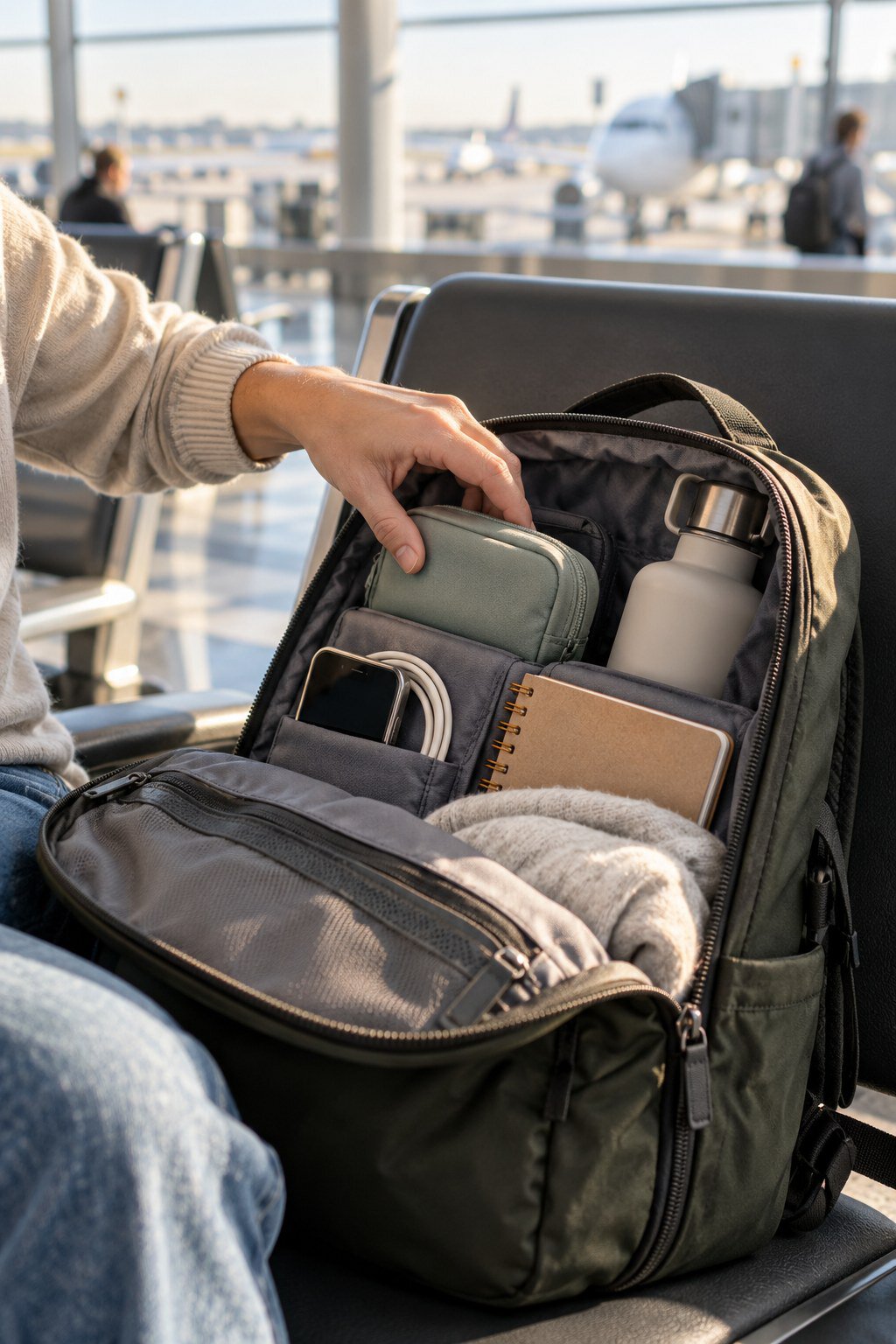
- Government ID or passport. Check that it is valid for the destination and trip dates. Keep it in one secure, easy-to-reach place rather than moving it between pockets at every stop.
- Boarding pass and essential reservations. Save offline copies of flight, lodging, rail, and transfer details. A screenshot is useful when airport Wi-Fi is crowded or a phone signal drops. Paper backups are optional, but can help if you are traveling with a low battery or a group that needs to share details.
- Payment card and a modest backup. Carry the card you plan to use plus a separate backup stored elsewhere. That separation is practical redundancy; bringing every card in your wallet simply adds loss risk.
- Phone with offline essentials. Download maps, tickets, address details, and any translation or transit information you may need. Keep the lodging address available in a note that works without data.
- Glasses, contacts, or hearing support you rely on. Put prescription eyewear and a small care kit in the cabin bag. If a checked bag is delayed, a spare pair or the supplies needed for arrival can make the first night much easier.
Clothing that earns its space
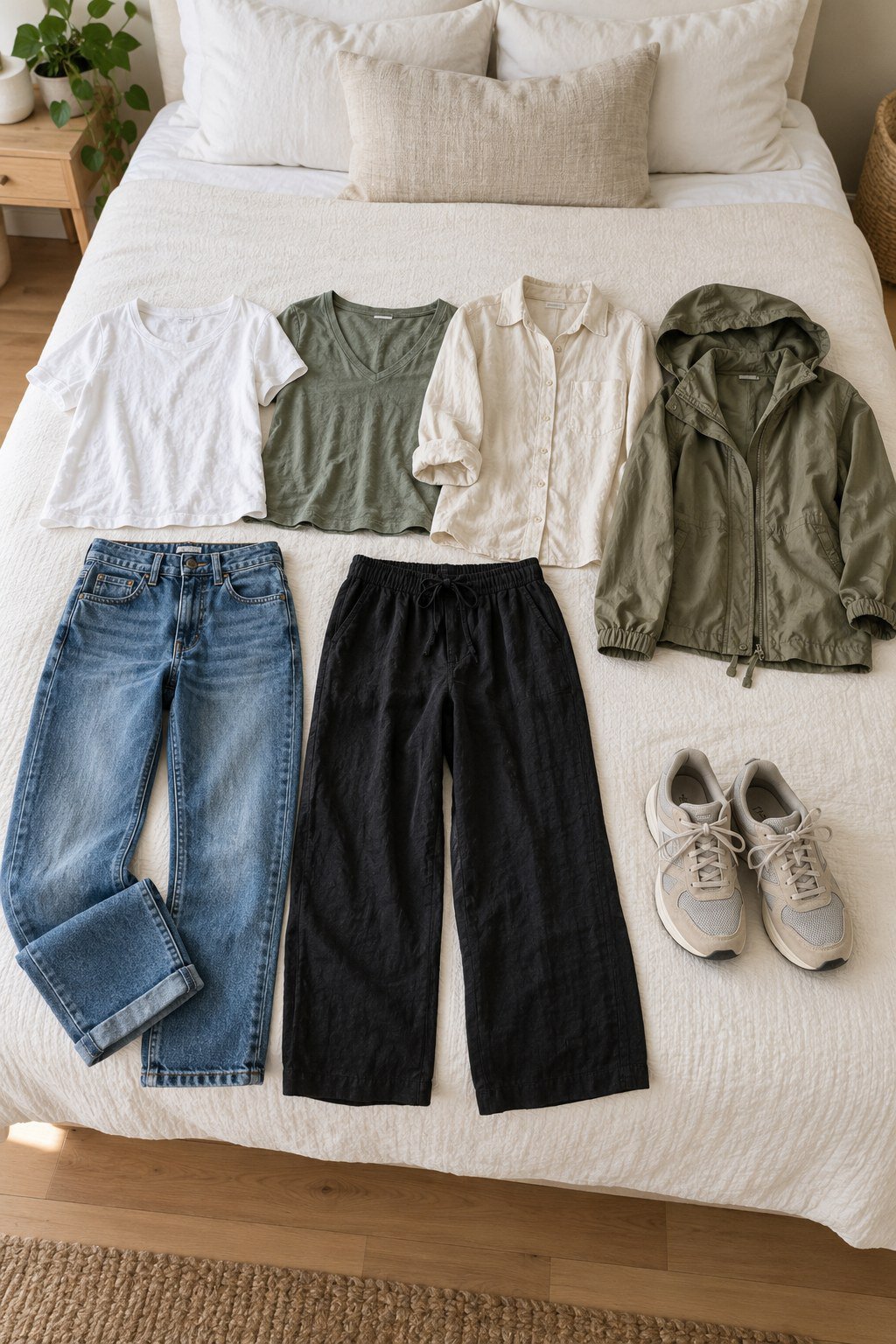
- Three to five tops that mix with the same bottoms. The exact count depends on laundry, heat, and how often you change. Choose a small color family so you can build outfits without packing a separate shoe or accessory for every top.
- Two versatile bottoms. One comfortable everyday option and one that can look a little more polished covers many city and family trips. For active itineraries, substitute a hike-ready bottom for the second option. The best pair is the one that fits your real plans, not a generic capsule list.
- One activity-specific outfit. Pack the clothing you truly need for a planned event: swimwear, a dinner outfit, workout clothes, or a modest layer for a religious site. Choose pieces that can do double duty when possible.
- Underwear and socks for your laundry plan. Count what you need until the first realistic wash, not just the number of calendar days. Quick-dry fabrics can reduce volume, but only help if you have a place and time to wash them.
- Sleepwear. One light sleep set is usually enough for a week if it can be reworn. If you sleep cold, choose a set that also works as a lounge layer rather than adding a bulky second outfit.
- A packable outer layer. A thin rain shell, cardigan, or warm layer can make a flight, air-conditioned train, or cool evening more comfortable. Pick for the forecast and destination, and wear the bulkiest layer on travel day if it is comfortable.
- Comfortable walking shoes. Wear your most versatile pair through the airport. A second pair is worth the space only when the activity or weather makes it necessary; pack it in a shoe bag and use the empty space inside for small soft items.
Health and personal care
- Daily prescription medicines. Keep them in original labeled packaging when practical and carry enough for travel disruptions, subject to destination rules. Check official destination guidance for controlled or restricted medicines. Do not put essential medication in a bag you may be required to gate-check.
- A simple medication and first-aid pouch. Include the personal basics you already use, such as bandages or pain relief, rather than assembling a pharmacy from scratch. Check expiration dates and rules for any liquid or sharp items.
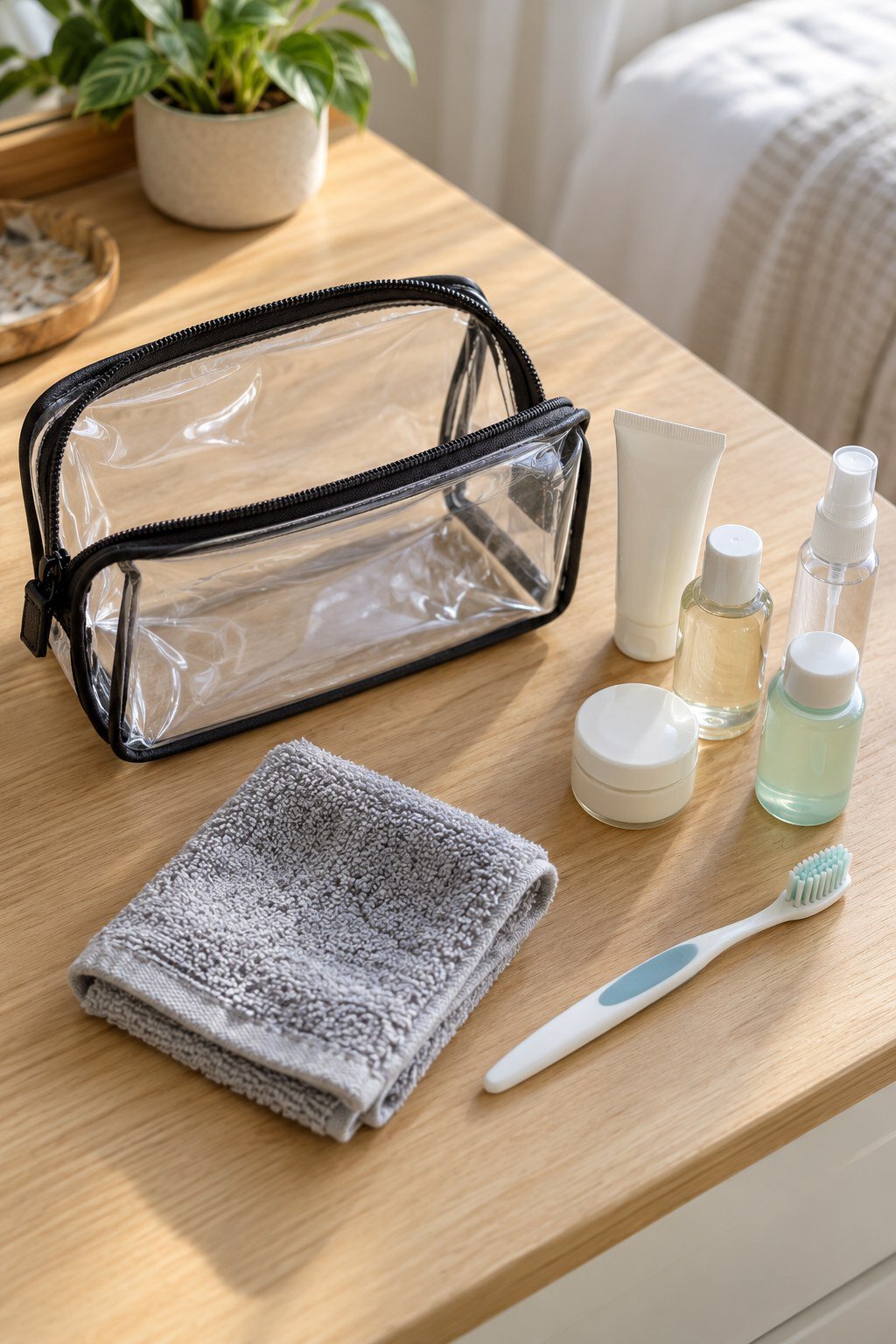
- Toiletries in leak-resistant containers. Use small containers and a sealed pouch for items that could leak. If flying through U.S. screening, liquids, gels, aerosols, creams, and pastes in carry-on must follow TSA’s 3-1-1 rule unless an exception applies: containers of 3.4 ounces (100 milliliters) or less in one quart-sized clear bag per passenger. Confirm current rules before departure. (https://www.tsa.gov/news/press/factsheets/tsa-travel-tips)
- Toothbrush and toothpaste. Keep a small set accessible for an overnight delay or an early arrival. Toothpaste is treated as a paste for U.S. carry-on screening and may need to fit the liquids bag.
- Hand sanitizer and tissues. A small sanitizer and a few tissues are useful on travel days. Check the size against airport rules and pack it where you can reach it without emptying the whole bag.
- Sunscreen or destination-specific skin care. Bring only the products that match the trip’s climate and your own needs. If the container is over the allowed liquid size, place it in checked baggage or buy it after arrival when appropriate.
Organization and charging
- One packing cube or soft organizer. A cube is useful when it separates categories or makes a change of clothes easy to find. It is not mandatory: a lightweight tote or reusable bag can do the same job without adding another rigid object.
- A small laundry bag. Keep worn clothes away from clean items. A reusable drawstring bag folds flat and can later hold damp swimwear only after it has been aired enough to avoid trapping moisture.
- Phone charger and the correct plug adapter. Check plug type and voltage guidance for your destination and device. A simple adapter changes the plug shape; it does not necessarily convert voltage. Pack the charger in the personal item if you will need it during the journey.
- Power bank that meets carrier rules. Keep portable batteries in cabin baggage and check the airline’s current watt-hour limits and packing rules. Do not assume a large battery is permitted just because it fits in a pouch.
- Charging cable for each essential device. Bring the cables you need, not every cable in the drawer. A short multi-device cable can reduce clutter if it is compatible with your devices.
- Earbuds or headphones. Choose the pair you know is comfortable for the length of your trip. If noise reduction matters to you, test the settings and battery at home rather than discovering a setup issue at the gate.
Comfort and small problem-solvers
- Refillable water bottle, empty at security if required. An empty bottle can be filled after screening where facilities allow. If you prefer a collapsible bottle, make sure its cap seals securely in the bag.
- A small travel snack. Choose a non-messy option you can eat comfortably during a delay. For international travel, check customs and agricultural restrictions before carrying fresh produce, meat, seeds, or other regulated foods across a border.
- One comfort item you truly use. This could be a sleep mask, a compact neck support, a book, or a small journal. Pick the item that solves a known problem for you. If it is bulky and you only imagine using it, leave it at home.
A packing order that keeps the useful things visible
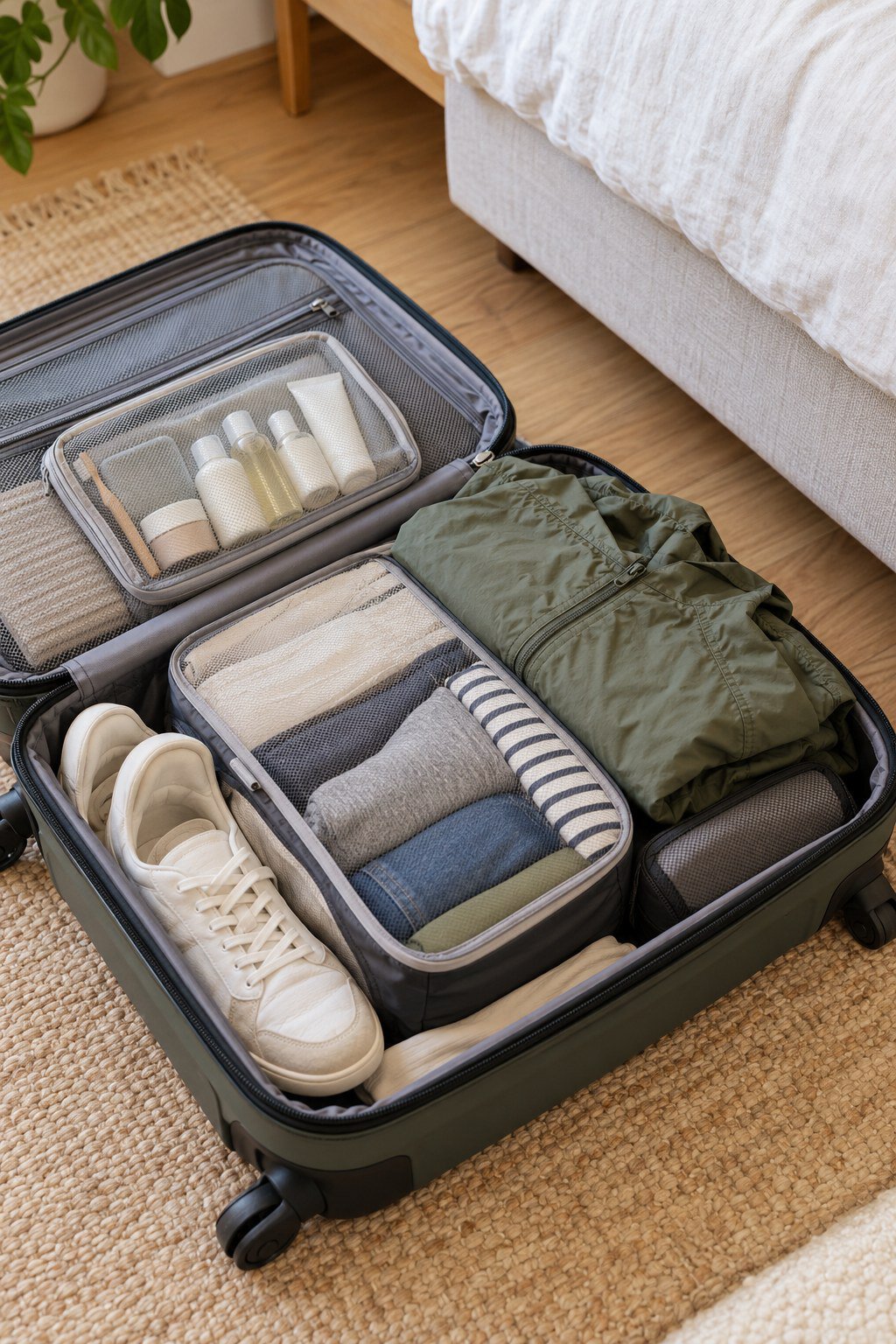
Start with the documents, medicines, electronics, and first change of clothes that must not be separated from you. Place these in the personal item or top layer. Roll or fold clothes according to what keeps them compact for you; there is no universal method that prevents wrinkles for every fabric. Put shoes along the sides, and use their interior space for clean socks or small accessories. Keep the liquids pouch near the opening if you expect to remove it at screening.
Before closing the bag, do a “first six hours” check: can you find your ID, charger, medicine, water bottle, one warm layer, and a change of clothes without unpacking everything? If yes, your arrival-day setup is working. If the bag is already tight, remove duplicate shoes, backup beauty products, and outfits that do not match another item before removing health or travel essentials.
Give each category a predictable place before the trip begins. Keep documents and a phone in their usual pocket, place the liquids pouch where it can be lifted out easily, and group small charging pieces in one pouch so they do not migrate to the bottom of the bag. A simple layout is easier to repack at a hotel than a tightly engineered arrangement that only works once.
Do one final fit check with the bag fully zipped and all exterior pockets filled. Put it on your shoulder or roll it the way you will through the airport, then confirm it still fits the carrier’s stated dimensions. If you need to force a zipper or hang items from the handle, the bag is likely overfilled. Remove one low-priority item and retest; leave enough room for a small purchase or a layer you take off during the journey.
Sharing a bag changes the backup plan. Keep each traveler’s medication, essential documents, and one change of clothes in the bag that person will keep close. If one carry-on is gate-checked or delayed, splitting these items prevents a single disruption from leaving the whole party without essentials.
What to skip in a carry-on checklist
Skip universal recommendations that assume everyone travels the same way. A neck pillow is helpful for some people and dead weight for others. Packing cubes are useful if they improve access, not because every traveler needs them. A week-long packing list should not insist on seven outfits when your itinerary includes laundry—or claim that three outfits are enough when you have formal events, wet-weather hikes, or a child who needs changes.
Also avoid placing restricted objects or oversized liquids in the bag without checking current airport and airline guidance. TSA’s item tool is useful for U.S. departures, but final screening decisions belong to security officers, and international rules can differ. Airline baggage size rules are a separate issue from security rules: passing one does not guarantee the other.
The quick printable-style checklist
- ID or passport, tickets, offline reservations
- Payment card plus a separate backup
- Phone, charger, cable, and compliant power bank
- Glasses or hearing support and daily medication
- Three to five mix-and-match tops, two bottoms, one activity outfit
- Underwear, socks, sleepwear, and one weather layer
- Comfortable walking shoes and only a necessary second pair
- Toiletries in suitable containers and a leak-resistant pouch
- Small first-aid basics, sanitizer, tissues, sunscreen as needed
- One organizer, laundry bag, refillable bottle, and snack
- One personal comfort item you know you will use
The best carry-on essentials list is the one you edit against your actual route, airline, and daily plan. Use the 27 items as a decision checklist, then pack only the pieces that solve a real need. That is how a seven-day trip fits into a manageable bag without turning every possible inconvenience into another thing to carry.
Sources
https://www.tsa.gov/news/press/factsheets/tsa-travel-tips
https://www.tsa.gov/sites/default/files/tsa-travel-checklist_05-24.pdf