
20 Airport Snacks That Work on Travel Days
The best airport snack is not always the most nutritious-looking one or the easiest thing to buy near the gate. It is the food that stays safe, travels well, fits your security and customs rules, and keeps you comfortable through the next stretch of the itinerary. A snack that melts, leaks, or needs refrigeration can create more hassle than it solves.
Use these 20 airport snacks as a flexible menu, then match them to your flight length, allergies, and airport rules. Pack a small amount you will actually eat, keep food separate from electronics, and check current restrictions before carrying it through security or across a border. Rules vary by country, airport, and destination.
Choose snacks by the travel problem
Think about when you will eat. A short connection calls for something easy to open and finish without a mess. A delayed flight may require shelf-stable food that can wait in your bag. A family trip can benefit from familiar, portioned snacks that help prevent a hunger crash while you wait. If you have a medical or dietary need, pack a dependable option rather than counting on a particular airport shop being open.
- Quick gate snack: dry, individually portioned foods.
- Long flight: a mix of something filling and something fresh, if available.
- Delay backup: shelf-stable food that tolerates a warm bag.
- International route: check customs rules and plan to finish or discard restricted items before arrival.
20 airport snacks that are easy to manage
1. Whole fruit with a sturdy peel
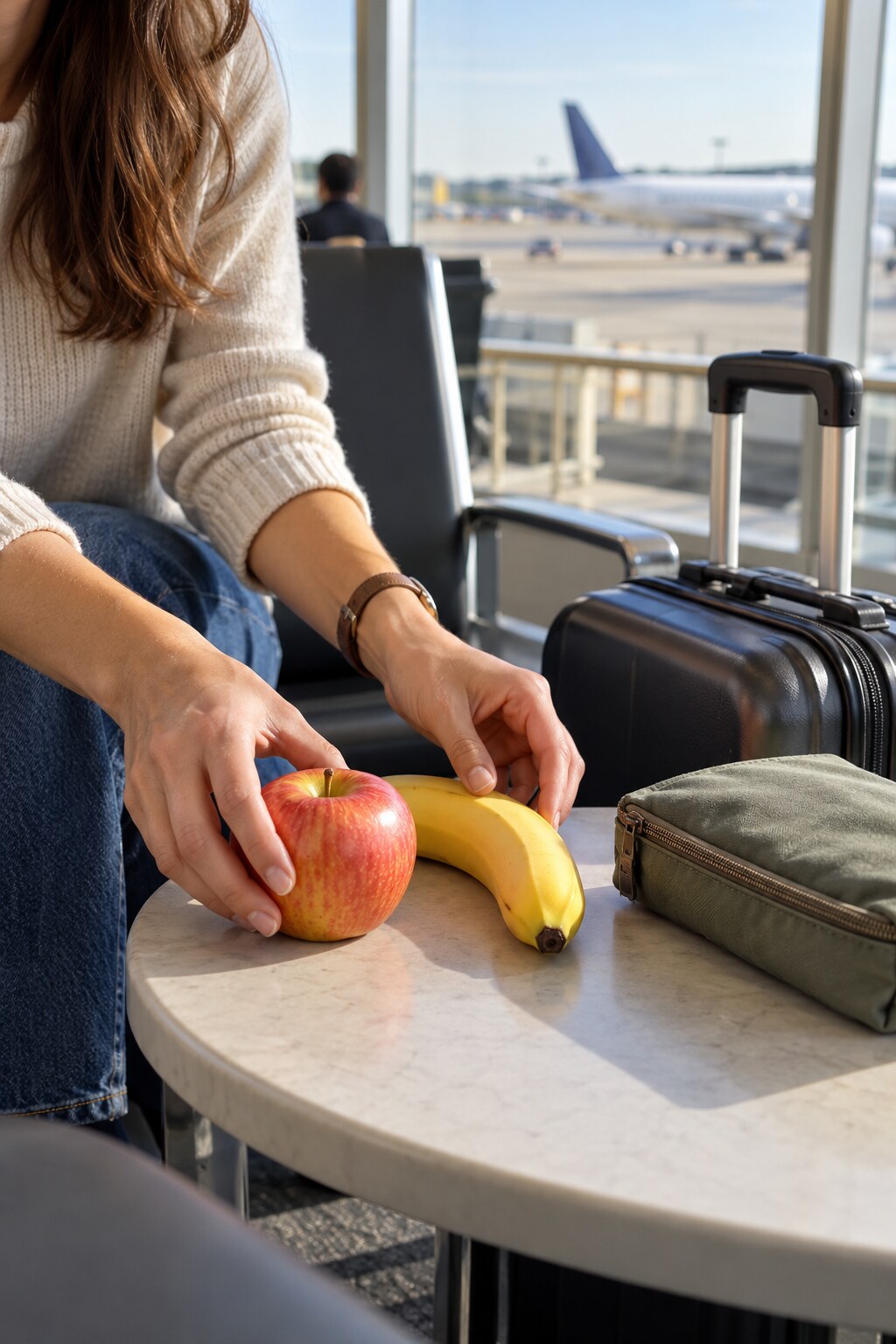
Apples, oranges, and firm pears can be convenient because they do not need a container and are less likely to crush than berries. Wash fruit before packing and carry a small tissue or napkin. The peel keeps the edible portion protected until you are ready to eat. Check destination customs rules before carrying fresh produce internationally, and plan to finish or declare it where required. Fruit is a good short-connection choice when you want something fresh without opening a sticky package.
2. Unsalted nuts or trail mix
A small portion of nuts or trail mix can be filling and compact. Use a leak-resistant pouch and keep it within reach, but be mindful that other passengers may have severe allergies. Avoid opening a large bag in a confined cabin if someone nearby raises a concern. Check ingredients carefully if you have an allergy, and do not rely on a “may contain” label as a guarantee. Trail mix with chocolate can soften in a warm bag, so choose a blend that does not melt easily.
3. Roasted chickpeas
Roasted chickpeas bring crunch and protein in a dry, portable form. Choose a lightly seasoned variety if you will be eating in a shared space, since strong odors and crumbs can bother seatmates. Pack a small amount in a resealable pouch and avoid leaving crumbs in the seat pocket. If you buy them at the airport, check the package seal before stowing them with clothes or electronics. They work well for a delay because they can sit in a carry-on without refrigeration.
4. Oat or granola bar with a short ingredient list
A bar is a useful backup when you need one-handed food during boarding. Pick a familiar brand and check for ingredients that do not suit your diet. Some bars crumble, stick to wrappers, or become hard in cold conditions, so test a favorite before relying on it. Keep one or two portions rather than a full box. If a bar contains nut butter or another spread, remember that some screening rules treat gels and spreads differently from solid foods.
5. Crackers with a sealed cheese snack
Crackers and a shelf-stable cheese snack make a compact savory option. Choose a sealed product that does not require refrigeration until opened, and follow its packaging instructions. Keep it in a separate pouch so crumbs stay out of your bag. If the cheese needs to stay cold, use an insulated sleeve and consume it within safe handling guidance. Dairy products may be restricted when entering some countries, so check customs rules for your destination before packing them across borders.
6. Pretzels or plain breadsticks
Pretzels are inexpensive, sturdy, and easy to share with a travel companion. They can be dry, so pair them with a drink after security rather than packing a liquid dip. Choose a small packet to avoid carrying half-open food through the rest of the trip. For a child, a few pretzels in a reusable snack cup can make the wait easier without a crumb-heavy meal. If salt is a concern for you, compare labels and pick a lower-sodium option.
7. Dried fruit
Dried mango, apricots, raisins, or dates pack more neatly than many fresh alternatives. Portion them because dried fruit is concentrated and can be sticky when eaten quickly. Choose plain varieties without a sugar coating if you prefer less sweetness. Keep them away from passports and fabric in a pouch that closes securely. Some destinations restrict fruit and plant products even when dried; verify the country’s official guidance rather than assuming a sealed snack is exempt.
8. Plain popcorn
Popcorn is light and easy to portion, making it a useful snack during a movie or a long wait. Pick a sealed bag that fits in your personal item, and avoid heavily buttered versions if you want to reduce grease on your hands. Popcorn is not very filling on its own, so combine it with a protein-rich option if you need a longer-lasting snack. Keep the bag closed between handfuls to limit crumbs and prevent it from spilling in a crowded seat.
9. Plain rice cakes or crispbread
Rice cakes and crispbread are dry, light, and often easy to find in travel shops. They can break, so protect them in a firm container or keep the original package flat. They pair well with a solid cheese or a small packet of a permitted spread, but check the security rules before packing anything creamy. Plain crispbread is especially useful when you want a neutral snack that does not have a strong smell. Keep one portion accessible instead of opening a large box at the gate.
10. Shelf-stable applesauce pouch
An applesauce pouch can suit young children or anyone who prefers a soft snack. Because it is a puree, it may be treated as a liquid or gel by airport screening rules. Check the allowed container size and pack it where you can remove it if needed. A sealed pouch is convenient but can leak when squeezed under luggage, so store it in a separate plastic or washable pouch. If you are unsure about the rule, buy it after security.
11. A small banana bought after security
A banana can be gentle and easy to eat, but it bruises and is best purchased close to the time you plan to eat it. Buy one after security if you want to avoid carrying fruit through a long line or across a border. Keep the peel in a napkin or bag until you find a bin. It works well for an early departure when you want a simple bite, but it may not hold up for an entire travel day inside a tightly packed backpack.
12. A plain bagel or roll
A bagel or roll is more substantial than a small snack and can serve as a backup meal when airport food choices are limited. Choose a filling you can eat without a mess, or carry the bread plain and buy an appropriate topping after security. Keep it in a paper sleeve or reusable bag to prevent it from flattening. If you have dietary needs, verify ingredients and cross-contact practices with the seller instead of assuming that a simple-looking item is suitable.
13. A small portion of hard-boiled eggs, when safely chilled
Eggs can be filling, but they require careful temperature control and may have a noticeable odor. If you pack them, keep them chilled in a suitable insulated container and follow food-safety time limits. They are usually better for a short journey than a day of connections. A sealed airport purchase after security may be easier to handle. Consider seatmates and shared-space comfort before opening them, and do not keep perishable food in a warm carry-on for hours.
14. A small yogurt cup bought airside
Yogurt can provide a cool, filling snack when you buy it after the checkpoint and eat it soon. It is less practical to carry through security because it may be subject to liquid restrictions. Use a spoon and napkin, and keep the lid on until you are seated. If you have a connection, check the time and temperature before saving it for later. A yogurt cup works best as a fresh purchase near the gate, not as an item forgotten in a backpack.
15. A small hummus cup with vegetables
Hummus and vegetable sticks can make a more satisfying snack than chips, but the dip may count as a spread for screening. Buy it after security or check the current rule for the airport. Keep the container upright and eat it promptly, especially if it requires refrigeration. Carrot or cucumber pieces are easier to manage than fragile greens. If you need an allergy-aware option, check for sesame and other ingredients and ask about cross-contact rather than relying only on the product name.
16. A packaged sandwich for a long travel day
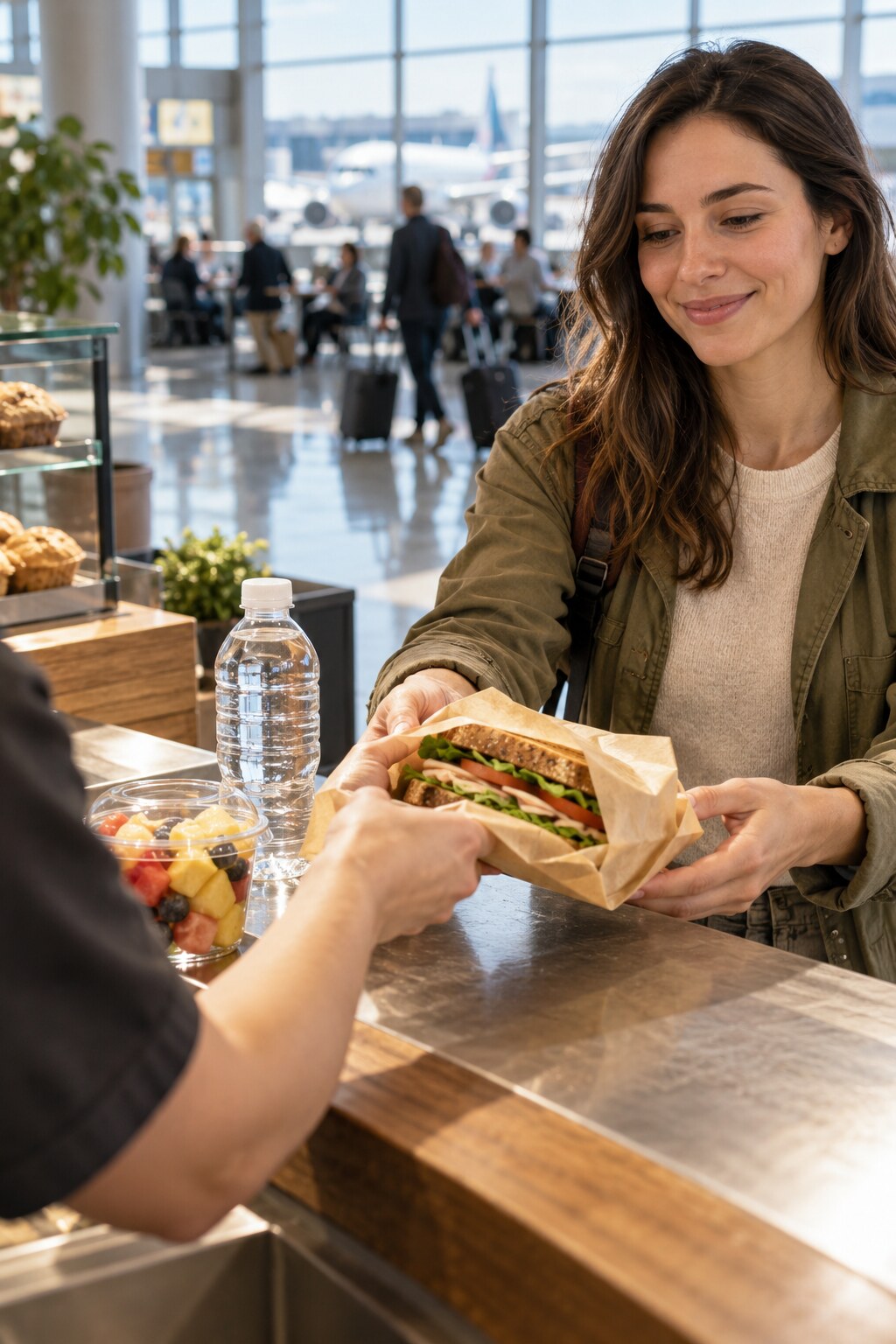
A sandwich can be a practical mini-meal when you choose a filling that remains safe for the journey and does not leak. Buy it after security if you want to avoid carrying it through screening or if the route crosses a border. Check the use-by guidance and keep it cool when needed. Eat it before boarding if you will not have a safe way to store it. For an early flight, check whether the airport shop opens before your departure; hours can vary.
17. A simple cheese stick from a chilled display
A cheese stick can add protein to crackers or fruit. Choose one from a refrigerated display after security and eat it within safe handling guidance. Keep the wrapper until you find a bin, and avoid carrying it around for hours without a cold pack. For international journeys, check dairy import rules. If you are traveling with children, a familiar individually wrapped cheese snack can be easier than an open container, but it still needs appropriate temperature care.
18. A low-mess nut-butter packet, if permitted
Single-serve nut butter can make crackers or a banana more filling, but spreads are often treated differently from solid snacks at security. Check the current airport limit and pack it in the liquids bag if required, or buy it after the checkpoint. Choose a packet that is easy to open without scissors and wipe your hands afterward. Because of serious nut allergies, avoid opening it close to other travelers if someone nearby asks you not to.
19. A familiar allergy-safe snack from home
If you manage a food allergy, bring a trusted, clearly labeled snack that you already know is suitable. Keep the packaging so you can check ingredients and show it if needed. Do not rely on a generic “allergy-friendly” claim without reading the label. Pack enough for a delay, but check rules on bringing food through security and customs. Carry prescribed emergency medication as directed and keep it accessible; food planning does not replace your personal medical plan.
20. A refillable water bottle paired with a snack
An empty refillable bottle can be a useful companion to dry snacks, subject to airport screening rules. Fill it after security where fountains or stations are available. It reduces the need to buy repeated small drinks, but it does not replace food or any medical hydration plan. Keep the bottle sealed in your bag while walking and refill before a long boarding queue. If you travel with a child, use a spill-resistant lid and check that the bottle fits the seat pocket or bag you plan to use.
Build a small snack kit without overpacking
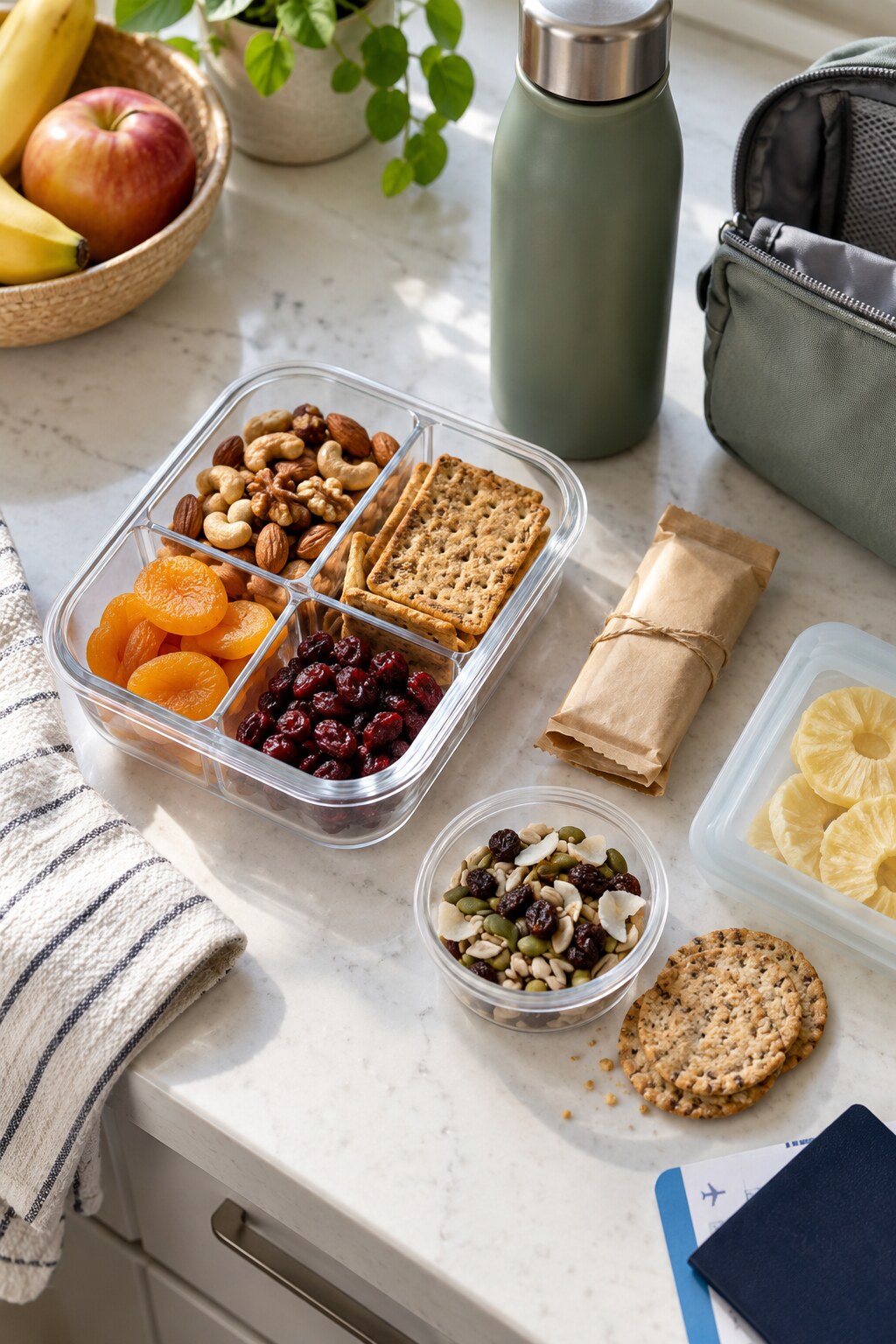
For a day of travel, pack one quick snack, one more filling option, and one backup that will survive a delay. Add napkins and a small waste pouch if you expect limited bins. Keep food in a separate section from medication, documents, and electronics. If someone in your group has allergies, label whose food is whose and avoid swapping packages without checking ingredients. A few dependable items are easier to manage than a bag full of snacks you do not end up eating.
What to leave out
- Open liquids, dips, and spreads that may be stopped at screening.
- Perishable food that will sit warm for hours without safe temperature control.
- Strong-smelling meals that are uncomfortable in a close cabin.
- Messy sauces or snacks that can leak onto documents and devices.
- Fresh produce or animal products without checking destination customs rules.
- Unfamiliar foods that could trigger a reaction or upset your stomach.
Use this quick packing sequence
- Check the itinerary: flight length, connection time, and whether shops are open.
- Choose a familiar, shelf-stable snack for delays.
- Add a fresh item only if you can eat it soon and store it safely.
- Review security rules for spreads, yogurt, purees, and drinks.
- Check customs rules for food that crosses an international border.
- Pack a napkin, utensils if needed, and a small bag for waste.
Make the snack plan fit the trip
Good airport snacks make travel easier because they are timed and chosen with care. A dry bar or nuts can bridge a short gap; a sandwich bought after security may cover a meal; a refrigerated food needs a safe plan. Check the rules for your actual route, keep essential food and medication accessible, and bring only what you can finish or safely store. That small bit of planning is more useful than packing an oversized snack bag for every possible delay.