
13 Local-Food Souvenirs That Travel Well in a Carry-On
The best food souvenir is not necessarily the most famous one. It is the one that survives the journey, fits the rules for your route, and still tastes good when you get home. A jar of sauce may look perfect on a shelf, but it can be awkward in a carry-on. A sealed packet of spice or a box of sweets may be easier to pack and easier to share.
Use this list to choose 13 local-food gifts that are often more travel-friendly than fresh or fragile purchases. “Carry-on friendly” is not a guarantee of admission: security rules, airline policies, customs, agriculture restrictions, and destination laws vary. Check the current rules for your airports and route before buying, especially for liquids, gels, meat, dairy, fruit, seeds, and international travel. TSA’s current item guidance is here: https://www.tsa.gov/travel/security-screening/whatcanibring/all-list?pubDate=20250608
How to pick a souvenir that makes it home
Think in four tests: is it shelf-stable, sealed, compact, and permitted? Read the package label and check whether it needs refrigeration. Ask the seller how long the item keeps and whether it is safe at room temperature. Avoid anything that can leak, melt easily, crumble in a crowded bag, or smell strongly when opened. Keep receipts and original packaging when possible. If you are crossing a border, declare food when required and consult the destination country’s official customs or agriculture page; never assume a product is allowed because a friend carried it before.
13 foods worth bringing home
1. A regional spice blend
Dry spice blends are light, compact, and easy to use after a trip. Look for a sealed pouch or tin with an ingredient list and a clear name, rather than a loose mix with no label. Ask how locals use it—on vegetables, beans, eggs, or a particular regional dish—and write the cooking suggestion on a note for later. Keep it in a separate bag so fragrant spices do not flavor your clothes. Whole spices often keep their aroma longer than finely ground blends, but follow the package’s storage directions.
2. Tea from a local shop or garden
Tea leaves and herbal blends are easy to pack, and a small tin makes a thoughtful gift. Choose a shop that labels the ingredients and origin clearly, especially if the blend includes flowers or herbs. Ask how much to use per cup and whether the tea needs to be stored away from light. If the product contains seeds, plant material, or ingredients subject to agricultural rules, check your destination’s restrictions before traveling internationally. A tasting-size packet is often a better purchase than a large bag you may not finish.
3. Roasted coffee beans
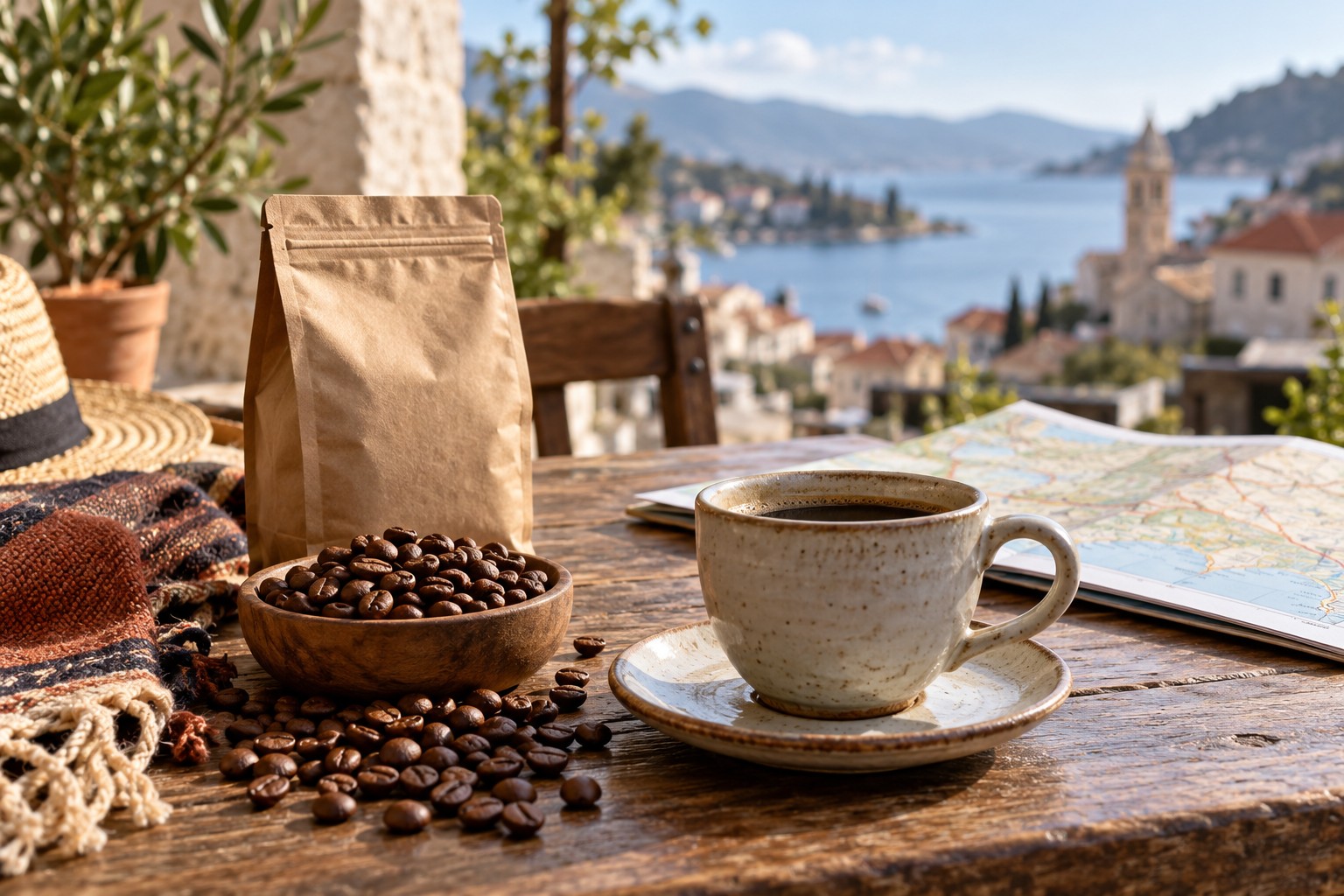
A bag of locally roasted beans can extend a café stop into a small morning ritual at home. Buy whole beans in a sealed bag with a roast date and origin details, if available. Ask the roaster what brewing method suits the roast, and choose a bag size you can use while it is fresh. Keep it away from hot electronics or strong-smelling items. Coffee is usually easier to pack than a drink or syrup, but packaging and security screening rules may differ by destination; verify them before departure.
4. Hard candy or a local sweet
Individually wrapped hard candy travels well, resists crushing, and is easy to share. Choose a flavor connected to the region or a small maker you visited. Avoid chocolate or soft caramels if your trip involves heat, a long connection, or a bag left in a car. Check the ingredients if you are giving the sweets to someone with allergies, and retain the label rather than repacking them into an unmarked tin. A small assortment is often more enjoyable than a large box of a flavor you have not tried.
5. A sealed bag of nuts or roasted seeds
Packaged nuts and seeds can make a useful snack for the flight home, but ingredient and import rules matter. Choose factory-sealed products with a label, and avoid buying raw agricultural items if your destination restricts them. If anyone in your household has a nut allergy, consider another gift. Keep the packet accessible so you can check the label before eating. For a local angle, look for a regional seasoning or small producer rather than a generic snack brand.
6. Dry pasta, rice, or a regional grain
Dry staples are sturdy and useful, especially when sold in a distinctive local shape or variety. Choose a small, well-sealed package and check its weight before adding it to your carry-on. Ask a shopkeeper for a simple preparation idea or a sauce pairing, then include that recipe on a note. Grain products may be subject to inspection or restrictions on some routes, so consult the official destination rules rather than relying on general travel advice. Avoid glass jars of sauce unless you have checked liquid limits and can protect them from breakage.
7. Packaged baking mix
A local pancake, biscuit, cornbread, or cake mix gives you a way to recreate a breakfast or dessert without carrying fresh food. Look for an intact package with ingredients and directions. Confirm whether it requires refrigerated additions and whether you can find them at home. The best mix has a story: a regional grain, a beloved bakery’s method, or a recipe the maker is willing to share. Flatten the box only if the inner bag is sealed and still labeled clearly.
8. Dried fruit
Dried fruit is compact and often more resilient than fresh produce, but it still needs to meet agricultural and customs rules. Buy a sealed retail package, read the country-of-origin and ingredient label, and keep it unopened until you know it is allowed at your destination. Avoid bringing loose fruit or produce across an international border without checking the rules. A small bag from a local orchard or farm shop can make a nice snack, but it is not worth a customs problem.
9. Shelf-stable chocolate or cocoa
Chocolate bars and cocoa powder can be excellent souvenirs if the temperature is mild and the packaging protects them. Choose solid bars over filled bonbons if you expect heat or rough handling. Keep chocolate near the center of your bag, away from direct sunlight, chargers, and warm surfaces. If you are traveling in summer, ask the shop whether it offers insulated packaging and consider buying close to departure. A bar with a local ingredient or maker is a more personal souvenir than an oversized gift assortment.
10. Small-batch salt
Flavored or smoked salt is light, shelf-stable, and easy to use in tiny amounts. Choose a secure container that will not open in your bag, and check that the label names any added herbs, allergens, or flavorings. Ask the maker for a pairing suggestion, such as vegetables, eggs, or roasted fish. A small jar is usually enough; larger containers are heavy and more likely to crack. Keep it in a zip bag as a second layer of protection in case the lid loosens.
11. A dry soup or seasoning packet
Dry soup mixes, rubs, and seasoning packets are practical when you want to recreate a flavor without carrying a prepared dish. Read the ingredient list and directions, and check whether the packet includes any restricted animal products. Choose a product with a clear maker and region. The best version includes a simple recipe or serving idea. Store it away from moisture and crushable items, and do not open it in transit where powders could spill through your bag.
12. A small jar only when rules and packing make sense
Jam, honey, mustard, or sauce can be a memorable local purchase, but jars are the least predictable item on this list. In the United States, liquids, gels, and spreadable foods in carry-on bags are generally subject to the 3.4-ounce container limit; larger containers typically belong in checked baggage. Verify the current TSA guidance and your airline’s rules. International routes may impose additional restrictions. If you buy a jar, choose a small sealed container, protect it in a leakproof bag, and only pack it in carry-on if it complies with screening limits.
13. A recipe card or food story with a non-perishable item
Sometimes the best food souvenir is a recipe card, spice note, or small cookbook paired with one permitted ingredient. Ask the maker how the product connects to the area and write down a preparation tip while you are there. This gives the gift more meaning without requiring fragile or perishable food. A postcard from the shop or a photo of the menu can help you remember the meal. Keep the source and date with your notes so you can find the business again or confirm whether its product is sold online.
Carry-on packing checklist
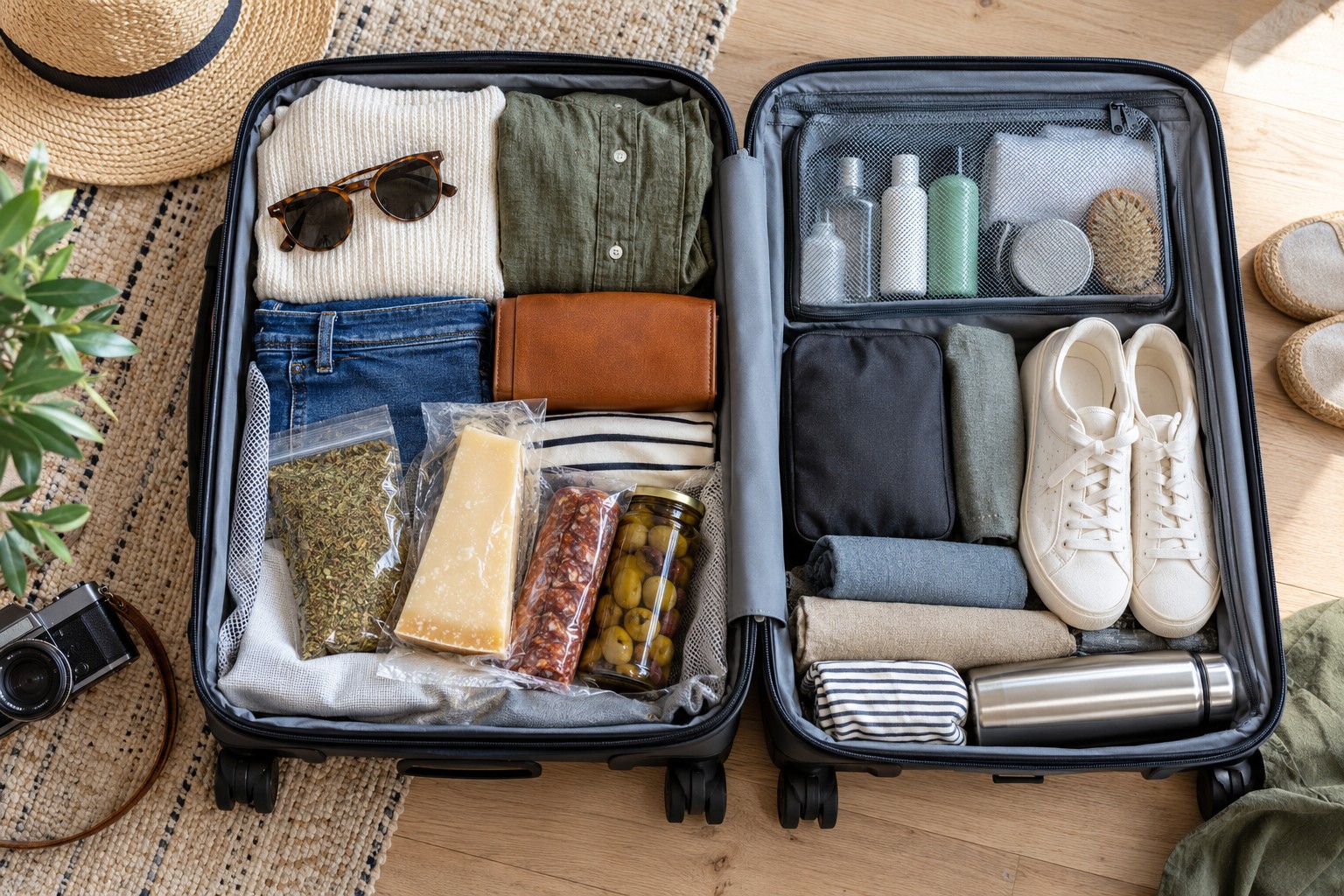
- Choose sealed, shelf-stable items with ingredient labels.
- Check security rules for liquids, gels, spreads, and powders on your exact route.
- Review customs and agriculture restrictions, especially for international travel.
- Protect jars with a leakproof bag and soft clothing, if you are carrying a permitted size.
- Keep receipts and original packaging until you arrive.
- Do not buy refrigerated goods unless you have a reliable way to keep them cold.
- Leave enough room and weight allowance for the souvenir before shopping.
Where to buy and when to shop
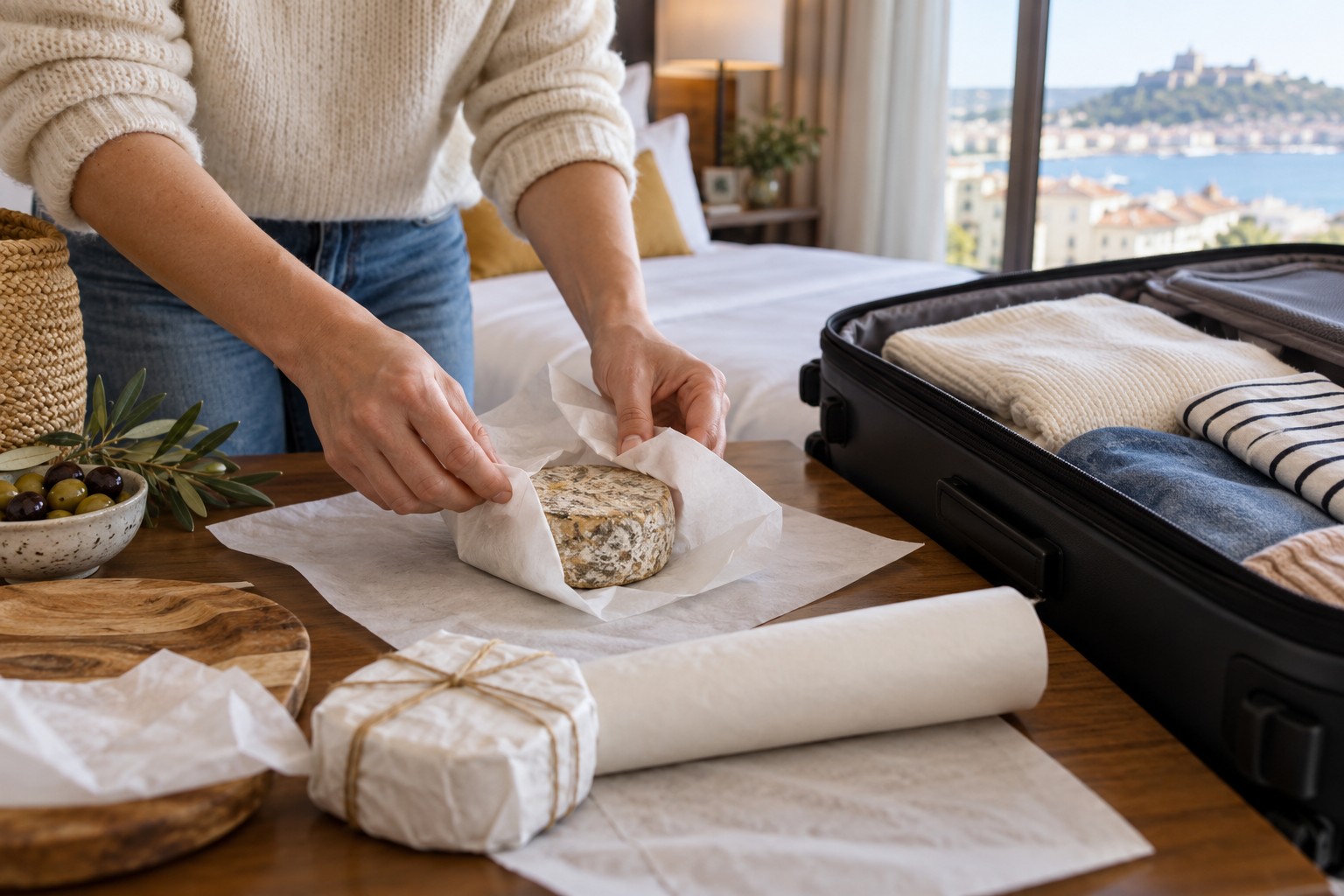
Buy packaged goods from a producer, specialty grocer, market vendor, or shop that can answer questions about ingredients and storage. Shopping near the end of a trip reduces the time you carry food, but the most interesting makers may not be close to your departure point. If the product is a priority, locate the shop early and save it for the last day. Ask about shipping only if the price and delivery conditions make sense; shipping can be simpler for fragile or bulky items, though costs and delivery times vary.
A good edible souvenir is small enough to travel, clear enough to identify, and tied to a taste you actually enjoyed. Check the rules first, buy only what you can carry safely, and leave room for the pleasure of opening it later. The best gift is not the most elaborate one—it is the flavor that brings a particular place back to mind.
Check travel rules before you buy
Before purchasing an edible souvenir, consider where the trip ends and how you will get there. Fresh produce, meat, dairy, and homemade foods may face restrictions at international borders or on particular routes. Liquids, spreads, sauces, and refrigerated items can also be difficult in carry-on baggage. Review the current rules for the airport and destination country, and ask the seller whether the package is sealed and labeled. A product that travels well by car may not be practical for a flight.
For carry-on travel, sturdy dry goods are usually easier to manage than glass jars or anything that can leak. Choose a compact package with ingredients visible, keep fragile items in a padded section of your bag, and leave room for security inspection. If a food needs refrigeration, do not assume an insulated tote will keep it safe for an entire travel day. Buy it close to home or choose a shelf-stable alternative. When the item matters as a gift, ask for a receipt and a protective box at the shop.
Make the souvenir personal and useful
A good food souvenir connects to a specific moment: a tea you tasted with the grower, a spice blend recommended for a family recipe, or coffee from a neighborhood roaster you visited. Write down the producer’s name and a simple serving suggestion before you forget it. Ask how the product should be stored and how long it keeps after opening. Buy one or two items you will use rather than a collection that becomes clutter. If you are giving the item to someone else, check ingredient and allergen information before wrapping it.
Think about the recipient’s kitchen, too. A heavy jar may be awkward for someone with limited storage, while a small sealed packet can be easier to share. Choose packaging that protects the food without adding unnecessary bulk, and keep the label attached. The most thoughtful souvenir is often modest: it carries a taste and a story without requiring special equipment or complicated preparation.
Sources
https://www.tsa.gov/travel/security-screening/whatcanibring/all-list?pubDate=20250608
https://www.tsa.gov/news/press/factsheets/tsa-travel-tips
https://www.fsis.usda.gov/food-safety/safe-food-handling-and-preparation/food-safety-basics/food-safety-while-hiking-camping