
11 Budget U.S. Getaways for Travelers Who Don’t Camp
You can want a nature-filled weekend without sleeping in a tent. A small-town inn, motel, cabin with indoor plumbing, or budget hotel near a trail can keep the trip comfortable without resort pricing. The trick is choosing a destination where the lodging itself does not force you into long drives, expensive meals, or a list of paid activities just to fill the day.
These eleven U.S. getaway ideas are built for travelers who prefer a real bed and a private bathroom. They are starting points, not price guarantees: lodging costs swing by season, event weekends, and how early you book. For each place, compare a simple room near the activities with a cheaper room farther out, then include parking, meals, and local transport. That is how you find an affordable trip that still feels like a getaway.
How to keep a no-camping getaway affordable
Choose the experience first—coast, mountain views, historic streets, or a lake—then identify a compact area where you can stay and spend most of the weekend. Check lodging on ordinary weekdays and shoulder-season dates if your schedule allows, but verify local weather and seasonal closures. Look for a motel, guesthouse, or modest inn with a kitchenette or breakfast, and read the cancellation terms before paying.
Plan one paid anchor and two lower-cost activities each day. Public beaches, scenic drives, town walks, visitor centers, and parks can carry a weekend, but confirm access, parking, and hours directly. If the destination requires a car, stay near the route you want to explore and avoid paying for an all-day resort location you will barely use.
11 budget U.S. getaways for travelers who do not camp
1. San Diego, California
A budget motel or small hotel near a trolley line can create a no-camping base for beaches, Balboa Park, and neighborhood food. Choose one coastal area and one city day instead of driving between distant attractions repeatedly. Beach access can be free, but parking fills and paid lots add up. The trade-off is lodging: a room near the water may cost more, so compare transit access and the cost of daily rides before booking.
2. Asheville, North Carolina
Stay in a modest inn or motel on the edge of downtown, then combine a walkable city day with a carefully planned Blue Ridge Parkway drive. The scenery is the draw, but road and trail access can change with weather or maintenance; check official park and road notices. A room with breakfast or a kitchenette can help offset restaurant costs. Avoid assuming every overlook is open or that the mountain drive takes only the time shown on a map.
3. Door County, Wisconsin
A simple motel or small-town guesthouse can anchor a weekend of shoreline views, local shops, and short nature walks. Stay near the cluster of towns and parks you want to visit rather than trying to see the entire peninsula. Summer and fall weekends can be popular, so compare midweek dates if you can. The area is easier with a car, and fuel plus parking should be part of the budget.
4. Cape May, New Jersey
A guesthouse or small inn away from the most expensive beachfront blocks can keep this historic coastal town within reach. Build a day around the beach, Victorian streets, and a simple picnic or casual meal. Check beach tag rules, seasonal hours, and parking policies for your dates. Staying a short walk or bike ride from the center may cost less while avoiding a car for every outing.
5. Savannah, Georgia
A budget hotel outside the historic core but near transit or a reliable ride route can lower lodging costs. Once downtown, shaded squares and historic streets make a pleasant low-cost walking itinerary. Choose one paid tour or museum rather than stacking several. Summer heat and humidity can make long walks harder, so plan indoor breaks and verify the distance from your room to the places you want to see.
6. Santa Fe, New Mexico
A small motel or inn near a bus route can support a relaxed art-and-history weekend. Browse galleries and public plazas, then choose one paid museum or cultural site that matters most to you. Elevation and dry air may affect visitors, so pace the first day and carry water. Compare lodging near the center with a lower rate farther away, adding transport rather than treating a bargain room as automatically cheaper.
7. Portland, Maine
A modest hotel or guesthouse outside the waterfront core can work for a food-and-neighborhood weekend. Choose a few walkable districts and one harbor or lighthouse excursion rather than driving all over the coast. Seasonal lodging demand can push weekend rates up, so check shoulder-season availability and opening days. If you plan to visit nearby beaches, include the transport cost and confirm whether local transit reaches your chosen stop.
8. Pigeon Forge and Gatlinburg, Tennessee
A budget motel or cabin with plumbing can provide a comfortable base near the Smokies without camping. Compare the distance to park entrances, traffic patterns, parking, and the cost of paid attractions along the main strip. The national park’s roads and facilities can be affected by weather or closures, so check official alerts. Choose a simple park-focused day and one paid evening activity rather than assuming every attraction belongs in the trip.
9. Lake Tahoe, California and Nevada
Stay in a basic motel or small hotel a short drive from the lakeshore, then choose one beach or scenic area for the day. Lodging can be expensive near the water, and parking or access rules vary by location and season. Check current conditions, reservations, and fire restrictions before setting out. A kitchenette can reduce meal costs, but do not book so far away that every visit requires a long drive.
10. St. Augustine, Florida
A small inn or motel beyond the busiest historic blocks can create a lower-cost base for a walkable history weekend. Spend time in the public district, choose one paid attraction, and use the beach as a separate half-day if the weather suits. Verify parking and shuttle costs before driving into the center. Summer storms and heat can change the plan, so keep an indoor alternative near your lodging.
11. Leavenworth, Washington
A modest motel or guesthouse outside the postcard core can work for a village-and-mountain weekend without a tent. Walk the town, then choose a nearby nature stop that matches your mobility and weather conditions. Popular festival dates can make lodging costly and crowded; check the calendar before deciding. If you travel by car, include winter road readiness or mountain pass conditions in the plan rather than relying on the town’s mild-looking forecast.
Pick lodging that reduces the rest of the bill
The lowest nightly rate is not always the lowest trip total. Compare included breakfast, kitchen access, parking, distance to the main district, and cancellation terms. A slightly higher room can save money if it lets you walk to dinner or avoid a daily resort fee. Conversely, a basic room farther out may be the better choice if you have a car and plan to spend the day on a scenic route.
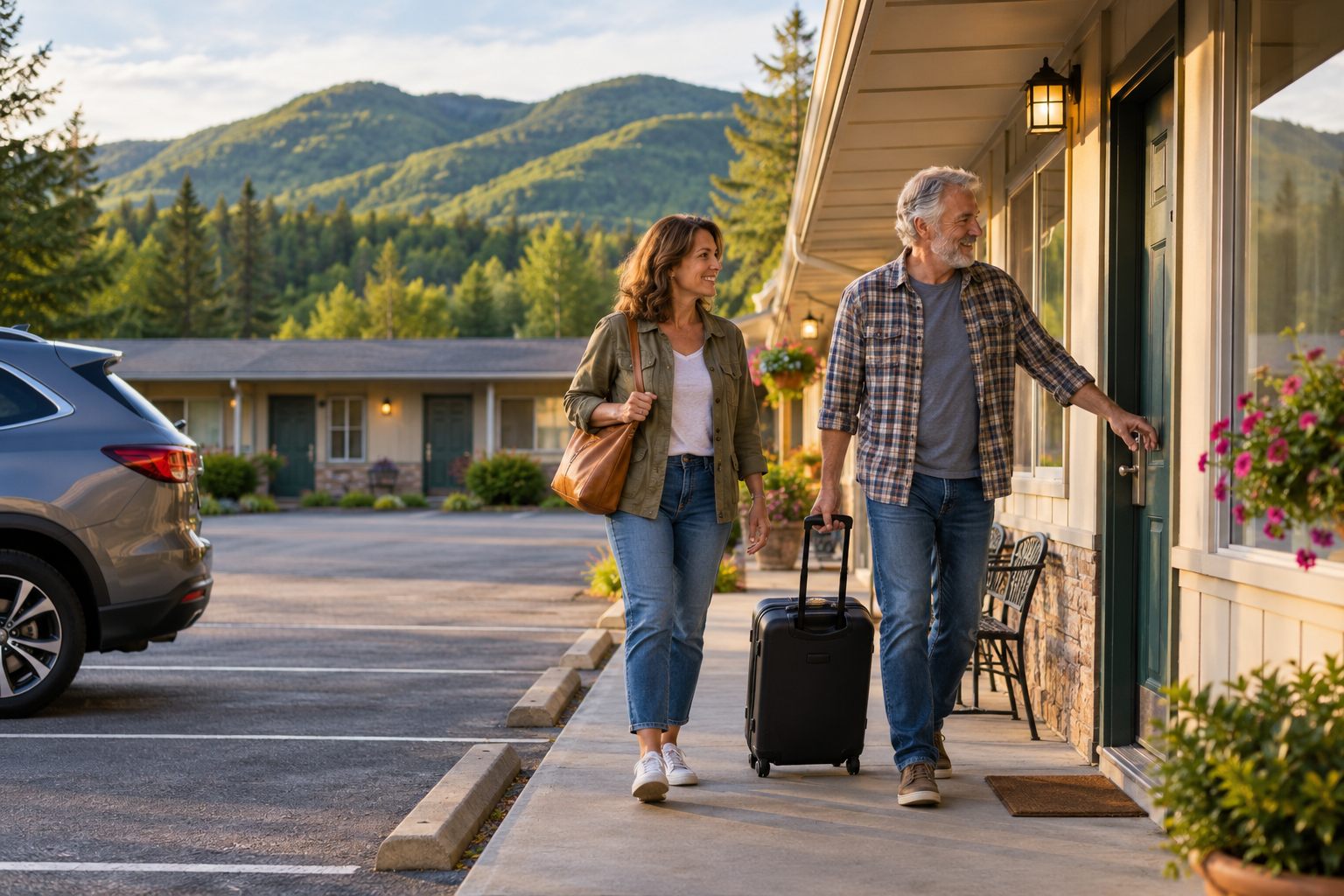
Read recent reviews for practical details: road noise, stairs, check-in hours, heating or cooling, and whether the advertised kitchenette is actually usable. Ask the property about parking size, late arrival, and any extra fees. A comfortable, clean room with a straightforward check-in is a better budget win than a photogenic stay that creates a new expense every day.
A sample low-cost weekend rhythm
Arrive Friday evening and keep dinner close to the room. On Saturday, have breakfast at the property or a grocery stop, visit one free outdoor or historic site, and choose one paid highlight. Return for a rest before dinner rather than paying for a second long excursion. On Sunday, take a short walk or scenic stop, then leave with enough time for the drive or transfer home. The structure protects one memorable activity while leaving room for low-cost discoveries.
When a no-camping getaway needs a car
Some of these places are much easier with a vehicle, while others can work with transit and walking. If you rent, compare all-in costs and hotel parking. If you drive your own car, estimate fuel, tolls, and a realistic rest stop. Choose a destination where you can cluster activities; a trip that depends on several long drives may not stay budget-friendly.
Choose comfort without paying for extras you will not use
A no-camping trip can still be simple. Pick one comfortable place to sleep, one area to explore, and a few flexible activities that suit the weather. Check current access and transport details, then compare the full weekend cost. That approach keeps the trip affordable without asking you to give up a real bed or a restorative night.
Three planning styles for a more affordable stay
The walkable-town weekend
Choose Savannah, St. Augustine, Portland, or another compact historic district when you want to minimize driving. Book a room that gives you an easy route into the center, then pick one museum or tour and spend the rest of the day walking, browsing, and resting. Check the route after dark and ask about parking before deciding to keep a car for the whole stay. You may find that one arrival ride and one departure ride cost less than several nights of garage fees.
The scenic-drive weekend
For places such as Door County, Asheville, or Lake Tahoe, the vehicle can be central to the experience. Group stops into a loop, look for public viewpoints and low-cost walks, and choose a motel with parking included. Fuel and distance can add up, so avoid treating every town or overlook as a required stop. Check official road and park updates before departure, and leave time for slower mountain roads or seasonal construction.

The beach or lakeshore weekend
For Cape May, San Diego, or Tahoe, decide whether beach access or low lodging cost matters more. If the room is farther inland, check the transport route and parking at the shore. Bring only what you can carry, and use a simple grocery picnic instead of buying every meal on the water. Verify beach access fees, seasonal tags, hours, and amenities, because a public shoreline does not always mean free parking or facilities.
Build one flexible itinerary for weather
Write down one outdoor activity and one indoor alternative near each other. If the morning is pleasant, start with the outdoor plan; if it turns windy, rainy, or too hot, move to a gallery, market, or historic building. This is especially useful in mountain, coastal, and southern destinations where conditions can shift within a day. A flexible plan prevents a last-minute purchase of an expensive tour simply because the original idea is unavailable.
Give every day a natural stopping point. A traveler who has enjoyed a morning hike may want a quiet afternoon, while a companion may want to explore town. Choose lodging near a place to rest, and avoid reservations that force everyone to travel back and forth. A comfortable room is most valuable when it supports the pace of the trip, not just when it looks attractive online.
Check the dates before you choose a destination
Prices rise around festivals, school breaks, foliage weekends, and major sporting events. Search the local event calendar before selecting dates, and compare a nearby weekday or shoulder-season weekend if you have flexibility. Off-season can mean reduced restaurant hours or closed attractions, so check the visitor information and the exact dates of the experiences you want. A lower rate is useful only if the trip still offers what you came to enjoy.
Before confirming a room, review the total after taxes and fees, the deposit, cancellation deadline, parking terms, and check-in window. Keep the address and arrival instructions offline. If you are driving into a mountain or coastal area, check the route conditions and daylight hours so you do not arrive tired on an unfamiliar road.
A useful final check is to compare the whole weekend total, not just the nightly rate: room, parking, meals, fuel or transit, and the one paid experience you most want. If the total feels high, change one variable—date, neighborhood, or trip length—rather than removing every activity that makes the getaway appealing.