
13 Cheap Weekend Trips by Train From U.S. Hubs
A low-cost weekend by train is not simply the trip with the smallest fare on the search screen. The winning plan is the one that keeps the entire weekend affordable after you add station transfers, lodging, meals, and the value of your time. A short rail ride into a walkable downtown can beat a cheaper ticket to a station that leaves you paying for a rental car. A scenic overnight train can save a hotel night, but only if you can sleep comfortably and arrive with enough energy to enjoy the day.
The ideas below are starting points from major U.S. hubs, not promises of a particular fare or daily departure. Train schedules, seasonal service, connection times, and station arrangements change. Check the operator’s current timetable for your exact dates, compare the full round trip, and build the destination around the hours you will actually have on the ground. For a two-night trip, leaving early Saturday and returning Sunday evening may be less useful than traveling Friday after work and coming home Monday morning.
How to judge whether a train weekend is truly inexpensive
Start with the full door-to-door cost for each traveler. Add the train fare, getting to the departure station, local transit or rides, lodging, meals, and any reservation or attraction you already know you want. Then compare that total with the realistic alternative: driving includes fuel, tolls, parking, and wear; flying includes airport transfers, baggage, and the extra time needed at each end. Do not assign a fake dollar value to convenience. Instead, write down the hours spent and decide which option gives you more usable time.
A walkable destination is often the most important budget feature. If you can reach dinner, a main attraction, and your hotel without paying for rides, a slightly higher rail fare may still win. Conversely, a low fare can be misleading when the station sits far from the place you came to see. Search a map from the arrival station to two possible hotels and the day’s main activity. Look for an actual transit route and its operating hours, not just a short straight-line distance.
Use the fare calendar only as a comparison aid. Prices may differ by day, departure, flexibility, and remaining inventory. Compare the same journey in both directions and check whether your preferred ticket can be changed or refunded. If your return is fixed but your outbound is flexible, price several departure times. A very early train may be cheaper yet require an expensive taxi because local transit has not started. The cheapest usable itinerary, rather than the cheapest displayed number, is the one to choose.
13 weekend trip ideas from U.S. rail hubs
From Boston: Providence or Portland
Providence works for a compact weekend built around a restaurant, a museum, or a neighborhood walk. The short rail connection can leave more time for the destination than a long drive, and downtown is relatively easy to explore on foot once you arrive. Portland, Maine, gives the trip a different feel: waterfront streets, independent shops, and a food-focused itinerary. Before choosing Portland, compare the train schedule with your hotel check-in and return time; if a limited departure leaves you with an awkward half-day, staying closer may offer better value.
From New York: Philadelphia, Hudson Valley, or Albany
Philadelphia is a strong first test for a low-cost rail weekend because a visitor can build a full itinerary around walkable historic districts, markets, museums, and neighborhood meals. Pick two nearby anchors rather than crossing the city repeatedly. Hudson Valley stops can suit a slower weekend of small-town browsing or a riverside walk, but confirm what is open on your dates and how you will reach the activity from the station. Albany can make sense for a museum-and-architecture weekend; compare the hotel location and local transit before assuming the train eliminates every car cost.

From Washington, D.C.: Richmond or Philadelphia
Richmond offers a good contrast to the capital: use one day for a museum or historic neighborhood and another for a riverfront walk, checking seasonal conditions and access before you go. Philadelphia is a longer but still practical rail alternative when you want a dense city itinerary. For either destination, the budget advantage grows when you choose a hotel close to transit and make the route itself part of the plan. Check the final train home before booking a late dinner or ticketed event; an inexpensive trip becomes stressful if the return schedule forces a costly overnight change.
From Chicago: Milwaukee or St. Louis
Milwaukee is a natural two-night option for architecture, lakefront time, breweries, museums, or a simple change of scene. It is compact enough for a weekend that relies on walking and transit, though weather can shift the balance toward indoor stops. St. Louis can support a longer weekend with a neighborhood-based plan, but the value depends on where you stay and how you move between attractions. Choose a cluster of activities rather than trying to cover every landmark across the region.
From Los Angeles: Santa Barbara or San Diego
Santa Barbara is appealing when you want a coastal change of pace, but the train journey is part of the experience and schedule timing matters. Check the current Pacific Surfliner timetable, station location, and any travel advisories before you book. San Diego makes a stronger no-car weekend when you select a neighborhood with food, waterfront access, and transit close by. Compare the hotel cost near the station with a less expensive room farther away plus rides. A lower room rate can lose its advantage quickly if every outing requires a car service.
From the San Francisco Bay Area: Sacramento or the coast
Sacramento suits a history, food, and riverfront weekend, particularly if you plan around the districts near the arrival station and check connections from your specific Bay Area departure point. A coastal itinerary can be beautiful but may involve a bus or transfer, so price and time the complete journey rather than only the rail segment. For either option, reserve the return early enough that you are not forced into a more expensive or inconvenient final connection.
From Seattle or Portland: a city-to-city weekend
The Seattle–Portland corridor can work well when you want a simple urban break without a rental car. Choose a hotel near transit, identify one major activity per day, and leave a flexible block for cafés, bookstores, or a waterfront walk. Compare the train times against your lodging policy: arriving before check-in can mean a bag-storage fee or several hours carrying luggage. If you live closer to Portland, a northbound weekend may offer a different itinerary without changing your transport strategy.
Build a two-night itinerary around the train timetable
Before purchasing lodging, sketch the real hours available. Note the planned arrival and departure, then subtract the time needed to reach the hotel, drop bags, and get back to the station. If the outbound arrival is late afternoon, make the first evening a neighborhood dinner rather than a ticketed attraction. Reserve the most important activity for the day when you have the most time and energy. Keep the last morning light enough to allow breakfast and a calm return to the station.

Use a three-anchor plan: one must-do, one lower-cost alternative, and one flexible neighborhood activity. A museum with a free day or a public garden can be a useful anchor, but verify hours and admission directly. Do not build your whole trip around a special free-entry window until you confirm reservations and crowds. If weather changes, swap an outdoor walk for an indoor market or gallery nearby. That keeps you from spending money on last-minute transport just to rescue the plan.
A quick comparison worksheet
For each candidate, compare the same costs and practical details:
- Round-trip fare for every traveler
- Station transfers at both ends
- Lodging for the same number of nights
- Local transit or ride costs
- Meals and planned attractions
- Total door-to-door travel time
- The earliest practical departure for the trip home
Then note the flexibility in each plan: refundable lodging, changeable rail tickets, and what you would do if a train is delayed. Compare at least two destinations using the same assumptions. A short phone note is enough; the point is to compare the same categories instead of letting a low fare dominate the decision.
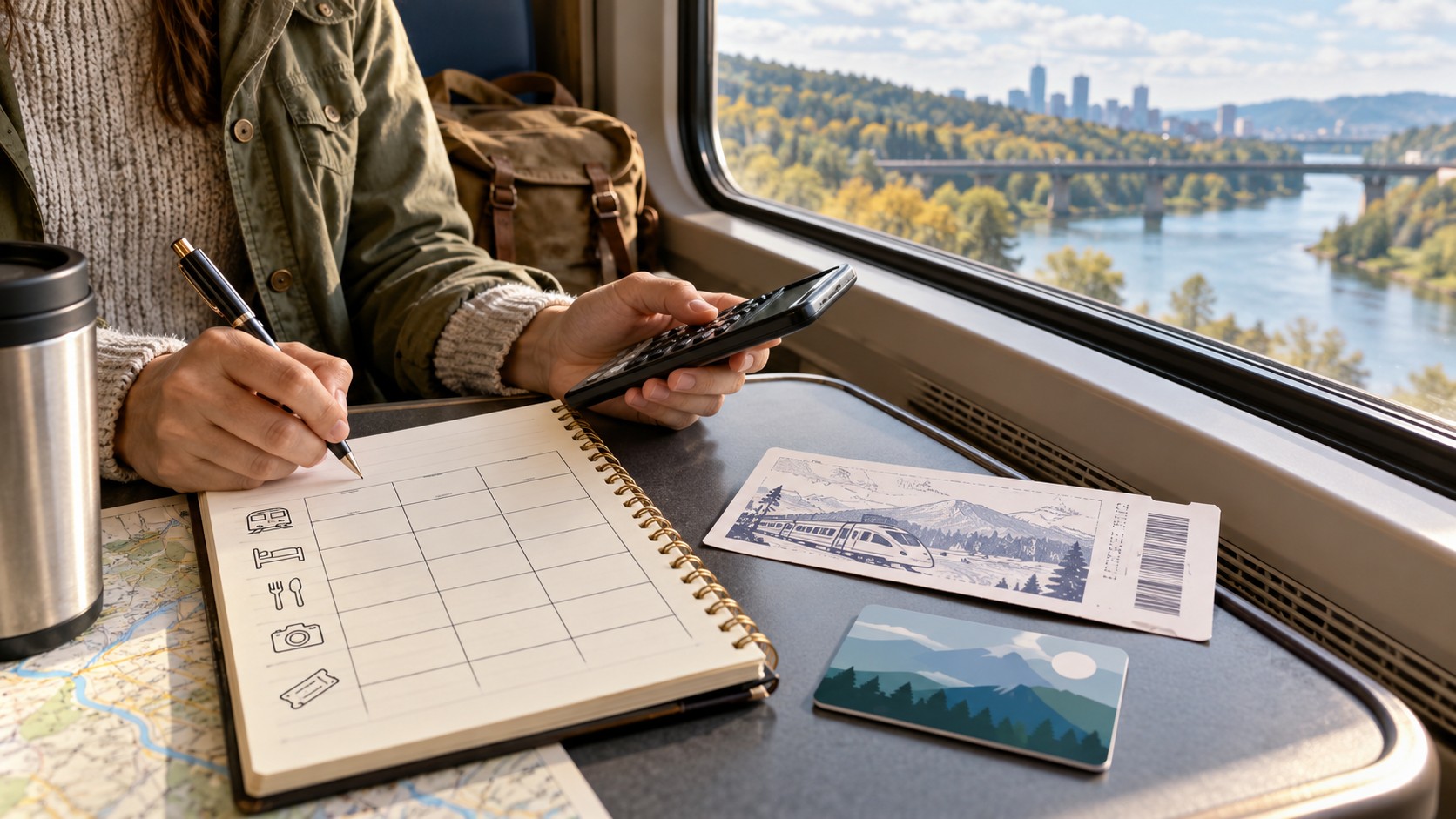
!– wp:paragraph –>Give each trip a simple score from one to five for total cost, usable hours, ease of getting around, and how much you want to go. The score is not meant to make the decision for you. It makes a trade-off visible. A trip can be slightly more expensive and still be the better choice because it gives you an extra half-day or avoids a car. If two options tie, choose the one with the simplest return plan and the least dependence on a single connection.
When a train weekend is not the best value
Skip the rail plan if the schedule consumes most of the weekend, if the final leg is an expensive transfer, or if the destination’s main appeal is spread across areas with little transit. A two-hour drive may beat an eight-hour train itinerary for a one-night trip, while a longer train may be ideal if you can travel overnight and rest. There is no virtue in choosing rail when it makes the trip harder. Consider a closer town, a bus connection, or shifting the weekend to a date with better service.
Also check for service alerts and construction notices close to departure. Some routes share infrastructure or adjust schedules by season. Save the operator’s confirmation and station details offline, and arrive with enough time to find the correct platform. If you are traveling with mobility needs, confirm station and onboard assistance directly with the carrier rather than relying on a map alone. A plan that is affordable but leaves no room for a delay is not a good weekend plan.
Make station logistics part of the budget
A train station is not just a point on a map. Check whether your departure station has secure bike parking, long-term parking, a reliable local bus, or a ride-share pickup area that works at your departure time. If someone is dropping you off, confirm where they can stop without circling or paying for parking. At the destination, note whether the station exit opens onto a walkable street or a large road with limited crossings. These small details can determine whether you need a cab at both ends.
Think about luggage before choosing a lower fare. A compact bag is easier on platforms, stairs, and crowded local transit. If your lodging will not hold bags before check-in, ask whether it offers luggage storage and whether that service costs extra. A hotel that is slightly closer to the station may be worth the difference when you arrive early or have a late departure. A no-car plan is strongest when the route from station to room is both physically manageable and practical in the weather you expect.
Two sample ways to compare a weekend
Imagine a pair choosing between a dense city and a coastal town. The city rail fare is higher, but its hotel is close to the station, breakfast is included, and the main museum and dinner district are walkable. The coastal fare is lower, but the only affordable room is outside town and requires two rides each day. Put those rides into the comparison before you decide. If the coastal trip still appeals, look for a different lodging date or a closer room rather than assuming the first listing is the only option.
For a solo traveler considering an overnight journey, compare the saved hotel night with the cost of the appropriate seat or sleeping accommodation, then consider how you feel after arriving. A seat is not equivalent to a night of sleep for every person. If you expect to spend the arrival day recovering, the overnight option may not create extra usable time. A daytime train plus a budget room can be the better value, particularly when the scenery or onboard reading time is part of the trip you want.
Pick the trip that leaves you with a satisfying weekend after transport and lodging are paid. A short, walkable city break can be more memorable than a packed itinerary with a bargain fare. Compare full costs, look closely at station access, and protect enough time for the activity that made you choose the place. Then book the rail and room only after the schedule works in both directions.
For current routes and schedules, start with the official route pages and search your dates directly: https://www.amtrak.com/northeast-train-routes
https://www.amtrak.com/california-train-routes
https://www.amtrak.com/train-routes