
14 Accessible Beach Features to Check Before Choosing
A beach can be beautiful and still be a difficult day if the route from the car ends at deep sand, the restroom is far away, or the only available chair sits in full sun. When access needs matter, the useful question is not simply whether a beach is called accessible. It is whether the specific path, facilities, equipment, weather protection, and help available on your date fit the people in your group.
Use this 14-feature checklist to compare beach options before you book a stay or drive across town. Conditions can change with tides, storms, construction, staffing, and seasonal operations. Confirm details with the beach or local authority shortly before you go, and ask about the parts of the visit that matter most to you. A clear answer about one feature does not guarantee that the entire beach experience will work for every visitor.
14 beach-access features to compare before choosing
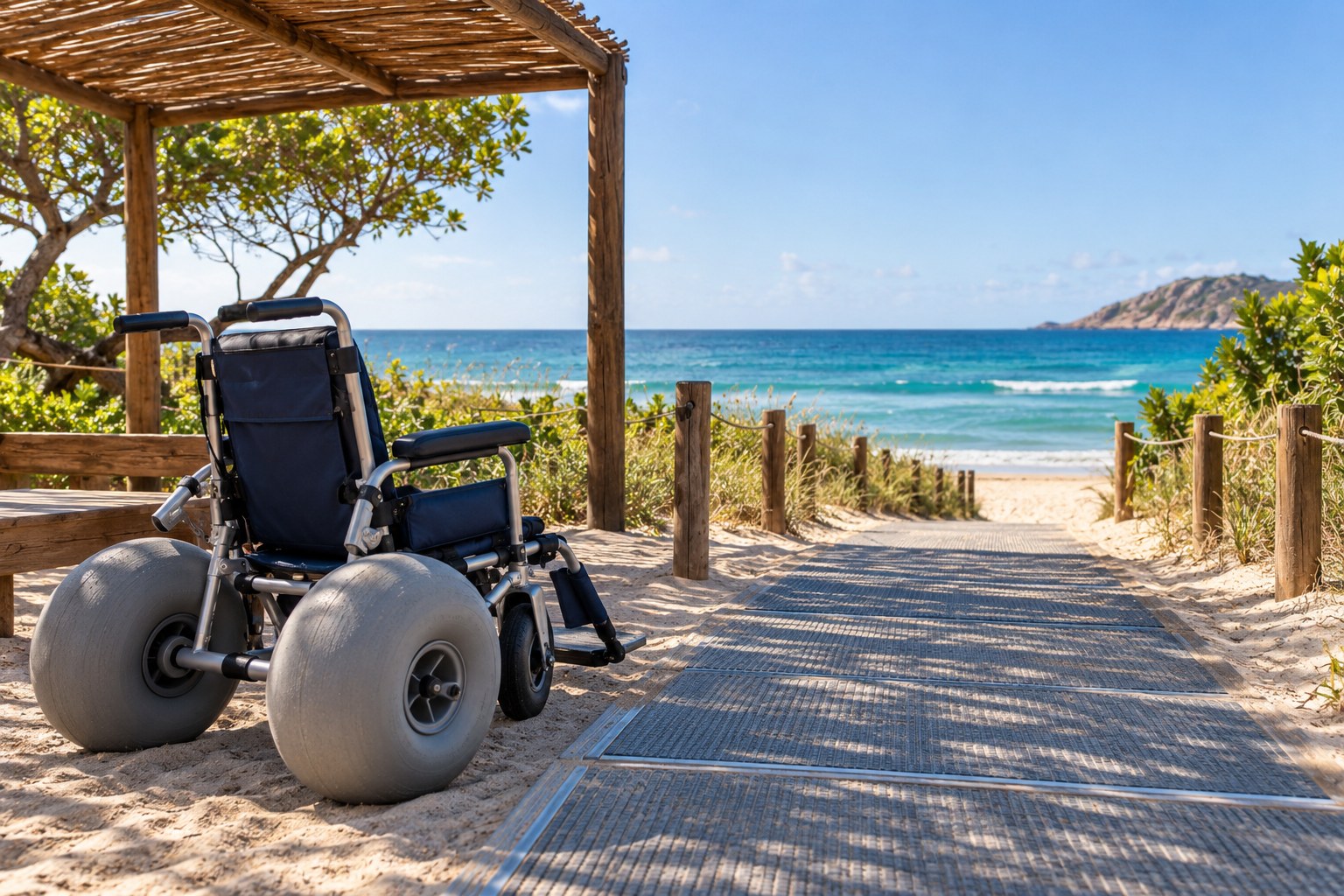
1. The route from parking to the shoreline
Ask how far the accessible parking or drop-off point is from the beach entrance and what the route is made of. A paved sidewalk may end before the sand, and a beach mat may begin some distance from the lot. Clarify slope, curb cuts, gates, and whether the route crosses a busy road. If your party includes someone who cannot travel over loose sand, learn exactly where the firm route stops and whether staff can describe current conditions.
2. Beach mats and how far they reach
A mat can create a more stable path over sand, but the length, width, placement, and maintenance schedule matter. Ask whether the mat reaches the water, a viewing area, or only partway across the beach. Find out if it is installed on your planned date and whether tides or weather may uncover or damage it. A path that stops well short of the water may still provide a pleasant visit, but it is better to understand the limit before choosing a beach.
3. Beach wheelchairs or mobility equipment
Some beaches lend beach wheelchairs or other equipment; others do not. Confirm the type, size, weight limits, transfer support, operating hours, reservation process, deposit, and return location. Ask whether the chair can be taken into shallow water or is intended only for sand, and never assume a manual chair or powered device can manage a particular surface. If a loan is first-come, first-served, identify a backup plan for arriving after the equipment is already in use.
4. Accessible parking and drop-off
Count the accessible spaces, note whether they require a permit, and ask how often they fill on warm weekends. Find out if there is a curbside drop-off area with enough space to unload mobility equipment safely. A crowded lot can make even a nearby space hard to reach, so consider arrival timing and a second parking option. If you are using a rideshare or shuttle, check whether it can stop near the accessible route rather than at a distant general entrance.
5. Restrooms and changing facilities
Look for the location, opening hours, route, and features of accessible restrooms. Ask whether the restroom is open during the full beach season, whether the path remains firm, and if there is a family or companion facility when needed. Changing areas may be separate from restrooms and may have different hours. Do not rely on a listing that simply says “restrooms available”; confirm that the facility meets your own requirements and is close enough to use comfortably during the visit.
6. Seating, shade, and places to pause
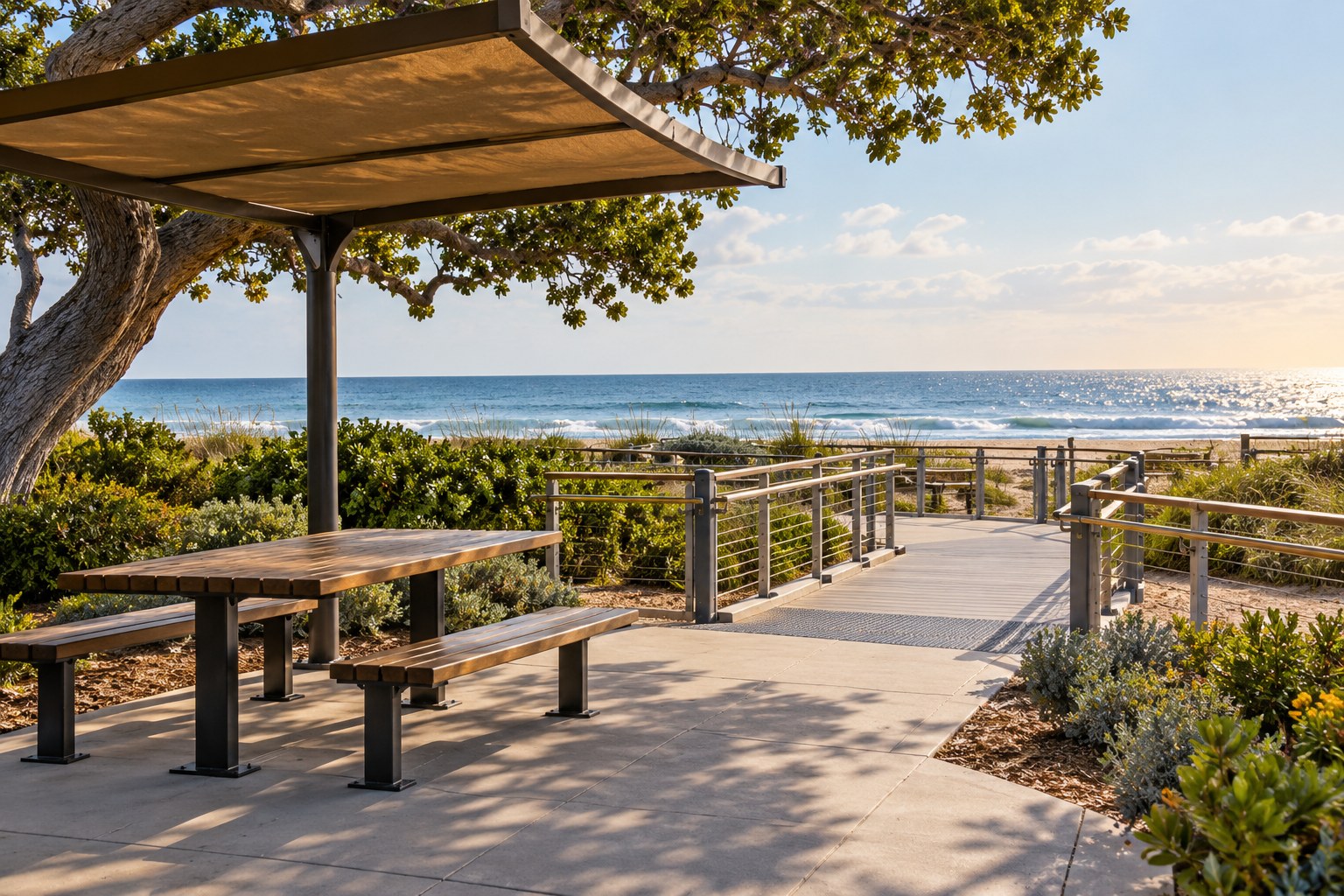
Beach access is not only about reaching the shoreline. Ask whether benches, shaded seating, picnic tables, or covered shelters are available along the route. Learn if the shade is natural or a reservable structure, and whether chairs can be moved without blocking the path. A bench exposed to heat may not function as a useful rest spot. If you bring your own shade, check local rules for tents, stakes, and placement so your setup does not obstruct access or conflict with lifeguard sightlines.
7. The surface beyond the mat
Sand changes throughout the day and between seasons. Wind, rain, beach grooming, and foot traffic can create soft patches or uneven transitions. Ask the local operator what the route looks like now rather than relying only on a photo from last summer. Consider how far your group wants to go and whether you can enjoy the day from the mat’s endpoint. The best beach choice may be the one with a shorter, reliable route and a good viewing area, even if another beach has a more famous shoreline.
8. Accessible showers and rinsing points
If rinsing off is important, ask where showers or rinse stations are located and whether they are usable without stepping through deep sand. Some outdoor showers are not designed for seated use or private changing. Confirm water access, seasonal operation, and whether the route back to parking is as easy as the route out. If no suitable shower is available, decide whether a towel, change of clothes, or another nearby facility is an acceptable alternative for your group.
9. Lifeguard coverage and emergency access
Confirm whether lifeguards are present on the day and hours you plan to visit, and where the staffed area sits relative to the accessible route. Coverage can vary by season, weather, and beach section. Ask how emergency vehicles reach the shoreline and whom to contact if someone needs help. Lifeguard presence does not make every activity risk-free, so follow posted flags, water guidance, and local instructions. If a member of your group has a health or communication need, make a personal safety plan before entering the water.
10. Entrances, gates, and crowd flow
A convenient route can be interrupted by a narrow gate, a temporary fence, a ticket booth queue, or a crowded boardwalk. Ask about entrance width, access controls, and the busiest arrival period. If the beach has multiple entrances, compare them rather than assuming the main entrance is best. Look for a route that lets your group move together and pause without blocking others. A map may not show temporary barriers, so a phone call or current operations notice can be valuable before a long drive.
11. Water access and transfer points
If reaching the water is a priority, ask whether there is a firm or matted route to a safe water edge, a transfer point, or a beach chair service. Clarify what staff can and cannot assist with; do not assume employees will lift or transfer a visitor. Water depth, surf, and tide conditions change, and accessible routes may not extend into the water itself. Choose a plan that respects the visitor’s comfort and independence, and ask the local authority about current safety limits.
12. Food, hydration, and nearby services
A beach visit may last longer than expected, so check whether water fountains, cafés, snack stands, or nearby stores are open. Their routes and seating may not be accessible just because the beach entrance is. If you bring food, confirm any restrictions on coolers or outside meals. Carry the water and personal items your party needs, and decide where they will stay so they do not block a mat or narrow path. A convenient nearby service can shorten the day if heat or fatigue changes your plans.
13. Fees, reservations, and equipment rules
Beach parking, shelters, equipment loans, and shuttles may require a fee or advance booking. Verify the price, accepted payment methods, cancellation terms, and whether a pass covers the whole group. Ask if equipment reservations guarantee availability or only reserve a time window. Check rules for mobility devices, service animals, shade structures, and personal equipment. A clear confirmation email is easier to use than a remembered phone conversation, especially when several people are coordinating the visit.
14. A weather and closure backup
Heat, storms, high surf, erosion, and maintenance can change beach access quickly. Review the forecast and local beach alerts, and identify an indoor or shorter alternative nearby. Ask how closures are announced and whether staff update the website or social media first. If a route is damaged or equipment is unavailable, decide what would make the outing worthwhile anyway: a short visit from a viewing area, lunch elsewhere, or saving the beach for another day. That choice protects the day from becoming an all-or-nothing plan.
Use a comparison scorecard that reflects your needs
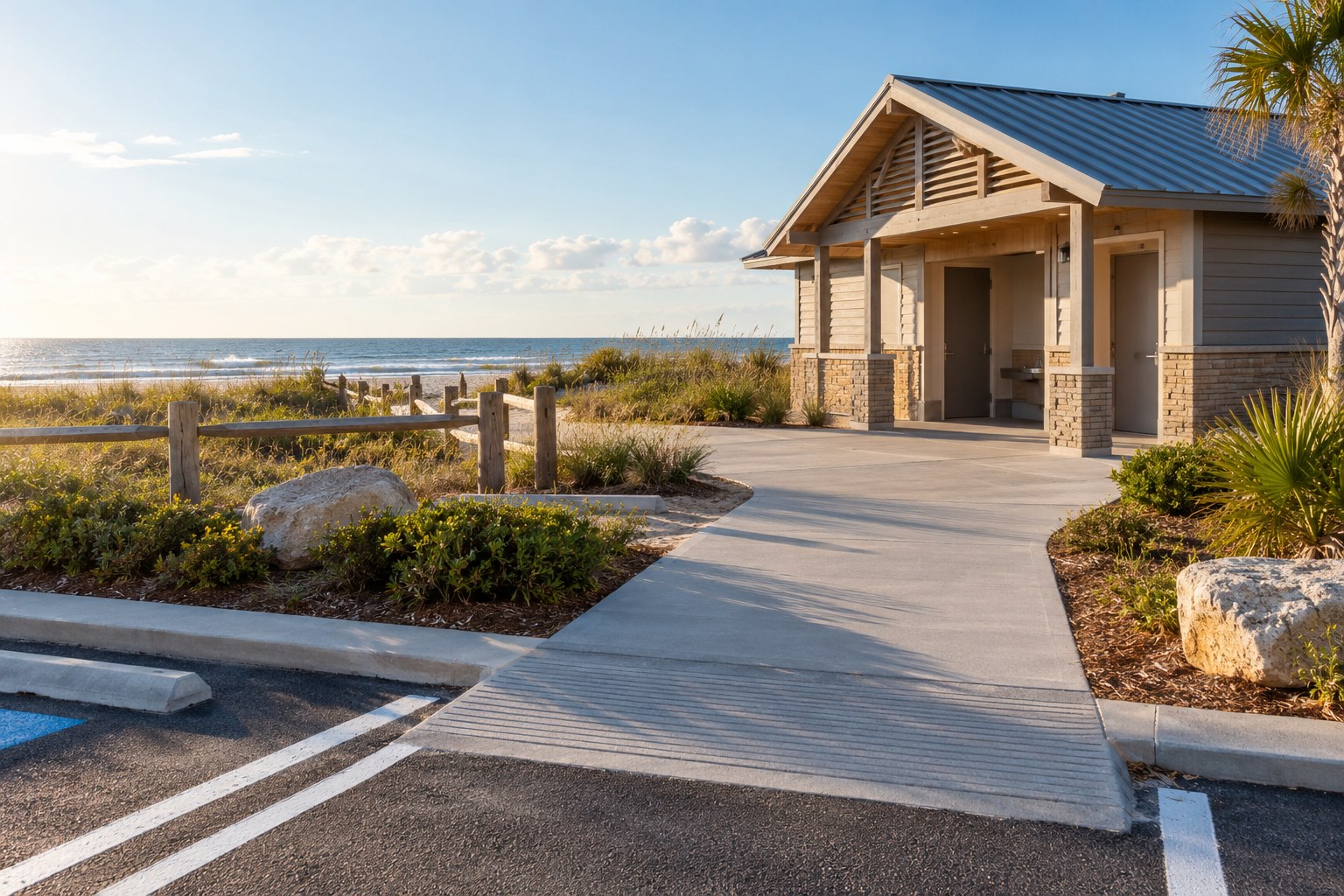
Before choosing, rank the features that matter most to your group. One family may prioritize an accessible restroom and shade; another may care most about equipment availability and a route to the water. Score each beach from zero to two for the must-have details: zero means unavailable or unclear, one means partly suitable, and two means confirmed to fit. Add a separate note for anything that must be checked again on the day, such as equipment or weather. Do not let a high total hide one essential feature that is missing.
If two beaches look similar, compare the travel effort and the strength of the information. A nearby beach with a confirmed mat, reserved chair, and close restroom may be a safer choice than a highly rated destination whose details are vague. Call the operator with a short list of specific questions and write down the answers. You are not asking for a broad promise that a beach is accessible; you are checking whether the actual route and support match your plan.
For a short visit, choose a beach with the fewest uncertain handoffs: a clear parking-to-mat route, a restroom you can reach, and a place to rest. For a longer day, add the details that support meals, changing, hydration, and time in the sun. If an essential feature depends on staff availability, check who can confirm it on the day and how late the service runs. A small outing with reliable access can feel more spacious than a full day spent solving logistics.
Questions to ask before you go
- Where does the firm or matted route begin and end?
- Is beach mobility equipment available, and can it be reserved?
- How close are accessible parking, drop-off, restrooms, and shade?
- Which facilities are open on my date and during what hours?
- Are there fees, seasonal limits, or rules for personal equipment?
- What changed recently because of weather, erosion, or construction?
- What is the closest backup beach or indoor alternative?
How to confirm a feature without relying on a label
When you contact a beach operator, start with the exact situation you are trying to solve. Instead of asking, “Is the beach accessible?” ask how far the route extends from accessible parking, whether a mobility chair is available on your date, what kind of surface leads to it, and where the restroom sits in relation to the path. Specific questions are easier for staff to answer and give you details you can compare across locations. If a person says “yes” without clarifying what that means, ask for a description or a current photo of the route.
Write down who answered and when. A helpful answer in spring may no longer describe a beach after a storm, construction project, or seasonal staffing change. Recheck the most important features a day or two before travel and again if the weather changes. Ask what happens if the reserved equipment is out of service or the mat is closed. A simple fallback protects the outing while leaving the visitor in control of whether to continue, switch locations, or choose a quieter plan.
Choose the beach that works for this visit
A destination does not need to offer every feature to make a good day possible, but you should know what it does offer and what will require improvisation. Choose according to the visitor’s priorities, not a generic accessibility label or a photograph of a smooth boardwalk. Reconfirm the essentials close to your visit and give yourself permission to change beaches or shorten the outing. The most useful planning detail is the one that turns an uncertain day into a choice you can make with confidence.
Sources
https://www.nps.gov/subjects/accessibility/index.htm
https://www.access-board.gov/ada/