
25 Beach Vacation Packing List Items That Earn Their Space
A beach bag can look perfectly packed at home and still fail at the shore: the sunscreen is buried, the towels are damp by lunch, and the extra “just in case” items leave no room for the things you actually use. A better beach vacation packing list starts with the day you expect to have, then adds a small buffer for weather, comfort, and the trip back.
Use these 25 items as a decision list rather than a shopping list. A couple walking from a hotel, a family driving to a public beach, and a traveler taking a ferry to a small island need different setups. The useful question for every item is simple: will it protect us, make a planned activity easier, or solve a predictable inconvenience? If not, leave it behind.
Start with the beach day you are actually planning
Before packing, check how you will reach the water, how long you expect to stay, what facilities are available, and whether you will return to your room between beach time and dinner. A resort beach with chairs and showers needs less gear than a public shore with a long walk from the car. A beach reached by boat may have strict space limits. Check local access, weather, water conditions, and facility notices close to departure; rules and conditions differ by location and can change.
The core beach vacation packing list
Shade, sun, and water
1. Sunscreen you will reapply
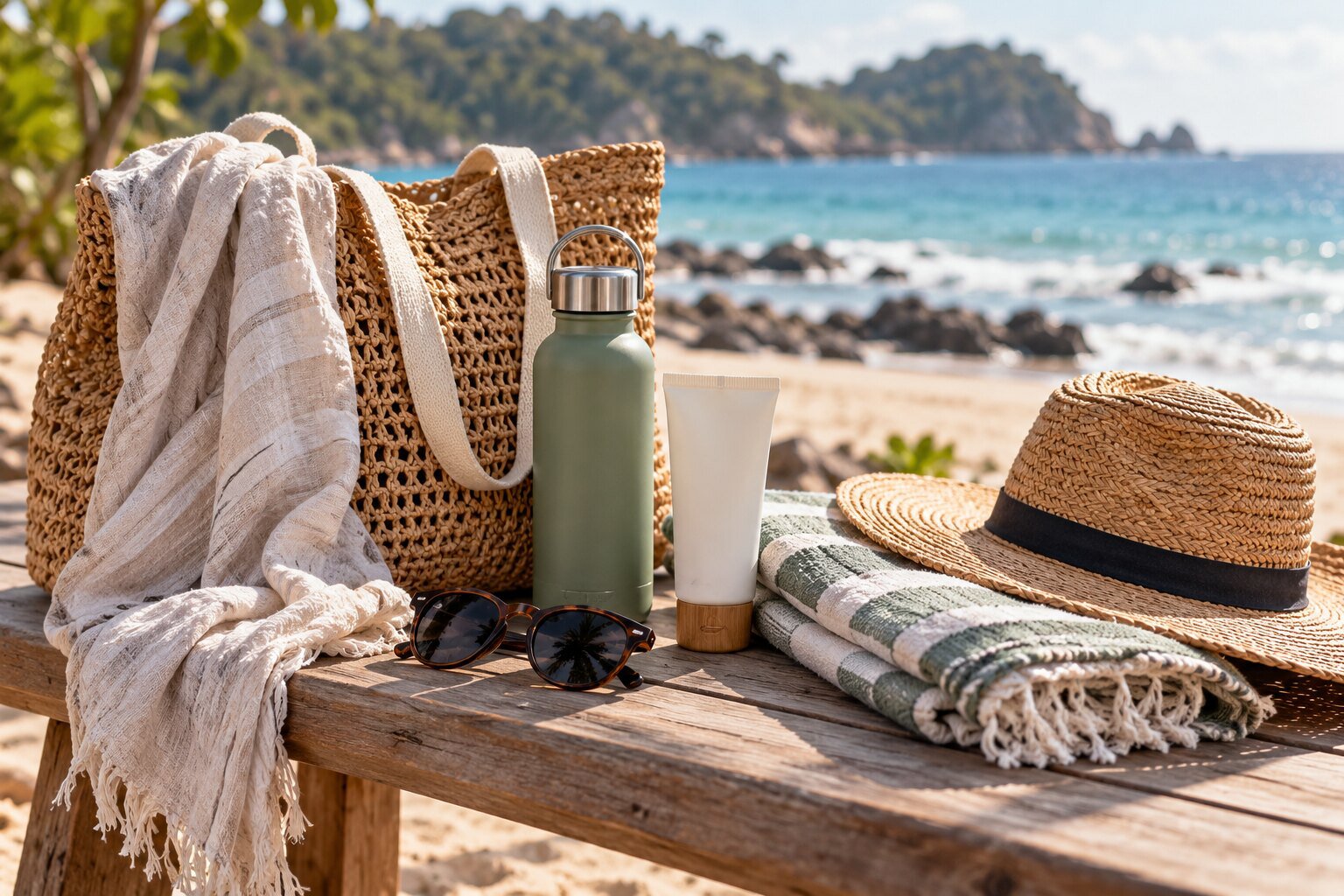
Bring a broad-spectrum sunscreen that suits your skin and the activities on your itinerary, then keep it where you can reach it. One full-size bottle for a group is often easier than several tiny containers that disappear into bags. Check expiration and travel restrictions before packing. Sun protection is a routine, not a one-time application; follow the product label and combine it with shade, clothing, and breaks indoors when needed.
2. A sun hat that stays on in wind
Choose a hat you can wear comfortably for several hours, with a brim that gives useful coverage and a chin strap if the forecast or boat ride makes wind likely. A hat that looks good but keeps blowing away becomes another thing to carry. If you are traveling with children, pack one adjustable hat per child and attach a name label inside rather than relying on a loose clip that may be lost in sand.
3. UV-protective cover-up or swim shirt
A lightweight long-sleeved swim shirt or cover-up can make the transition between swimming, walking, and sitting in the sun easier. It is especially useful when you do not want to reapply lotion to every exposed area as often. Pick quick-drying fabric that is comfortable wet and dry. One versatile piece is usually more useful than packing several outfits dedicated to a few hours on the sand.
4. Refillable water bottles
Bring a bottle for each person if clean refill water is available at your lodging or beach facilities. A wide-mouth bottle is easier to rinse after a sandy day; an insulated one can be pleasant on a hot outing but is heavier. For beaches without reliable drinking water, plan how much you need before leaving and follow local guidance. Do not assume a small beach kiosk will be open or stocked.
5. Sunglasses with a secure case
Pack sunglasses you are willing to wear outside for a full day and a case that closes. A soft pouch is lighter, while a hard case protects a favorite pair in luggage. If you plan to swim or paddle, consider a strap that fits your activity and does not interfere with equipment. Keep a spare inexpensive pair only if losing your main pair would derail the trip; otherwise it is extra clutter.
6. A compact shade option, only when allowed
For a long stay with no natural shade, a compact umbrella or approved beach shelter can be worth the space. Check local rules first: some beaches restrict the size, placement, or type of shade structure, and crowded areas may not have room for it. If you are staying near a hotel pool or renting chairs, leave the shelter at home. A lightweight sun shirt and timed indoor break may be the smarter substitute.
7. Lip balm with sun protection
A small sun-protective lip balm is easy to forget and easy to keep in a zip pocket. Bring one per person if sharing a personal-care product is not practical. Put it in a pouch that stays with the sunscreen instead of loose in the bottom of the beach bag. The point is to make regular use convenient, not to add a row of specialty products you will not carry to the shore.
8. A light layer for the trip back
A thin long-sleeved layer helps when the wind picks up, the sun goes down, or air-conditioning feels cold after swimming. Choose a piece that works over a swimsuit and with the clothes you will wear later. If you are walking a short distance from a warm resort room, you may not need one in the beach bag. For a ferry, open-sided vehicle, or coastal evening, it often earns its space.
9. Small first-aid and personal-care pouch
Pack only the personal items your group may need during the outing: any prescribed medication, a few adhesive bandages, and skin-care items you already know work for you. Keep medication in its original packaging when appropriate and store it according to its instructions. Do not leave heat-sensitive items in a hot car. A compact pouch is easier to protect than a large “beach pharmacy” full of products chosen for hypothetical problems.
10. A small dry bag for phone and keys
A dry bag is useful for a kayak, boat, or wet walk back from the water, but it does not replace a plan for valuables. Test the closure at home, keep the bag secured, and avoid taking an expensive device into water just because the pouch is labeled waterproof. For a standard beach day, a zip pouch inside a larger bag may be enough. Take only the keys you need and keep them with a responsible adult.
11. A towel chosen for drying time
One towel per swimmer is straightforward, but a bulky bath towel can dominate a small bag. A quick-dry travel towel packs smaller; a larger cotton towel may feel better for lounging but takes longer to dry. If your lodging supplies beach towels, verify the policy before packing any. For a full day with children, an extra small towel can be more useful than a second full-size one because it handles wet hands, spills, or a seat.
12. Water-friendly footwear
Match footwear to the actual shoreline. Sandals work for a short walk on soft sand; water shoes may help on rocky or shell-covered areas if they are appropriate for the location. Wear comfortable walking shoes for a long approach rather than expecting thin flip-flops to handle stairs or uneven paths. Check whether footwear is allowed for any planned boat, snorkel, or water activity, and avoid packing two pairs that solve the same problem.
13. A washable bag for wet swimwear
A lightweight wet bag or washable pouch keeps damp swimwear away from dry clothes during the trip back. It is most useful when you will not return to your room first. Choose a size that fits the group’s actual swimwear; a large waterproof tote can become heavy and keep moisture trapped for hours. Open the bag and dry its contents when you get back instead of leaving wet fabric sealed overnight.
14. A simple sand-removal cloth or brush
A small microfiber cloth or soft brush can help clear sand from feet before you put shoes on or get into a car. It is most useful when there is no outdoor rinse station. Keep it in an outer pocket and shake it clean away from other people. If your beach offers showers, use those and skip the extra tool. Avoid talc or powders unless you have checked that they are appropriate for your group and destination.
15. A light picnic or snack plan
For a long beach visit, bring snacks that tolerate warmth and do not require a complicated setup. Whole fruit, crackers, or a simple sandwich may be easier than a full picnic spread. Use an insulated cooler only if you have a way to keep food at a safe temperature and carry the extra weight. Check rules about glass, alcohol, fires, or outside food at the specific beach. If nearby cafés are open and within an easy walk, buy lunch there and pack less.
16. A small reusable trash bag
Bring a light bag for wrappers, fruit peels, and other rubbish if bins are not nearby. It should close or tie securely so it does not blow away. Keep food waste separate from clean dry gear and carry everything out when required. A trash bag is less glamorous than a new organizer, but it makes cleanup faster and helps you leave the beach in good condition. Check local guidance for recycling and disposal.
17. A compact seating option, when chairs are not provided
A lightweight sand mat or folding chair can make a long stay more comfortable, but it is a poor choice for a beach reached by stairs, ferry, or crowded shuttle. Decide based on carrying distance and whether there is a place to store it. If a companion needs a seat with back support, check the surface and access route before leaving. Renting on site can cost more, but it may be worth it when portability matters.
18. Swimwear that fits the day’s activity
Wear swimwear you can move in comfortably and bring a change only if the itinerary makes one useful. A clean set is helpful if you are moving from the beach to a meal or a long ride; otherwise a cover-up and dry layer may be enough. If you plan to snorkel, paddle, or play in waves, choose secure pieces suited to that activity. Avoid packing a backup suit simply because it is small if you rarely use one.
19. A child’s familiar comfort item
For a young child, one familiar toy, book, or comfort item can be more valuable than a bag of new beach toys. Choose something easy to identify and not precious if it may get sandy. Keep it in the dry bag and use it during a shaded break or the ride back. If the child enjoys digging, one compact, sturdy sand toy may be plenty; check beach rules before bringing equipment that could disturb protected dunes or habitat.
20. A small game or book for shade time
A deck of cards, paperback, or small travel game gives the group something to do when swimming pauses or the wind changes. Keep it to one item that works for more than one person and can survive a little sand. A phone can fill this role, but its battery may be needed for directions, tickets, or an emergency contact. Download entertainment in advance if you plan to use a device offline.
21. A change of clothes for the ride home
A dry shirt, underwear, or light outfit is useful after swimming, especially for a long drive or an evening plan. Pack it in a separate dry pouch so it stays clean. A whole second outfit for every person may be unnecessary if you are a short walk from lodging. For children or anyone who is likely to spill, a spare top can solve the realistic problem without adding another complete set of clothing.
22. A hair tie, comb, or detangling option you already use
Wind, salt water, and sand can make hair care annoying on the return trip. Take the small tool or tie you already rely on instead of buying a special beach kit. Store it with the towel or toiletries, where you will remember it. If the outing is short or your lodging is close, leave it behind. A beach bag should solve a recurring nuisance, not become a second bathroom cabinet.
23. A waterproof card sleeve or minimal payment plan
If you expect to buy food or rent equipment, take only the payment method and identification you need, protected in a secure pouch. Some beach vendors take cards; others may not, and connectivity can be unreliable. Check what is practical at your destination and keep a backup payment option secured separately. Do not bring every bank card, passport, or cash reserve to the sand if your lodging has a safer place for them.
24. A small waterproof phone pouch for brief protection
A pouch can protect a phone from splashes and sand while you take a few pictures or check a meeting time. It is not a substitute for a dry bag or a reason to submerge a device. Test it before the trip, keep the touch screen usable, and consider leaving the phone with a trusted person during swimming. Photos are easier to enjoy when the group has agreed who is watching valuables and who is actually in the water.
25. A realistic backup for weather or a changed plan
Choose one compact backup item based on the forecast and route: a thin rain shell for a breezy coast, an extra layer for a boat crossing, or a dry pair of socks if you have a long walk home. Do not pack every possible weather accessory. Check the forecast again before leaving and be willing to shorten or change the outing if conditions are unsafe. The best backup plan may be a nearby indoor activity rather than more equipment.
Pack a smaller beach bag with this three-layer system
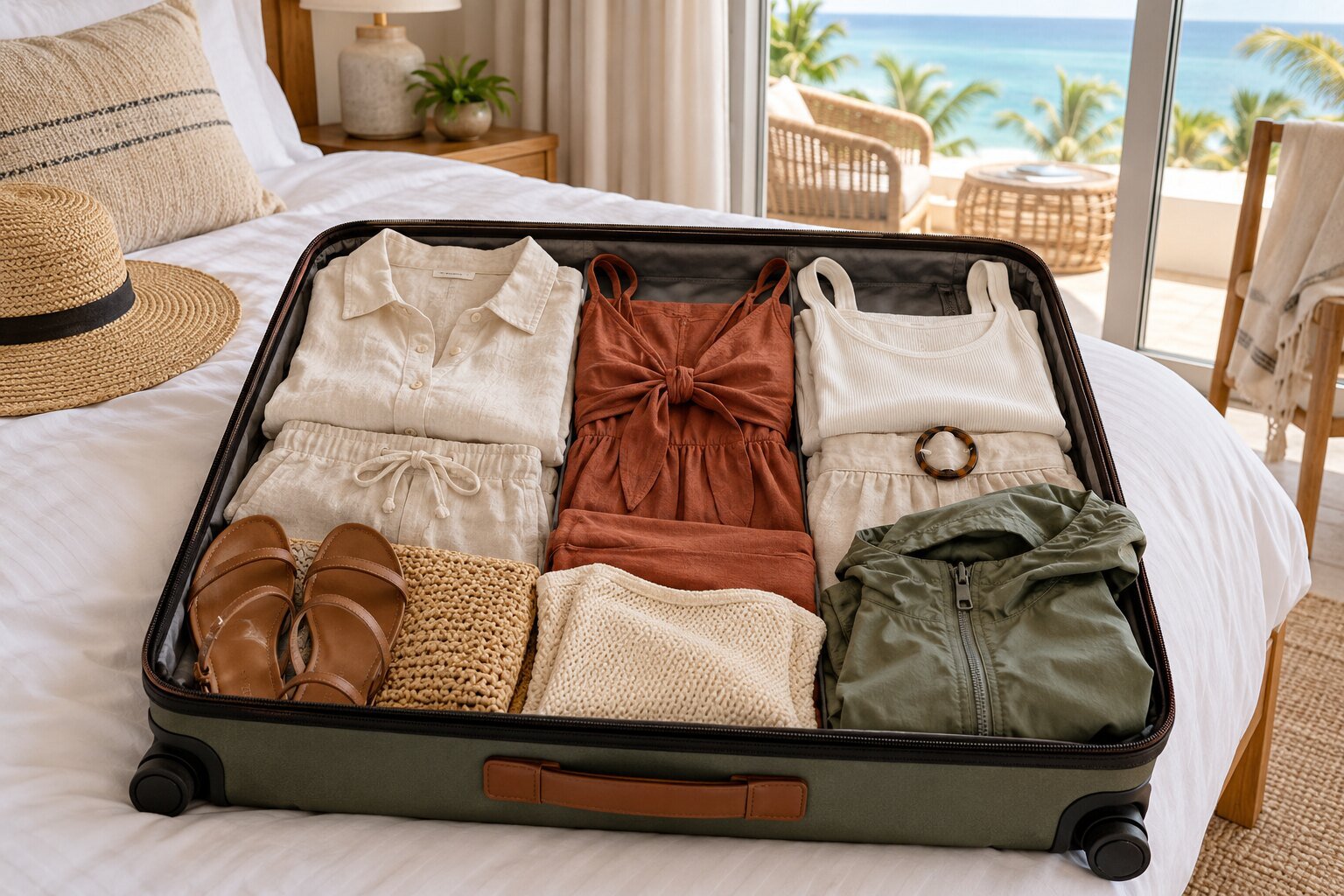
Put essentials you need repeatedly—sun protection, water, and any required personal medication—in the top or outer pocket. Keep dry items such as a change of clothes, phone, and keys in a separate protected pouch. Put wet or sandy gear in a washable bag at the bottom or outside. If you have children, give each child one small color-coded pouch rather than asking them to search through a shared tote.
Use a quick test before leaving the room: can you reach sunscreen without unpacking towels, and can you keep the phone and keys away from wet swimwear? If not, rearrange the bag. Keep water and heavier items balanced so the strap is comfortable. A backpack may work better than a shoulder tote for a walk or stairs, while a wide tote is easier to load from a car. Choose the container for the route, not for the photo.
What to leave off the list
- Full-size toiletries when a small pouch or hotel supply is enough
- Multiple towels if your lodging provides beach towels
- Bulky shade or chairs when space, access, or beach rules make them impractical
- Valuables you do not need at the shore
- Large collections of toys, snacks, and “just in case” products
- Anything that blocks a view, access route, or protected habitat
The easiest beach day is usually the one with fewer things to manage. Start from the plan, confirm what your destination already provides, and pack for the return trip as carefully as the swim. If each item solves a likely need and has a clear place in the bag, you can spend less time rummaging and more time choosing whether the next hour is for the water, a walk, or a quiet break.
Sources
- https://www.weather.gov/safety/ripcurrent
- https://www.nps.gov/subjects/oceans/coastal-safety.htm
- https://oceanservice.noaa.gov/hazards/beach-safety.html