
13 Car-Organization Ideas for Real Road Trips
A neatly packed car is not automatically an easy car to travel in. The important question is whether passengers can reach what they need without opening the trunk at every stop, and whether the driver can see clearly and move without distraction. A road-trip setup should protect the space used most often: the seat beside you, the footwell, and the few minutes when everyone is getting in or out.
These thirteen organization ideas are built for actual travel days, including family trips, weekend drives, and longer routes with luggage. Most use items you may already have. Before buying a new organizer, test the setup at home: sit in every seat, check that belts and airbags are unobstructed, make sure nothing can roll under the pedals, and confirm that the rear window and mirrors remain clear. A little less gear is often the best organization system.
Organize by how often you need an item
Think in three zones. The reach zone holds only items needed while seated, such as a water bottle in a designed holder, tissues, or a charging cable routed safely. The stop zone holds things you may want at a rest area: a snack pouch, a light layer, or a child’s activity. The trunk zone holds luggage, spare shoes, and equipment you do not expect to touch until arrival. This order prevents the common mistake of stacking everything at hand level and turning the cabin into a storage shelf.
Keep the driver’s zone simple. A passenger can manage snacks, maps, and music. The driver should not have to reach across seats, look down at loose items, or rearrange a bin while moving. Secure heavier objects low and firmly. Never place cargo where it blocks an airbag, seat belt, mirror, window, emergency exit, or the driver’s movement. Follow the vehicle manual for cargo and restraint instructions.
Thirteen setups that make travel days easier
1. Give each passenger one small reach pouch
Use a soft pouch for the handful of items each passenger expects to reach for: tissues, lip balm, earbuds, a book, or a small activity. A pouch is easier to move between the car and hotel than several loose objects. Keep it on the passenger’s lap or in a safe storage spot, never where it could slide into the footwell or interfere with a seat belt. Let children choose their own few items so the pouch stays limited rather than becoming a second suitcase.
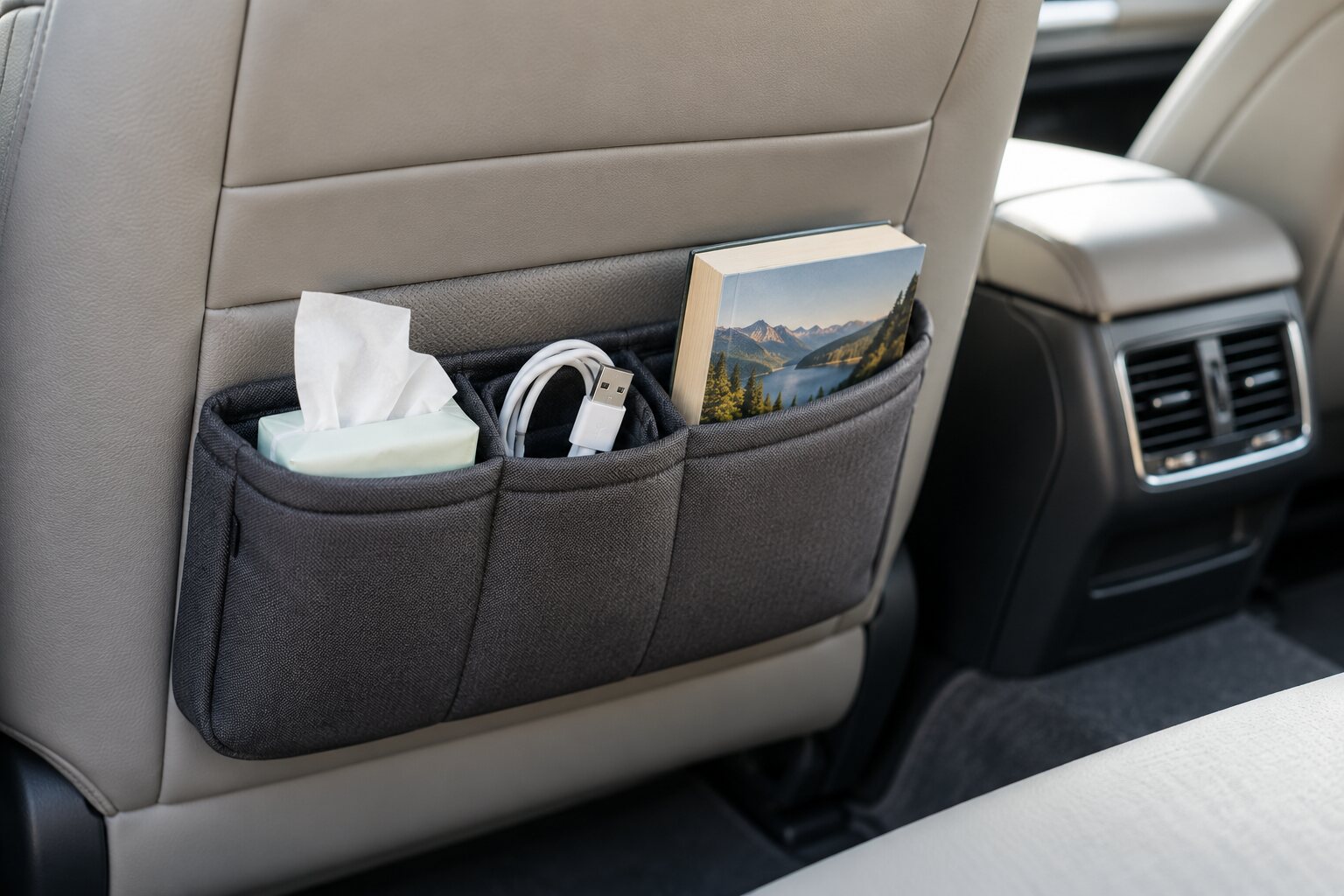
2. Build a passenger-managed snack station
Place a small lidded bin in a stable location that a front passenger can manage while parked. Split snacks into portions before departure and include napkins and a small trash bag. Avoid glass, foods that melt easily, and anything that needs a driver to unwrap. If you have children in the back, give each child a simple snack pouch rather than one large communal box that spills every time it is passed around.
3. Use a one-bag-per-person rule for the cabin
On a long drive, give each passenger one small personal bag that fits in a safe designated spot. Everything else goes in the trunk. This creates a clear limit and makes it easier to find chargers, comfort items, or a layer at a stop. For younger children, an adult can pack a shared activity bag. Avoid piles on the floor, where objects can roll under seats or into the driver’s area.
4. Make a rest-stop basket
Keep a small tote near the trunk opening with items likely to be used during a break: wipes, sunscreen, a light jacket, dog leash, or a change of clothes for a child. It should be easy to lift out without unpacking suitcases. Keep medication, valuables, and important documents with the person responsible for them rather than leaving them in a basket in a parked vehicle. Repack the basket each evening so it is ready for the next day.
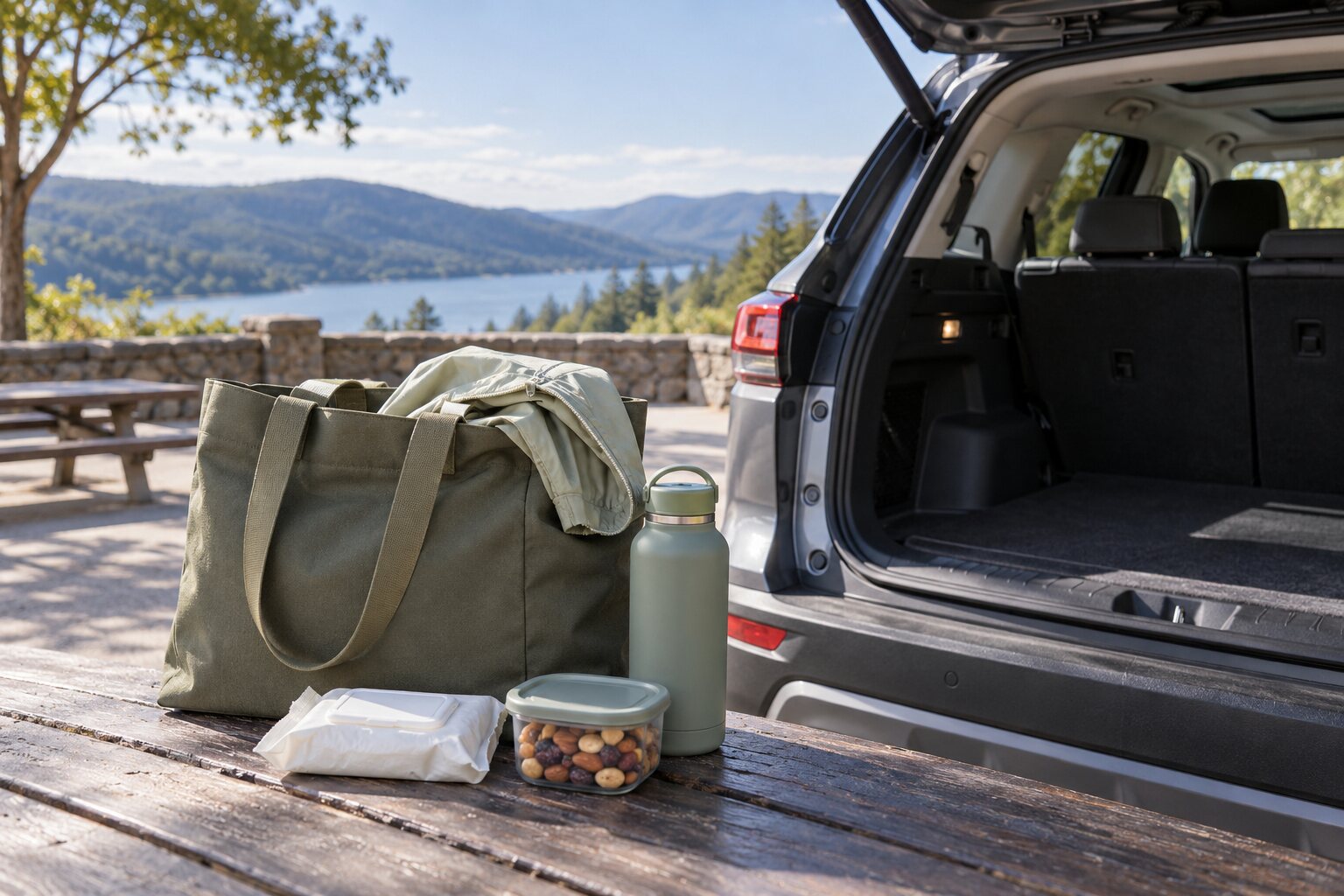
5. Pack the trunk in arrival order
Place the first-night bag, stroller, or cooler where it can be reached without removing every suitcase. Put items needed only at the final destination deeper in the trunk. Use soft bags that can adapt to the space, and secure hard-sided items so they do not shift. If the car has a privacy cover, make sure it can close and does not obstruct the rear view. Do not stack cargo above the seatback if it can slide forward during a sudden stop.
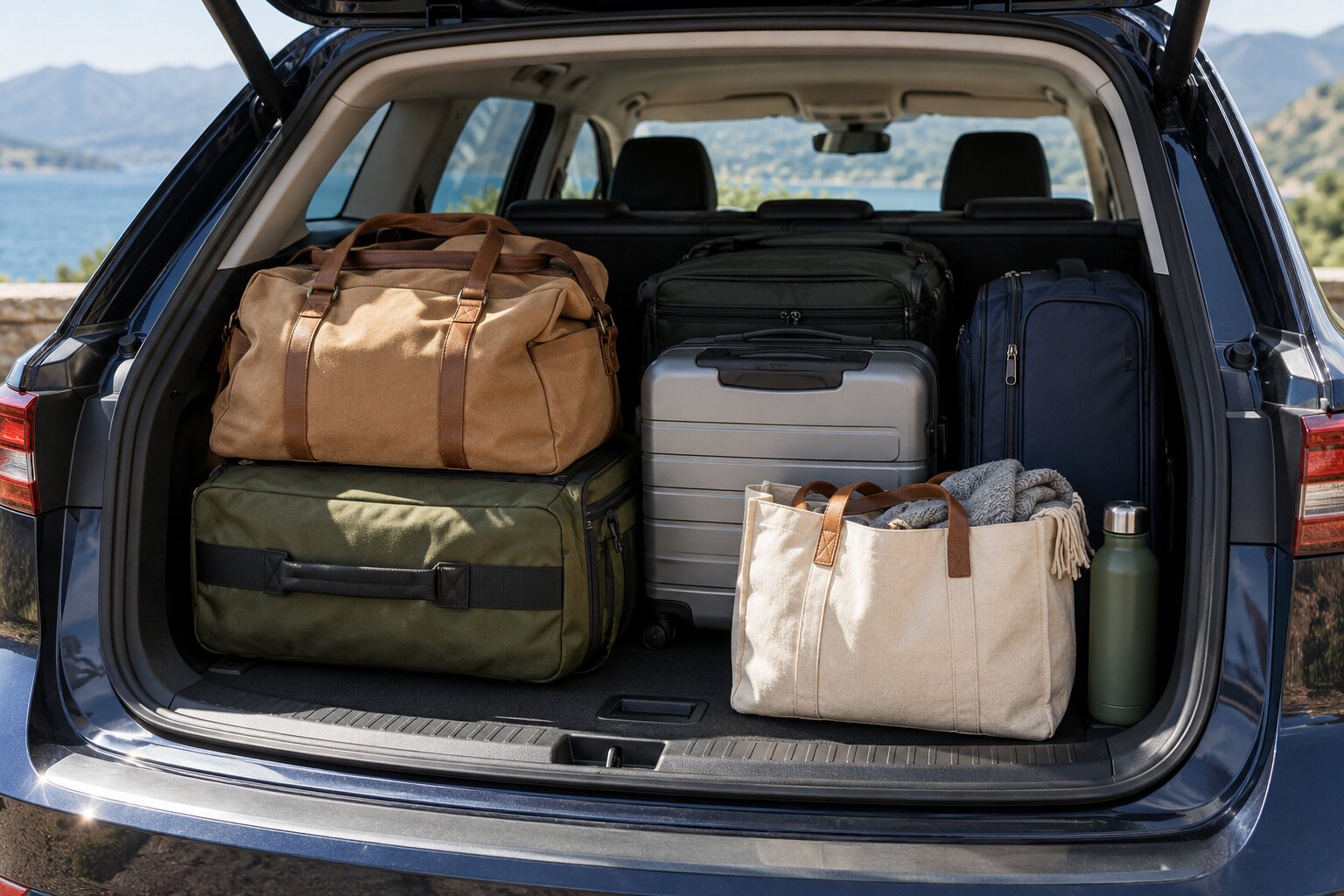
6. Keep a dedicated charging pouch
Store compatible charging cables, a car adapter, and a power bank together, then check the connectors before leaving. Label cables by device or passenger so they do not become a tangled pile. Keep cords routed away from pedals, steering controls, and moving seat tracks. The driver should not need to plug in or troubleshoot a phone while the vehicle is moving. If a phone is being used for navigation, mount it according to local law and set the route before departure.
7. Use a soft door-pocket kit for small essentials
Door pockets can hold a few light items that belong there: a small amount of tissues, a pen, or a folded map. Avoid filling them with heavy water bottles or objects that could strike someone in a collision, unless the vehicle is designed for that specific storage. Check that items do not rattle or interfere with a window. The goal is a tidy pocket, not an extra drawer that collects everything you cannot decide where to put.
8. Give children a predictable activity rotation
Instead of handing over a large toy box, prepare two or three activities and switch them at planned rest stops. A coloring pad, audio story, and small soft toy can be enough for a child who likes variety. Avoid hard or sharp objects and check child-seat guidance before attaching anything to the seat. For children prone to motion sickness, choose audio or conversation rather than screens or reading, and follow appropriate medical guidance for care.
9. Put wet or dirty gear in a separate washable bag
Keep a washable tote or sealed bag for damp swimsuits, muddy shoes, or used towels. It separates mess from clean clothing and makes the next hotel check-in faster. Avoid leaving wet items sealed for long periods; unpack and dry them when you arrive. If the gear contains sand, use a brush or shake it out outside before putting it in the bag. A simple separation system is more useful than a complicated collection of labeled containers.
10. Keep a small trash bag within passenger reach
A removable trash bag prevents wrappers and receipts from ending up in seat pockets or on the floor. Put it where a passenger can reach it without turning around or leaning across the cabin. Use a bag with a secure top if you have food waste, then empty it at a stop. Do not hang it from a grab handle or attach it near an airbag. A passenger should be able to remove it while parked in seconds.
11. Create a dog travel zone without loose gear
Traveling with a dog needs a secure restraint or carrier suitable for the vehicle, plus a separate bag for leash, waste bags, food, and water bowl. Keep loose supplies in the trunk or secured cargo area rather than beside the animal. Plan breaks based on the dog’s needs and confirm lodging and attraction rules. Never leave an animal unattended in a parked vehicle when temperature or conditions could put its health at risk.
12. Keep documents in one person’s secure bag
Put the driver’s license, insurance information, reservation details, and any travel documents in one secure, easy-to-reach bag that stays with a responsible adult. Save offline copies of key confirmations, but protect personal information on devices. Avoid placing documents in a car organizer that stays behind if you leave the vehicle. A single owner for the document pouch reduces last-minute searching at a hotel, border, or rental counter.
13. Do a five-minute evening reset
At the end of each day, remove trash, charge devices, refill water, and move tomorrow’s first-use items to the reach zone. Put wet gear aside to dry and return the rest-stop tote to its place. This small reset prevents the next morning from beginning with a full-car search. If you are staying several nights in one place, take the essentials inside and leave the car arranged for the next outing rather than rebuilding the entire setup.
What should stay out of the cabin?
- Loose heavy objects that can move during sudden braking
- Items that block windows, mirrors, airbags, seat belts, or exits
- Charging cords near pedals, steering controls, or seat tracks
- Anything that asks the driver to reach, unwrap, read, or search while moving
- Valuables or important documents left visible in a parked car
- Too many organizers that consume legroom and add more things to manage
Before departure, load the car and take a short parked-seat test. Can everyone buckle in comfortably? Can the driver see through every needed window and reach the controls without obstruction? Can a passenger hand out a snack or map without creating a distraction? If the answer is no, remove something or move it to a secure trunk space. A good road-trip setup feels calm because the car carries what the trip needs and leaves the rest at home.
Make the system fit the car you have
A small sedan may need a tighter cabin limit than a minivan, but more cargo space does not mean you should fill it. Start with the number of passengers, their seat and legroom needs, and the largest fixed item such as a stroller or mobility aid. Load that item first, then fit luggage around it. If the trunk is full before the essentials are packed, reduce clothing, consolidate toiletries, or use a roof box only if the vehicle is rated for it and the cargo can be secured according to the manufacturer’s instructions.
Do a practice load the day before departure. Close the hatch, sit in every seat, adjust mirrors, buckle each belt, and confirm that emergency supplies remain reachable. Keep the first-night bag separate if you arrive late, and place items needed during a stop near the trunk opening. On a multi-day trip, reset only the small reach zone each evening; the rest of the luggage can stay organized. A predictable system saves time because every passenger knows where their own essentials live.
Reset the car at every overnight stop
A useful road-trip setup is easy to restore after a stop. Keep one small tote for items that should come indoors each night—medication, valuables, chargers, snacks that need temperature control, and anything a child needs for sleep. Leave bulky luggage packed by traveler or day rather than unpacking the entire trunk. If your lodging has stairs or a distant parking lot, use a smaller overnight bag so the group does not have to haul every suitcase inside for one night.
Before departure, take a minute to check that the arrangement still works. A bag that was secure in the driveway may shift when the car brakes. Place heavy items low and stable, keep loose objects out of the passenger area, and make sure nothing blocks mirrors, windows, airbags, seatbelts, or access to emergency equipment. Child seats must be installed and used according to their instructions; do not use a storage organizer that interferes with their fit or the vehicle’s safety features.
Assign each person a small personal zone instead of trying to make every item communal. A reusable pouch for headphones, tissues, a book, and a refillable bottle reduces repeated questions and reaching across the cabin. For shared snacks, put only a day’s supply in the passenger area and keep the rest secured in the trunk. At a rest stop, return wrappers, refill bottles, and move anything needed next to its assigned place. A two-minute reset prevents the car from becoming harder to use every day of the trip.
Try the setup on a short drive before a long departure. Notice what passengers reach for, which items shift, and whether anyone has to ask the driver to find something. Move only those items that need a safer, easier place, then keep the same arrangement for the first travel day.
Sources
- https://www.nhtsa.gov/vehicle-safety/seat-belts
- https://www.nhtsa.gov/vehicle-safety/child-safety
- https://www.nhtsa.gov/vehicle-safety/distracted-driving
- https://www.nhtsa.gov/vehicle-safety/air-bags