
18 Road-Trip Games for Adults and Kids
The best road-trip game is not always the one that makes the car loudest. It is the one that fits the people in the back seat, the length of the drive, and the driver’s need to concentrate. A word game can save a quiet stretch of highway; a scavenger hunt can keep children engaged for a while; and a playlist challenge may work better for adults than another trivia quiz.
These eighteen games are grouped by how they work, so you can choose the right one without packing a tote of supplies. Many can be played entirely by passengers. Keep the driver out of anything that requires reading, looking away from the road, holding a phone, or answering under pressure. For travelers prone to motion sickness, choose audio-based games or take breaks instead of reading cards or screens in a moving car.
Set a few car-game ground rules first
Before starting, agree that anyone can pass, change games, or take a quiet break. Keep the volume low enough for the driver to hear navigation and traffic, and avoid games that reward shouting or sudden movements. Make sure loose objects stay secured; a small toy or card can become a distraction if it slides under a seat. If a child becomes carsick, stop the game and focus on comfort, fresh air, and a safe break rather than trying to finish a round.
For a long drive, rotate between three kinds of activity: a talking game, a listening game, and quiet solo time. That rhythm works better than expecting passengers to stay entertained continuously. Short rounds also make it easy for someone to join late or leave without ending the fun. The driver can participate only when the game does not interfere with safe driving, and should always be free to opt out.
Easy word and observation games
1. Alphabet road signs
Passengers look for words on signs that begin with each letter, moving from A to Z. Decide whether words on billboards count and whether the same sign can help more than one player. The driver does not need to search or read; a passenger can call out finds for the group. Skip letters that become frustrating and make the goal a shared finish rather than a competition.
2. License-plate states
Passengers spot license plates from different states and provinces, then keep a shared list. To keep it calm, make the challenge about noticing, not chasing: never change lanes or pressure the driver to catch up with a vehicle. Younger kids can look for colors or plate shapes instead of reading names. On a short trip, choose a small region goal so the game can end before it runs out of possibilities.
3. Three clues, one place
One passenger thinks of a place, object, animal, or food and gives three clues. The others guess. Start with clues that get more specific, and let the person answering request one extra hint. It is easy to adapt for different ages: preschoolers can guess familiar objects, while adults can choose a city, book, or travel memory. No one needs to look outside or handle anything.
4. Category chain
Choose a category—fruit, national parks, movie characters, or foods—and take turns naming a new item without repeating one. Add a gentle time limit only if everyone enjoys competition. For a mixed-age group, allow a pass and offer a new category when a child runs out of ideas. If the game becomes loud, switch to a shared list in which passengers alternate turns at an easy pace.
5. Story one sentence at a time
Each passenger adds one sentence to a story. Pick a setting—an airport, a lighthouse, or a lost picnic basket—and keep the plot moving from the previous person’s idea. A child can be the storyteller and an adult can help with a sentence when needed. Make it a collaborative tale, not a test of memory. You can stop at any time and give the story a silly ending.
6. Would you rather: travel edition
Take turns asking light choices: beach sunrise or mountain sunset, window seat or aisle, picnic lunch or diner stop. Players can explain their choice if they want, but nobody has to justify it. Keep questions appropriate to the group and avoid personal topics that might make someone uncomfortable. This game naturally creates ideas for future trips and usually works well even when attention is low.
Games that use the scenery without distracting the driver
7. Color spotter
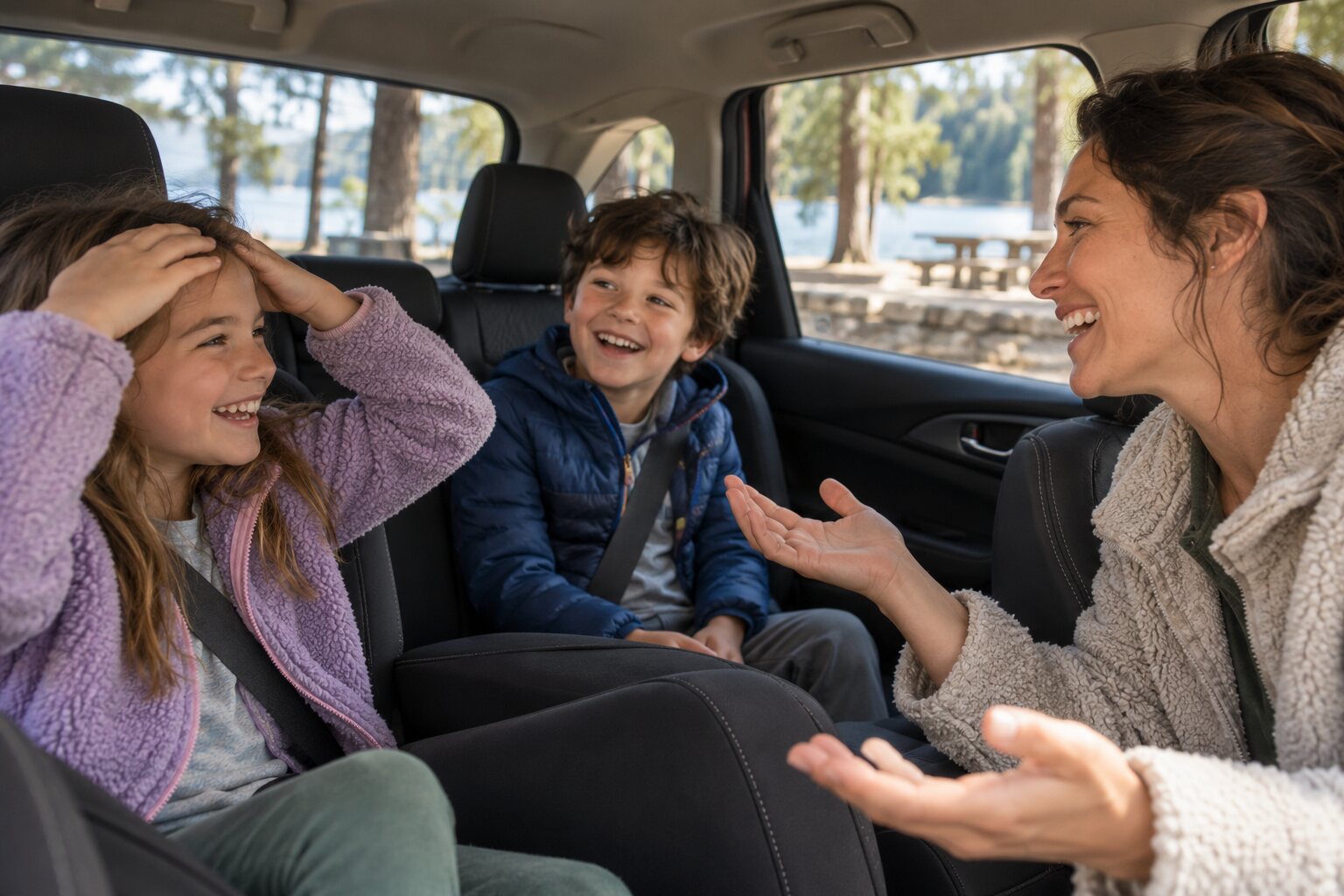
Choose a color and let passengers quietly count things they notice from their seats. Use broad categories such as red cars, green signs, or yellow flowers, and set a short round. The driver should not participate by scanning for a target. This is a low-pressure option for children who want to watch the landscape but may not be ready for word games.
8. Cloud stories
On a clear day, passengers spot cloud shapes and invent a short story about them. It works best when the horizon is visible and the person playing is comfortable looking outside. If someone feels queasy, stop looking at moving scenery and switch to an audio game. Keep the game gentle and do not ask the driver to identify clouds or look upward.
9. Landmark bingo without a printed board
Before a familiar route, choose five things passengers may see: a bridge, a water tower, a train, a farm stand, or a tunnel. Each passenger keeps track mentally or with a secured notebook. Use landmarks that are common on the route rather than making the game depend on reading multiple signs. A shared team goal makes it easier for younger children and reduces competition over who spotted something first.
10. “What might be around the bend?”
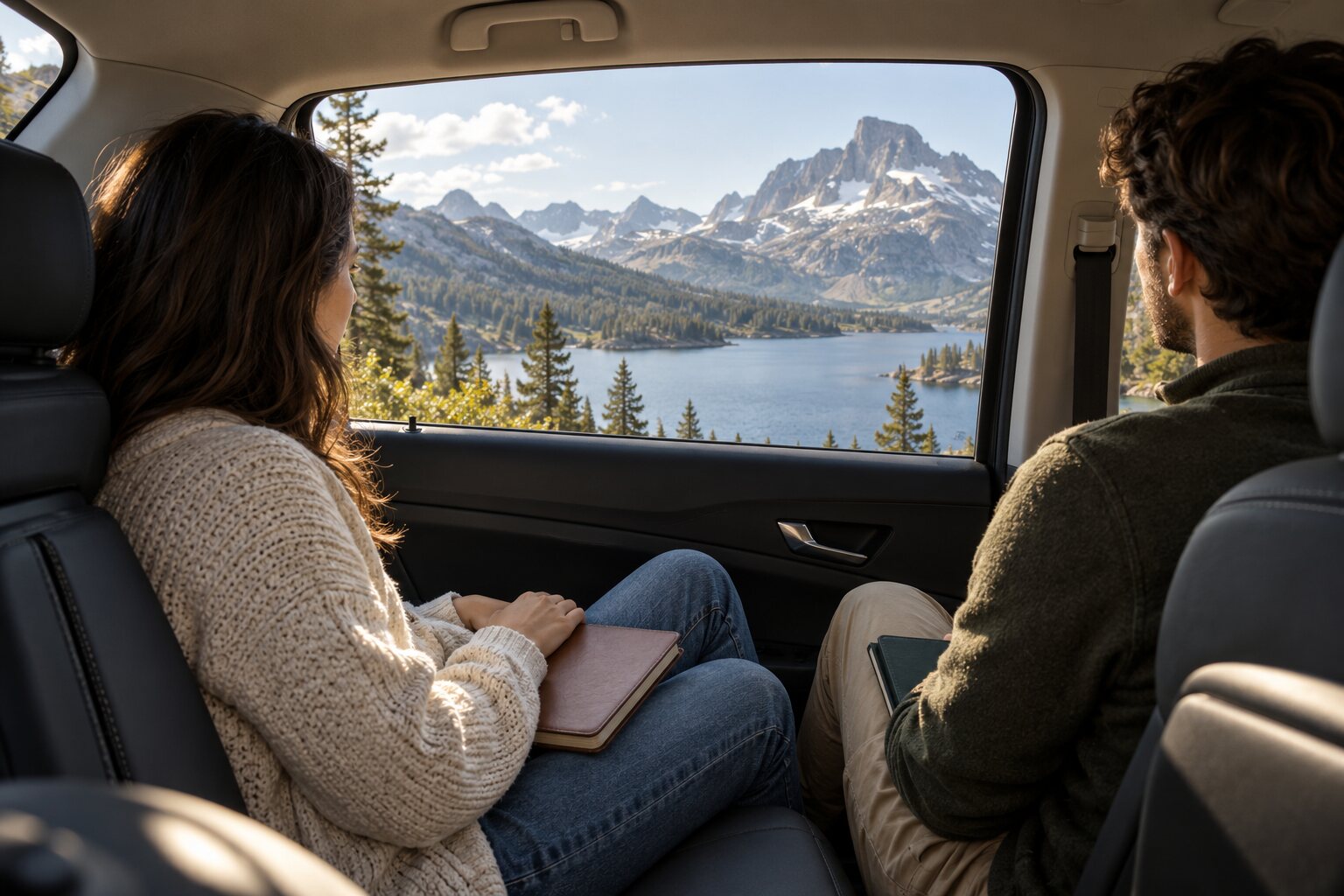
Passengers make a quiet guess about what the landscape will look like after a hill or curve: forest, town, river, or open fields. This is about noticing the geography, not predicting traffic. The driver does not need to answer or look for a clue. It can turn a familiar drive into a small observation exercise and works particularly well for adults who prefer conversation to trivia.
Audio-first games for a calmer cabin
11. Song-title connection
One passenger names a song, and the next person chooses another title connected by a word, theme, or performer. Nobody needs to play music aloud; the point is the connection. Keep the pace easy and allow people to pass. The game works for mixed generations because participants can explain why a song matters to them, but it does not require anyone to sing.
12. Soundtrack for the landscape
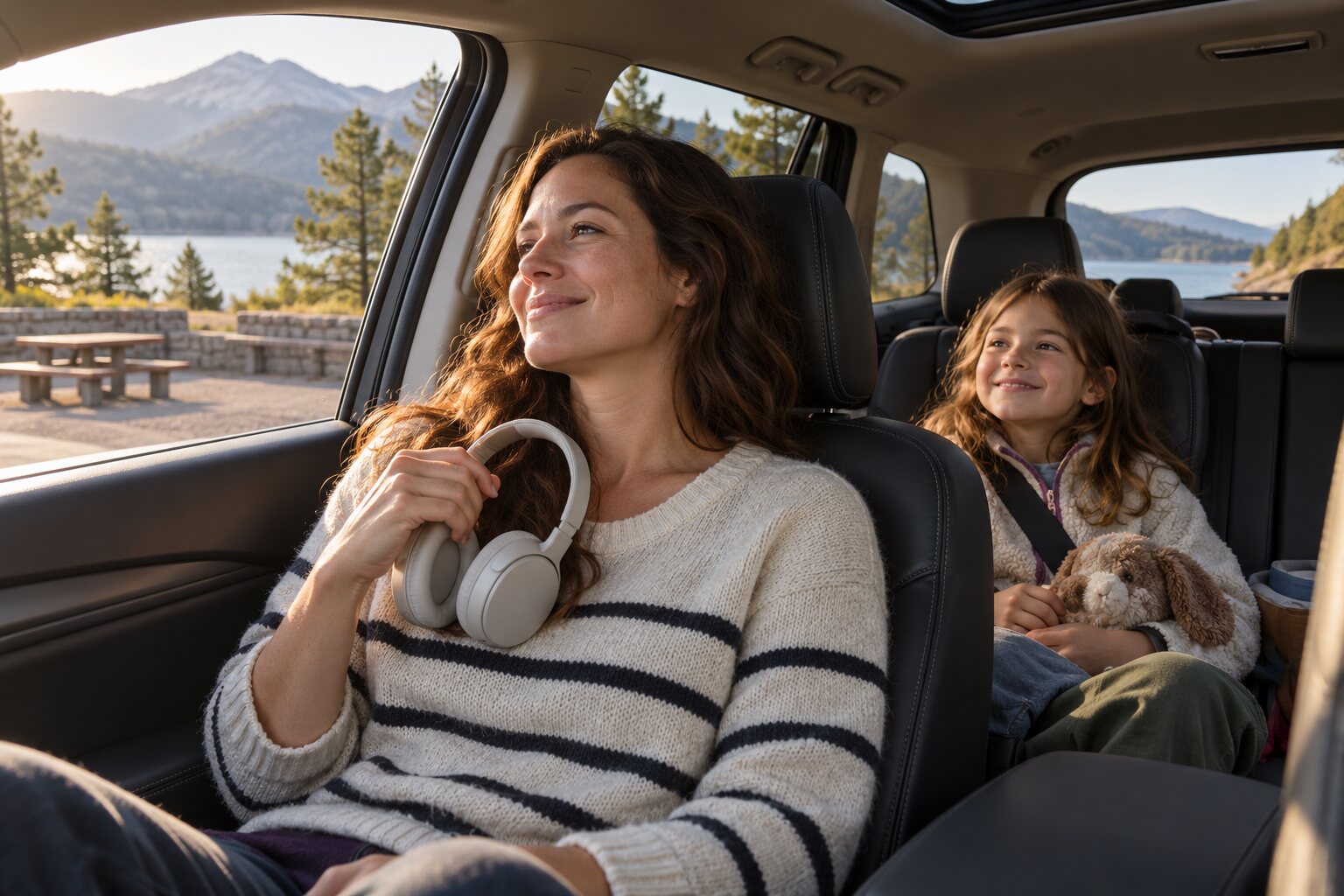
Passengers choose a song that fits the scenery and take turns saying why. The group can build a playlist later, after the car is parked. Do not ask the driver to scroll a music app or find a track while moving; one passenger can manage audio when safe, or save the ideas for a stop. This makes a good low-effort game when people are tired but not ready to sleep.
13. Guess the sound
A passenger makes a simple sound effect—rain on a roof, a train whistle, or a barking dog—and the others guess. Keep it quiet enough not to startle the driver. Younger passengers can use animal sounds; adults can use movie or household sounds. Stop if the game gets too loud or someone is trying to rest.
14. Podcast pause prediction
When listening to a family-friendly story or podcast, passengers pause during a safe break and guess what may happen next. Do not interact with a screen while the vehicle is moving; one passenger can manage the audio, or save the pause for a rest stop. Choose content everyone can follow. A short episode is often better than a long one because the group can finish a story and discuss it before the next activity.
Simple games for teens and adults
15. Two truths and a travel lie
Each person shares two true travel experiences and one invented story. The others guess which one is fictional. Use experiences people are comfortable sharing; nobody should be pushed to talk about a trip they would rather keep private. This can reveal funny family memories and is more engaging than a generic quiz when everyone already knows one another.
16. Rank the hypothetical itinerary
Give the group five possible stops—an overlook, a museum, a diner, a short trail, and a beach—and ask everyone to rank them for a fictional day. Compare why the lists differ. The game surfaces what each traveler values, which can help the group make real trip decisions later. Keep it hypothetical while moving; save navigation changes or booking decisions for a parked stop.
17. The no-repeat movie pitch
Take turns pitching a movie in one sentence without naming the title, and let the others guess. Choose broad genres or family-friendly films the group knows. No props are needed, and the rules are easy to adapt if someone is new to the group. This is a better fit for people who enjoy pop culture than for passengers who want to rest, so keep it optional.
18. The best-stop debate
Pick a made-up road-trip dilemma: one extra hour at a beach or a short visit to a museum, breakfast before dawn or a late lunch, one long scenic road or two quick towns. Each player chooses and gives one reason. Keep the conversation light and do not turn it into an argument about the actual route while the driver is navigating. It is a simple way to learn what kind of day the group wants before the next trip.
Pick a game for the passenger who needs it
| Passenger need | Good starting games | Skip or adjust |
|---|---|---|
| Young child | Color spotter, story building, animal sounds | Long rounds or strict elimination rules |
| Motion sickness | Audio games, Would you rather, song connections | Reading, screens, looking down, detailed scavenger lists |
| Teen who dislikes “kid games” | Movie pitch, playlist connection, itinerary ranking | Forced singing or public performance |
| Tired group | One-sentence story, short audio round, quiet break | Timers, shouting, high-stakes competition |
| Driver | Only passive conversation when it feels safe | Reading, searching, phone use, looking away, scorekeeping |
Keep a small “game menu” in your head rather than packing a complicated kit. Start with one no-material option, one audio option, and one visual option for passengers who feel comfortable looking outside. Rotate when the energy shifts. If the car gets tense, a snack stop or quiet stretch may work better than another game. A good road-trip memory includes passengers who felt comfortable, not only a full list of activities completed.
Keep games comfortable, inclusive, and driver-safe
Choose games that suit the people and the road. A word game that works for a group of adults may frustrate a preschooler, while a fast trivia round can feel tiring after a long day. Offer an easy way to pass without explaining, and rotate who chooses the next game. For children, use categories they know—animals, foods, colors, or things they can see—then make the rules more challenging only if they ask. The point is shared attention, not keeping score or proving who is cleverest.
Watch for signs that someone is getting carsick or overstimulated. Reading, looking down at cards, or tracking a moving screen can make nausea worse for some passengers. Switch to an audio story, a scenery-based game, or quiet rest, and encourage the passenger to look toward the horizon if that helps. Keep water and a bag within reach, and plan breaks where everyone can get fresh air. If a passenger feels unwell, pause the game rather than asking them to push through it.
The driver should never need to read prompts, hold materials, or answer on a timer. A front-seat passenger can host and handle any cards or device; if nobody can do that safely, choose a simple conversation game or stop. Avoid games that encourage speeding, distraction, or arguments about directions. A playlist challenge, a calm story, or a shared observation can be enough. Quiet time is also a valid part of a family drive: rotate between games, music, and rest so that entertainment does not become another obligation.
Sources
- https://www.nhtsa.gov/vehicle-safety/distracted-driving
- https://www.cdc.gov/motion-sickness/about/index.html
- https://www.nhtsa.gov/road-safety/child-safety