
8 Winter Road Trips With Daylight and Road Checks
A winter road trip can look perfect on a map and still be a poor choice once the sun sets at 4:30, a mountain pass closes, or a visitor center switches to limited hours. The best cold-weather drive is not the one with the most dramatic route. It is the one that leaves daylight for the scenery, has a realistic place to stop, and gives you permission to turn around when conditions change.
Use these eight ideas as starting points, not promises that every road will be open on your travel dates. Each route pairs a winter landscape with a practical check: elevation, seasonal access, daylight, or an easy backup. Before departure, confirm road status with the state transportation department and the park or land manager. If officials advise against travel, change the plan.
How to choose a winter route you can actually enjoy
Begin with the hardest part of the route. Is there a high pass, a remote stretch without services, or a road that closes after snow? Check the official road report for that section before booking lodging around it. A navigation app estimates normal drive times; it does not tell you whether a road is icy, whether chains are required, or whether a park gate has closed.
Then work backward from daylight. Pick a daily driving window that includes fuel, meals, bathroom stops, and slower speeds. In winter, a two-hour map estimate can turn into three hours after weather and traffic. Schedule the scenic section early in the day, and avoid reaching an unfamiliar mountain town late at night. Keep one overnight stop flexible if the route depends on a pass.
- Check state road conditions and park alerts the evening before and again before leaving.
- Look up sunset for the exact date and location, not just the trip’s starting city.
- Keep the fuel tank comfortably above empty before remote or high-elevation stretches.
- Carry warm layers, water, a phone charger, and the vehicle equipment recommended by its manual.
- Choose a nearby indoor backup so a closure does not become a wasted day.
Eight winter road trips with daylight and road checks
1. Jackson to the Grand Teton valley viewpoints
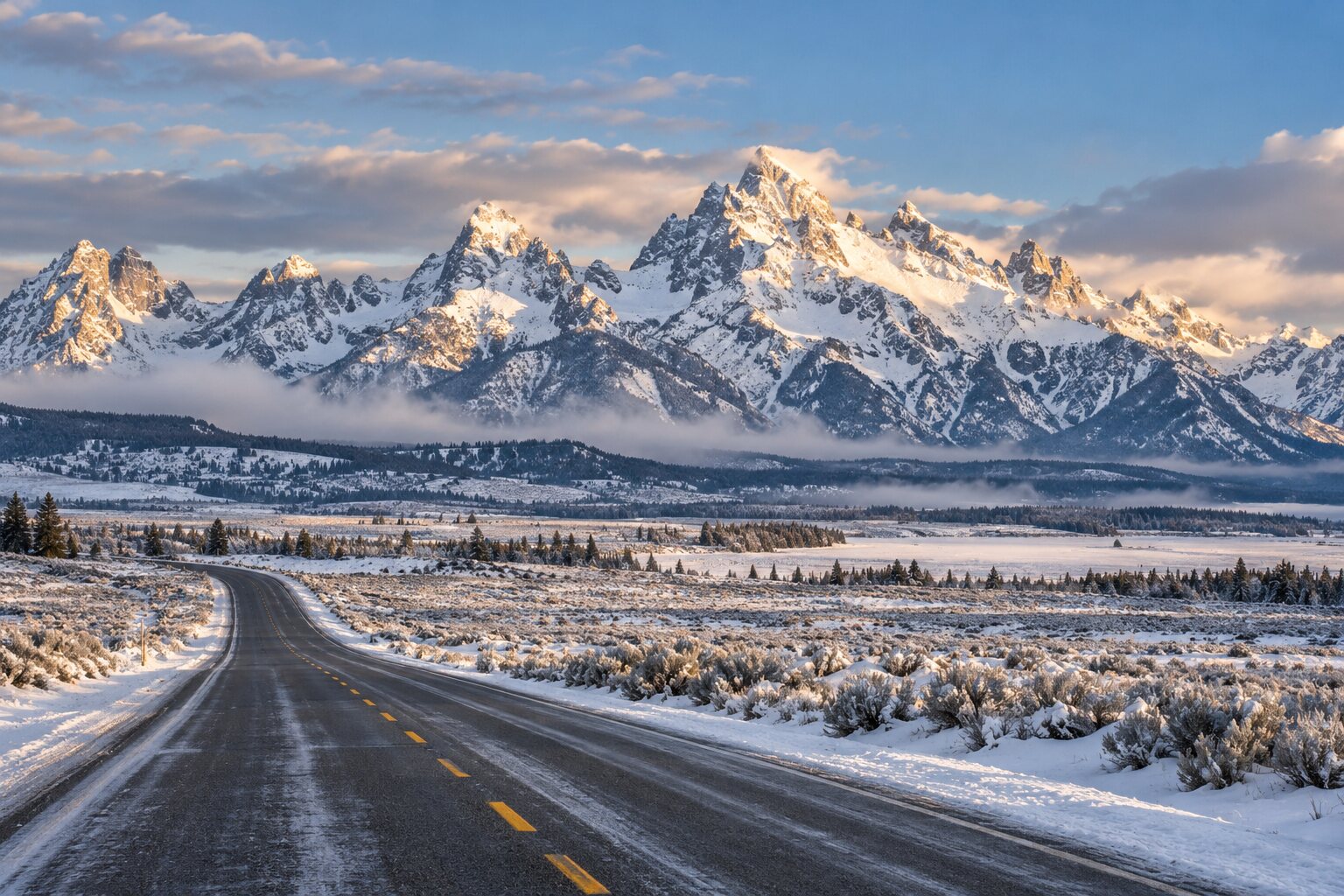
Base in Jackson and use a short out-and-back toward the accessible Teton Valley viewpoints rather than treating the park’s full summer road network as a winter route. Snow can close or limit access on park roads, and services are seasonal. Check Grand Teton’s current road status before setting a turnaround point. A clear morning may offer mountain views and wildlife viewing without requiring a long drive; if access is limited, keep the day in Jackson or choose a lower-elevation walk. Do not stop in the road for photographs, and keep a respectful distance from wildlife.
2. Yellowstone’s North Entrance to Mammoth Hot Springs
The North Entrance near Gardiner is the practical starting point for a winter Yellowstone visit, but the park’s road system changes substantially by season. Plan around the roads the National Park Service says are open to regular vehicles, and do not assume a summer loop is available. Mammoth Hot Springs can anchor a compact visit; reserve enough daylight for the drive back and check entrance, facility, and weather updates. If conditions deteriorate, shorten the outing. A park day is not worth pressing on icy roads after dark.
3. Olympic Peninsula’s coastal loop, with a lowland focus
For a milder winter landscape, plan a coastal section of the Olympic Peninsula around Port Angeles, Lake Crescent, and one accessible beach or town stop. Rain, wind, landslides, and temporary closures can matter as much as snow, so check the National Park Service alerts and Washington road reports. Avoid trying to circle the entire peninsula in one short day. Choose a base, identify a second route inland, and keep the coast as the weather-dependent highlight. Tide tables and storm surf conditions can also change whether a beach walk is comfortable.
4. Death Valley viewpoints from a Furnace Creek base
Winter is a popular season for Death Valley because daytime temperatures are often more manageable than in summer, but distances between services remain large. Start from Furnace Creek, choose a few nearby overlooks, and check the park’s road conditions before heading toward more remote areas. Flash flooding can damage roads even when rain has stopped, and some routes require high-clearance vehicles. Carry water, fuel, and layers for the temperature drop after sunset. Keep the drive short enough to return before dark rather than adding every famous viewpoint to one itinerary.
5. Zion and the lower-elevation towns of southern Utah
Use Springdale as a base for Zion’s accessible areas and a separate day for nearby towns, instead of trying to cross multiple high plateaus in one winter drive. Zion’s shuttle schedule, parking arrangements, trail access, and road conditions can change by date. Check the park’s current visitor information and Utah’s road report. Even a short trail can be slick in shade, so bring shoes with grip and a backup indoor stop. If a snowstorm is forecast, keep the trip close to the lodging base and skip the longer scenic drive.
6. The Blue Ridge Parkway near Asheville, using open sections only
The Blue Ridge Parkway is beautiful in winter, but sections can close for snow, ice, or maintenance. Do not plan a fixed point-to-point itinerary along the full route. Choose a base near Asheville, identify a few overlooks on sections confirmed open that morning, and keep a town-based alternative ready. The National Park Service posts closure information; verify it before driving onto the parkway. Short daylight and fog can make a scenic road tiring, so leave time to return by a familiar highway if conditions change.
7. The Oregon Coast between two comfortable overnight bases
A winter Oregon Coast trip works best as a series of short coastal drives rather than one long dash from north to south. Choose two towns with lodging and services, then explore nearby viewpoints between them. High surf, wind, and rain may limit beach access; check Oregon’s road information and local warnings before heading to exposed headlands. Stay behind posted barriers and never turn your back on the ocean. A lighthouse museum, aquarium, or café gives the itinerary a dependable indoor option when the shoreline is rough.
8. Lake Tahoe’s shoreline with a short, weather-aware loop
Lake Tahoe offers dramatic winter scenery, but the surrounding roads climb into mountain weather and can require chain controls. Choose a single side of the lake for the day, check Caltrans and Nevada road updates, and confirm parking or recreation access at each stop. Do not assume a full shoreline loop is comfortable during a storm. If the pass conditions are poor, stay near your lodging, take a short local outing, or use a rest day. Travelers without winter-driving experience may prefer a shuttle or guided outing over driving during active snowfall.
Make the day flexible before you leave
Choose the route’s most demanding section to set your comfort level. A sunny afternoon at a low-elevation overlook is different from a pass that can close during a storm. If anyone in the car is uneasy about snow or mountain driving, prioritize lower elevations, frequent towns, and more than one reasonable stopping point. That may mean choosing a shorter loop or traveling in shoulder season. The best winter itinerary is one you can enjoy without feeling pressured to continue when conditions change.
Think about how quickly plans can adapt. A one-night stop near a major highway offers more options than a remote cabin with one access road. Keep lodging flexible when possible, and avoid stacking a timed activity immediately after a long winter drive. If the road is clear, you gain a relaxed arrival. If it is slower than expected, you can still reach your overnight without sacrificing the whole day. Share your rough route and check-in plan with someone at home, especially when traveling through areas with limited service.
Build a simple go-or-no-go check into breakfast: read the local forecast, road status, and park alerts; confirm fuel and food stops; then decide whether the planned distance still makes sense. Conditions can differ across a pass or valley. If officials advise against travel, postpone or choose an indoor day. A scenic drive should remain optional; the trip does not fail when you turn around. In winter, flexibility is part of the itinerary itself.
A practical three-day winter driving rhythm
For a long weekend, choose one overnight base and make the landscape the day’s activity. On day one, arrive in daylight, buy groceries or snacks, and do not add a faraway viewpoint after check-in. On day two, use the clearest forecast window for the longer drive. Set a turnaround time before leaving: if a road report worsens, a trailhead is closed, or the return would push into darkness, switch to the shorter option. On day three, keep the morning close to the lodging and leave a generous margin for the drive home.
This rhythm is especially useful when the trip crosses more than one elevation zone. A blue sky in town does not guarantee clear conditions on a pass, and a sunny forecast for a broad region can hide a storm over the exact road you intend to use. Check the report for the road segment, not just the destination. If the route crosses a state line, make sure you are reading both agencies’ updates. Save the relevant pages before leaving service, because a screenshot of yesterday’s status is not a substitute for a fresh report.
Think through the passenger experience as well as the driver’s. A traveler who dislikes winter roads may feel more comfortable with a short scenic drive and time in a warm café than with a full loop. Children may need an indoor break before everyone is ready for another viewpoint. Keep a warm layer, water, essential medication, and charging cable in the cabin rather than buried under luggage. When everyone knows that turning around is an acceptable option, the group is less likely to pressure the driver into continuing through poor conditions.
Do not make a winter itinerary depend on a single road, attraction, or meal reservation. Identify a nearby town, visitor center, museum, or easy walk that still works if the scenic segment closes. If the route is remote, tell someone where you expect to be and when you will check in. Carry enough fuel and supplies to wait safely for help, but follow the vehicle manual and local authority guidance rather than attempting roadside repairs in a dangerous location. If an official closure or warning says to stay off the road, use the backup plan.
Finally, judge success by the experience you had, not by the number of miles completed. A winter drive with one beautiful overlook, a relaxed lunch, and an early return can be better than a packed itinerary that leaves the driver tense and the passengers cold. Build the route around the daylight you have, check conditions as they change, and leave room to stop. That simple approach works across all eight ideas here, whether the scenery is snowy peaks, desert color, forest, or a stormy coast.
Pack and plan for the wait, not just the drive
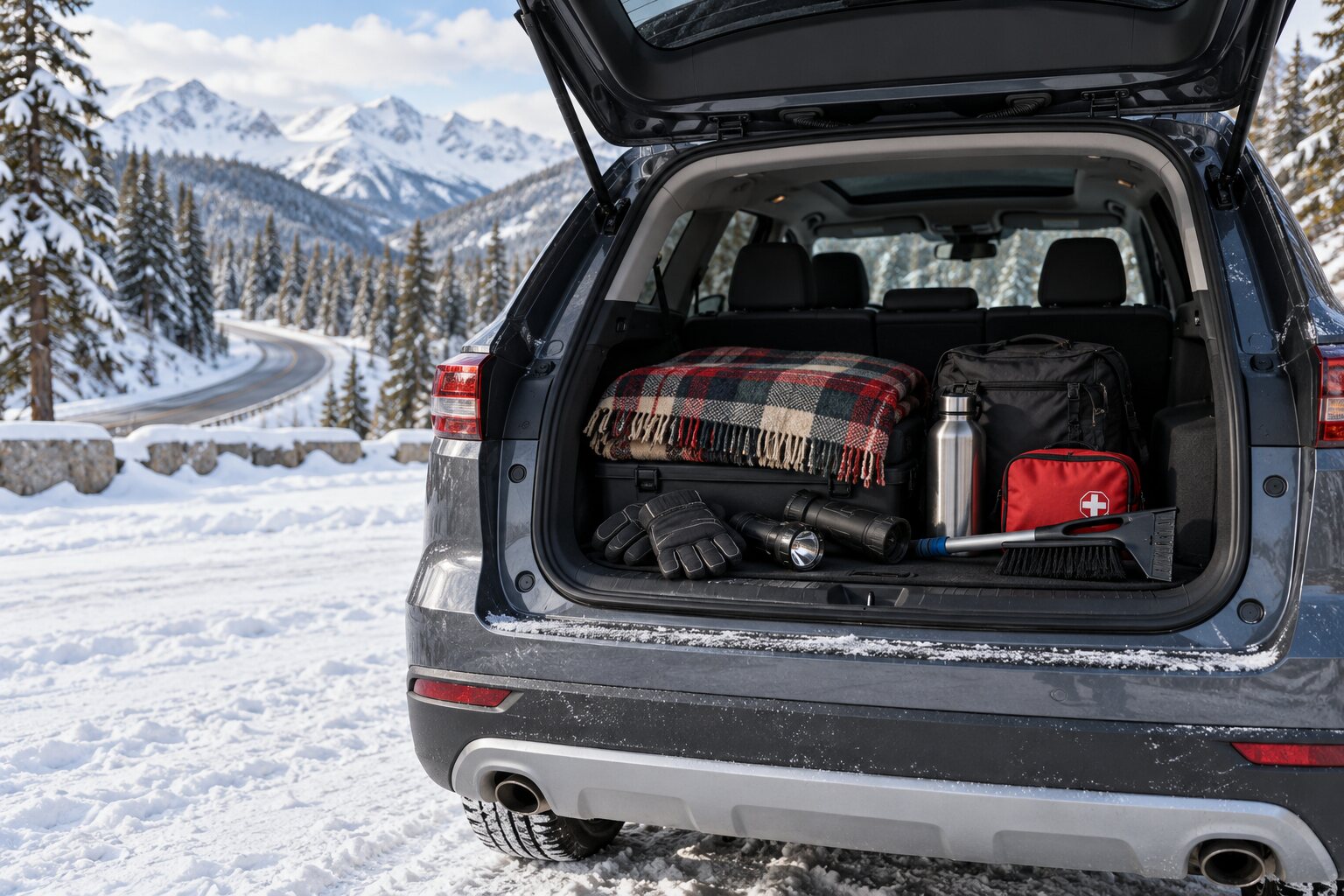
Before leaving, make sure the basic winter items are in the passenger area: a warm layer for everyone, gloves, water, a snack, a charging cable, and any medication the group may need. Check the tire pressure and windshield washer fluid, and confirm that the vehicle’s winter equipment matches its manual. If your route requires chains, learn the local rules and practice fitting them somewhere safe before the trip. These preparations do not make a storm risk-free; they make a delay less uncomfortable while you follow official instructions and wait for conditions to improve.
Give someone at home your route and expected check-in time when you will be driving through a remote stretch. Keep your phone charged and download maps for areas with weak service. If a closure forces a change, tell your lodging host or travel companion before taking an unfamiliar detour. Avoid following other vehicles onto a closed road or around a barrier. A clear, boring alternative is often the smarter choice, especially when the original route depends on daylight or a pass that can close quickly.
Sources
- https://www.nps.gov/grte/planyourvisit/conditions.htm
- https://www.nps.gov/yell/planyourvisit/parkroads.htm
- https://www.nps.gov/olym/planyourvisit/conditions.htm
- https://www.nps.gov/deva/planyourvisit/conditions.htm
- https://www.nps.gov/zion/planyourvisit/conditions.htm
- https://www.nps.gov/blri/planyourvisit/roadclosures.htm
- https://www.tripcheck.com/
- https://roads.dot.ca.gov/