
15 Airport Outfit Formulas for Long Travel Days (Chosen by Flight, Weather, and Arrival Plan)
The airport outfit that looks perfect in a mirror can become a nuisance by hour six: a waistband digs in, a jacket is too warm to wear and too bulky to pack, or shoes that looked polished feel wrong after a connection. The fix is not another universal list of “comfy travel clothes.” It is to match the outfit to the hardest part of your actual travel day.
Think about three moments: the temperature when you leave, the hours you will sit or walk, and what you need to do shortly after you land. A direct flight to a hotel can tolerate a softer outfit than a same-day meeting or a train transfer across town. A winter departure and warm arrival call for a removable layer, not a heavy outfit that stays on all day.
Below are 15 formulas you can adapt from clothes you already own. Each has a purpose and a tradeoff, so you can choose one that works for your body, climate, and itinerary instead of copying a photo that ignores the rest of the journey.
The four-part airport outfit test
Before choosing individual pieces, check whether the outfit works in four conditions:
- At the curb: Can you handle your bag, walk from the drop-off, and stand in line without adjusting a strap or hem every few minutes?
- At the seat: Can you sit, reach for something, and change position without a waistband, stiff seam, or tight sleeve becoming the main event?
- At the temperature change: Can you remove or add a layer without turning your carry-on into a closet?
- At arrival: Can you walk to transit or dinner in the same outfit, or does it only work for the plane?
An outfit does not have to pass every test in the same way. A crisp outfit may be worth it for a short flight and a work arrival. A long overnight route may call for a soft base layer and a clean outer layer you can put back on before landing. The point is to choose the compromise on purpose.
15 airport outfit formulas by travel day
1. The direct-flight uniform: straight-leg trousers, breathable tee, and light cardigan
Choose comfortable trousers with a soft waist, a tee that does not cling, and a cardigan thin enough to fold over your bag handle. This outfit works when you want to arrive looking composed without wearing a full matching set. Neutral colors make it easy to repeat the pieces on the return trip.
Best for: A short-to-medium direct flight and a casual arrival plan.
Adjust it: Swap the cardigan for a button-up shirt if you want a sharper layer. Avoid a belt if it becomes uncomfortable after sitting.
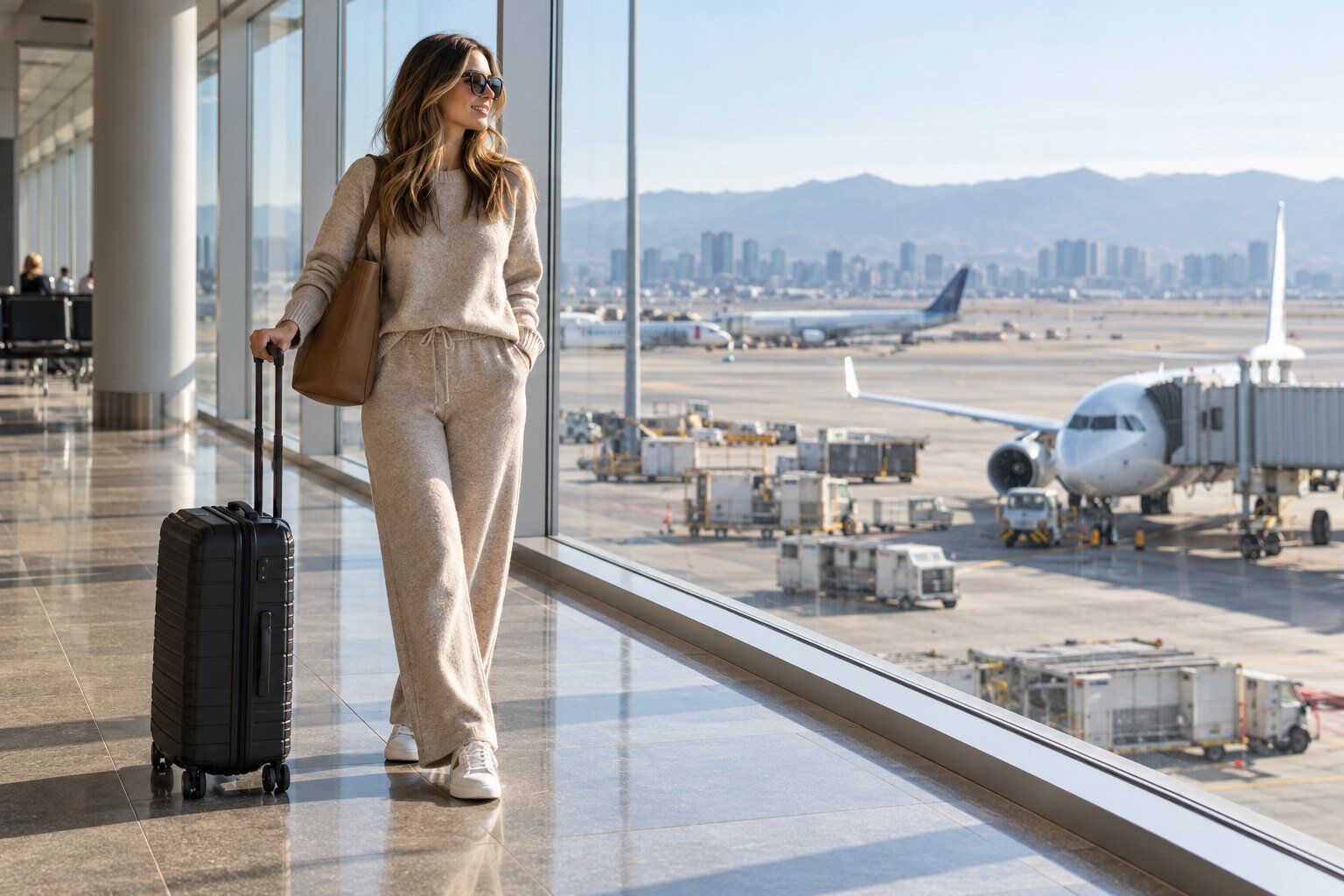
2. The long-haul set: relaxed matching knit top and pants
A matching set looks intentional while giving you the movement of loungewear. Pick a mid-weight knit with a top that still looks like daywear; very thick fleece can feel hot in a crowded cabin and take up room in a personal item. The visual payoff comes from a coordinated color, not an elaborate outfit.
Best for: A long direct flight or an overnight route where comfort is the priority.
Tradeoff: Knit fabric can wrinkle or hold lint. Keep a compact layer for temperature changes and check that the pants are not so long they drag around the airport.
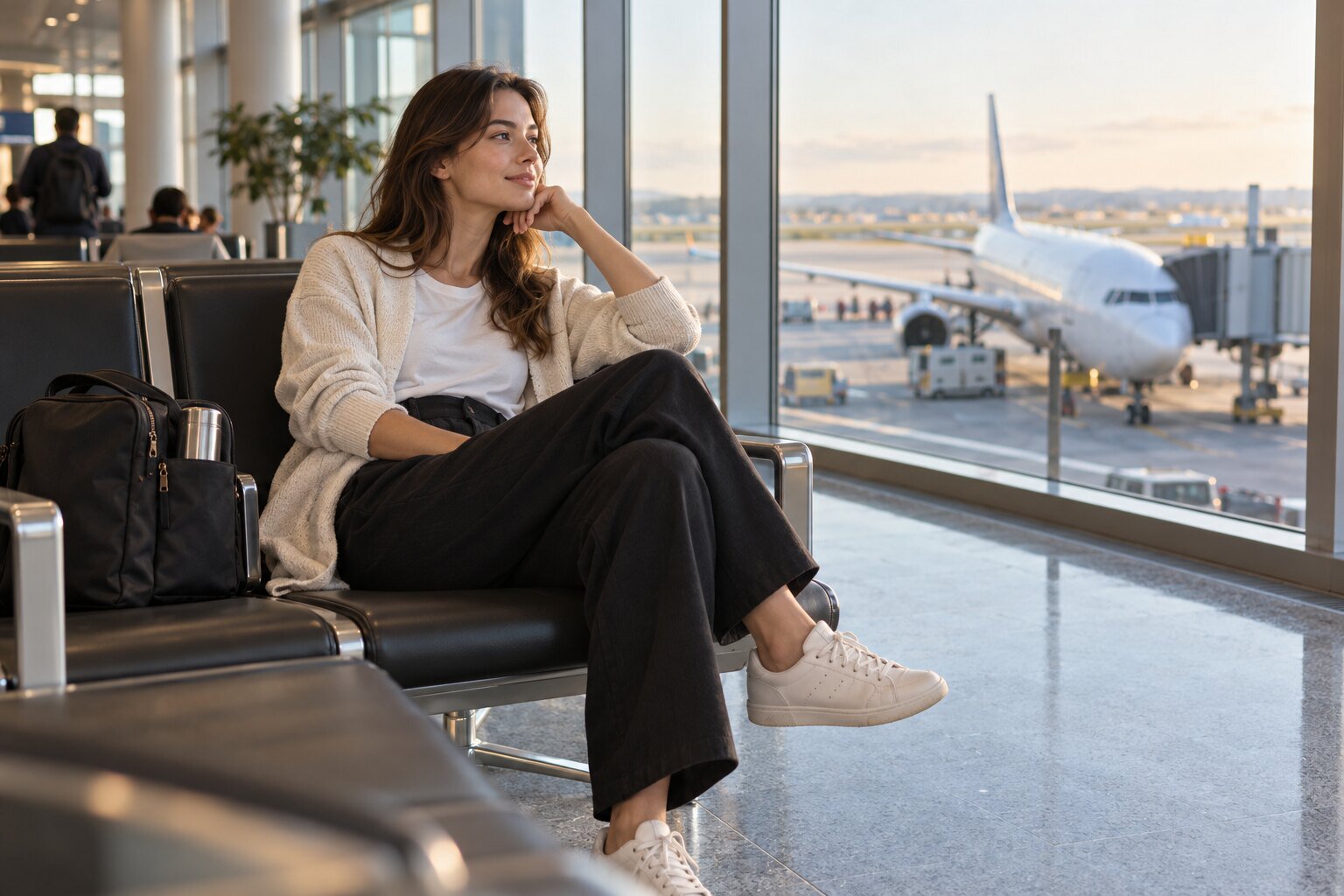
3. The winter departure, warm arrival: light base, packable jacket, easy shoes
Wear a thin long-sleeve top under a removable sweater or overshirt. Put the warmest coat in your bag if it compresses easily, or wear it only for the outdoor parts. Choose shoes that work for both the airport and the warmer destination; heavy snow boots can make an awkward first outfit after landing.
Best for: Trips that cross a real climate gap.
Make it easier: Keep gloves, hat, and heavy outerwear together so they do not spill into your seat area. If you need to carry the coat, make sure it fits your bag allowance.
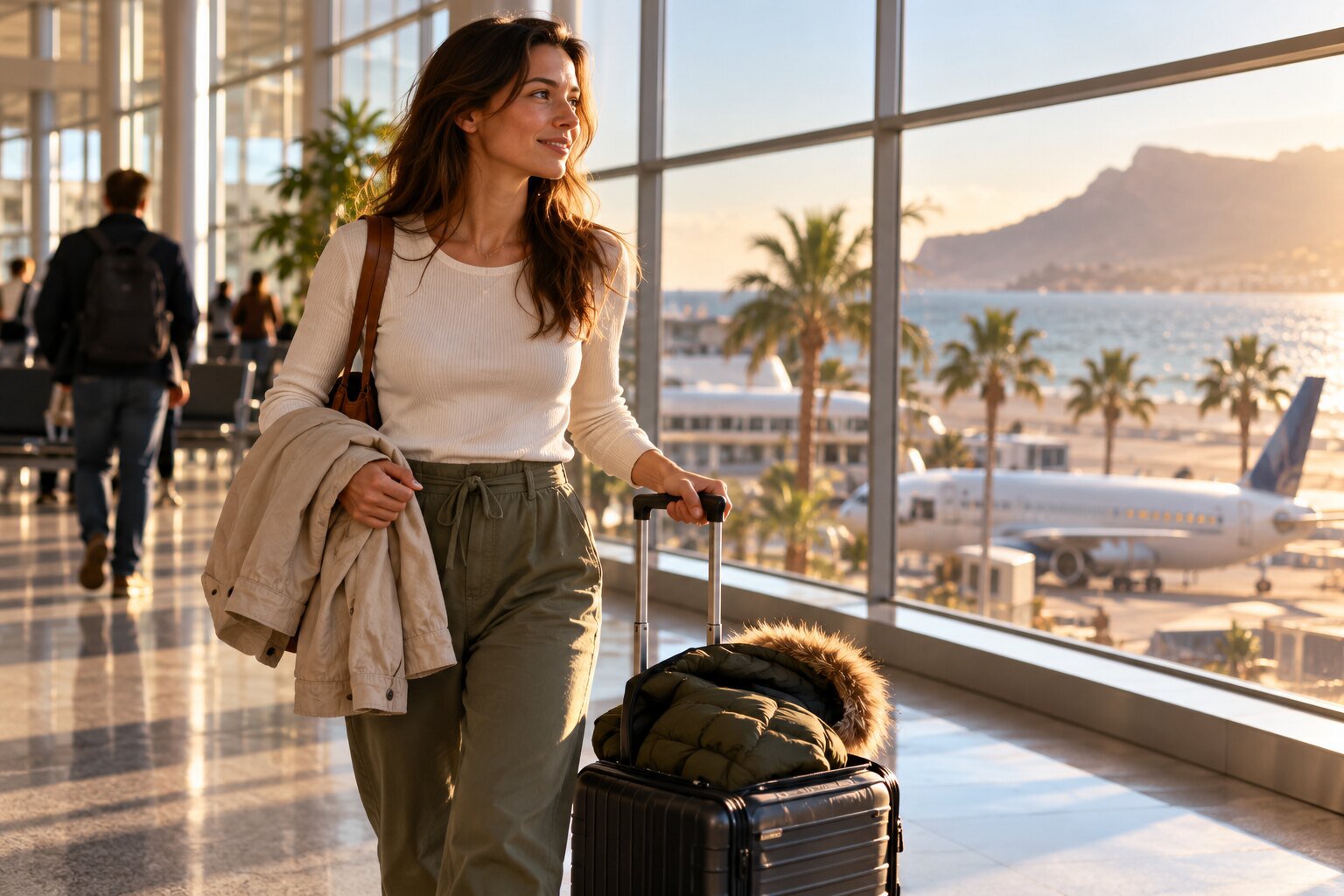
4. The summer-to-air-conditioning formula: linen-blend pants, tank or tee, and overshirt
Lightweight pants and a simple top feel appropriate outdoors, while an overshirt gives you a layer for cold terminals and cabins. A linen blend may crease, but the relaxed texture often makes that less noticeable than it would be on a tailored piece. Choose a top that stays comfortable if the overshirt comes off.
Best for: Warm-weather trips with cold indoor spaces.
Skip: An oversized scarf that needs constant adjusting or a garment that only works when perfectly arranged.
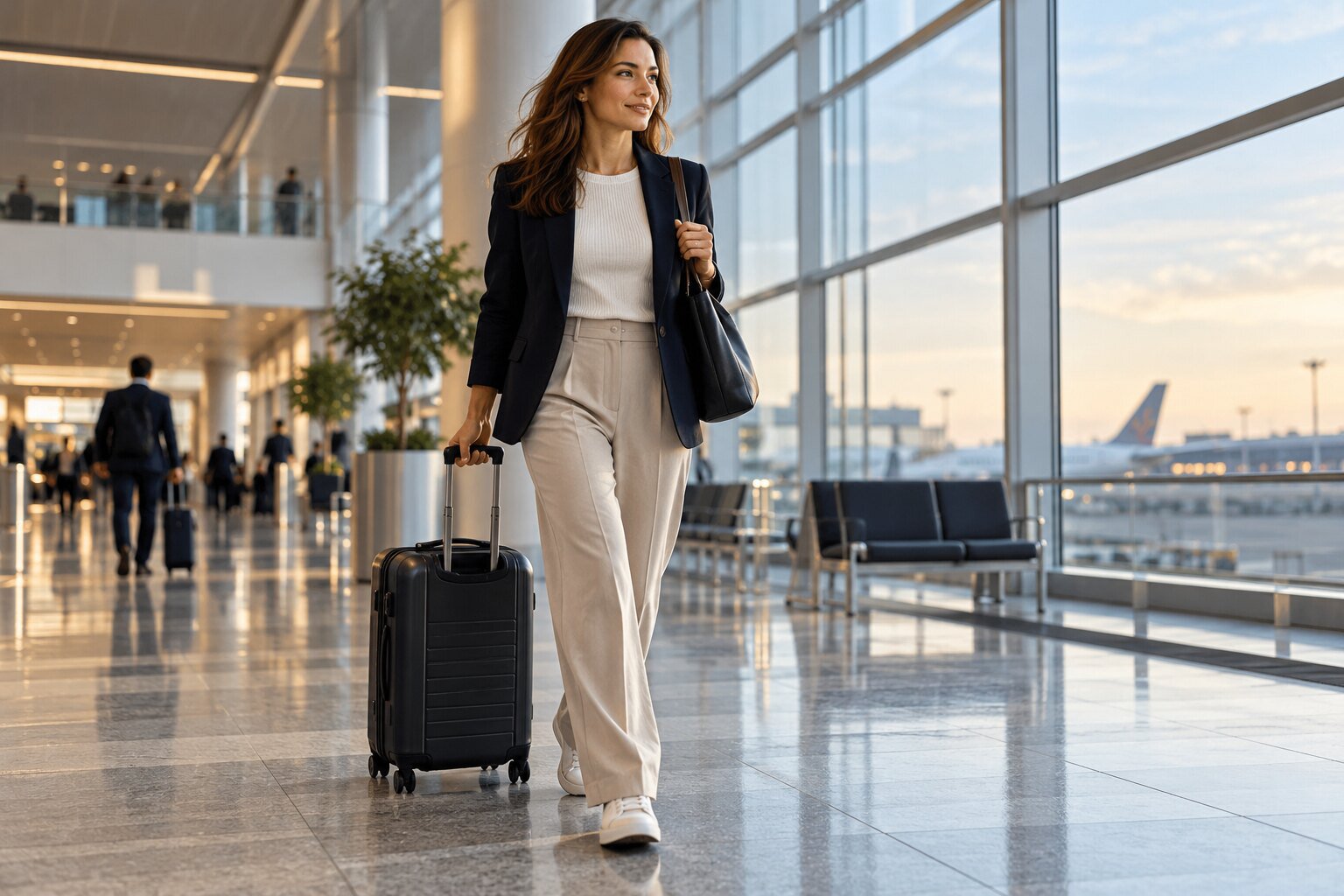
5. The meeting-on-arrival outfit: stretch blazer, simple shell, and polished trousers
If you have to be presentable soon after landing, keep the foundation simple and let one structured layer do the work. A blazer with some movement is easier to sit in than a stiff jacket, and a plain shell makes the outfit look finished without extra accessories. Keep the blazer out of a tightly packed bag if wrinkles would matter.
Best for: A work trip with a short transit from airport to meeting.
Tradeoff: This is a style-first choice. If you have a long connection or a red-eye, change into a softer base for the flight and wear the blazer before landing.
6. The airport-to-dinner look: dark jeans, soft top, and one elevated layer
Dark jeans are useful when you want one outfit to cover travel and dinner. Choose a cut that stays comfortable while seated and a top with enough structure to feel dressed. Add a simple jacket or clean overshirt instead of relying on several accessories that can get misplaced.
Best for: An evening arrival with no time to check in and change.
Adjustment: If denim feels restrictive on your route, use a ponte or travel trouser with a similar silhouette.
7. The warm-weather one-piece: midi dress with a light layer and walkable sneakers
A breathable midi dress reduces outfit decisions and can look complete with minimal styling. Add a soft layer for the cabin and sneakers that you have already worn comfortably. Check the hem when seated and walking so it does not bunch under a seat or catch on stairs.
Best for: Warm destinations and direct routes where an easy outfit matters.
Tradeoff: A one-piece can be less adaptable if temperatures change or a spill happens. A spare tee or thin leggings in your personal item can make it easier to adjust.
8. The skirt version: knit skirt, fitted tee, and a roomy overshirt
A knit skirt can feel less restrictive than stiff trousers while keeping a polished shape. Pair it with a fitted tee or tank and an overshirt that reaches past the waist. The proportions work because the top layer adds structure without requiring a fitted jacket.
Best for: Travelers who prefer skirts but still want easy movement.
Check: The elastic waist and fabric should feel comfortable while seated, not only while standing in front of a mirror.
9. The leggings outfit that looks like a real outfit: leggings, long button-up, and clean sneakers
Leggings can be a practical base for a long day, but the surrounding pieces make the difference between gym wear and an intentional travel look. Add a long button-up or tunic-style shirt, a neat layer, and shoes that are clean and easy to walk in. Keep the silhouette simple so the longer top does not snag on your bag or seat.
Best for: A very long travel day when flexibility matters more than formality.
Tradeoff: This may not suit a business or formal arrival. Pack a fresh top if you need a quick change before checking in.
10. The road-to-airport outfit: soft jeans, breathable shirt, and light jacket
If the airport is one stop in a road trip, choose pieces that work both in the car and through the terminal. A breathable shirt avoids the heaviness of a thick sweatshirt, while a lightweight jacket gives you a layer that can be taken off quickly. Shoes should make sense for both driving and walking.
Best for: Road trips that include a short flight or a rental-car return before departure.
Tip: Keep the outfit low-fuss around seat belts and bags; dangling accessories can tangle when you are moving between car and terminal.
11. The early-morning departure: zip layer, soft pants, and slip-on sneakers
At a very early hour, you want the outfit to require little thought and no complicated layers. Soft pants, a plain top, and a zip hoodie or cardigan are easy to manage when you are tired. Slip-on sneakers may speed up your routine, but follow the screening instructions at your airport and choose a pair that supports comfortable walking.
Best for: A short night before departure or a flight that leaves before sunrise.
Tradeoff: A hoodie can be bulky. Choose one light enough to fold or use as a pillow only if that is comfortable for you.
12. The connecting-flight formula: stretch pants, secure pockets, and no fragile layers
Connections add walking, stairs, and the possibility of a quick gate change. Pick stretch pants that stay put, a top that does not need adjusting, and a light layer you can tie or carry easily. Keep valuables in a zipped pocket or a bag that stays on your body when you sit down.
Best for: Tight connections or airports where you expect to walk between terminals.
Avoid: Long hems, shoes you have never tested, and accessories that need to be removed and packed every time you move through a checkpoint.
13. The plus-size comfort formula: relaxed tunic or tee, flexible trousers, and open-front layer
Fit matters more than a particular label or trend. Look for a waistband that remains comfortable while seated, a top that does not ride up when you reach overhead, and a layer that can stay open without pulling. If you prefer compression or shaping garments, choose only what you already know feels comfortable for the full length of the trip.
Best for: Anyone who wants a little more room through the waist, hips, or arms.
Try before travel: Wear the complete outfit at home while sitting for a while, walking with your personal item, and reaching for an overhead shelf. It is a practical way to catch fit problems before travel day.
14. The sensory-friendly option: familiar soft fabrics, minimal seams, and easy layers
For travelers who are sensitive to tags, tight cuffs, scratchy fabrics, or strong temperature changes, familiarity is a real advantage. Start with a tried-and-true base outfit, remove tags that bother you before the trip, and choose only one layer that can be added or taken off quickly. Do not make travel day the first test of a new fabric.
Best for: Anyone who values predictable feel over a new look.
Make it personal: Your comfortable fabric or fit may be different from someone else’s. The useful formula is the one that avoids the specific textures and pressure points that distract you.
15. The one-bag outfit: repeatable separates in two neutral colors
When you are traveling light, choose a top, bottom, and layer that each work with the other pieces you packed. Two compatible colors make mixing easier and keep the travel outfit from becoming a one-use item. Wear the bulkiest comfortable layer on the plane and pack the lighter pieces.
Best for: A short trip with a personal-item-only packing plan.
Tradeoff: The most versatile pieces are not always the most comfortable. Do not choose a stiff jacket or heavy shoe just to save a little room in your bag.
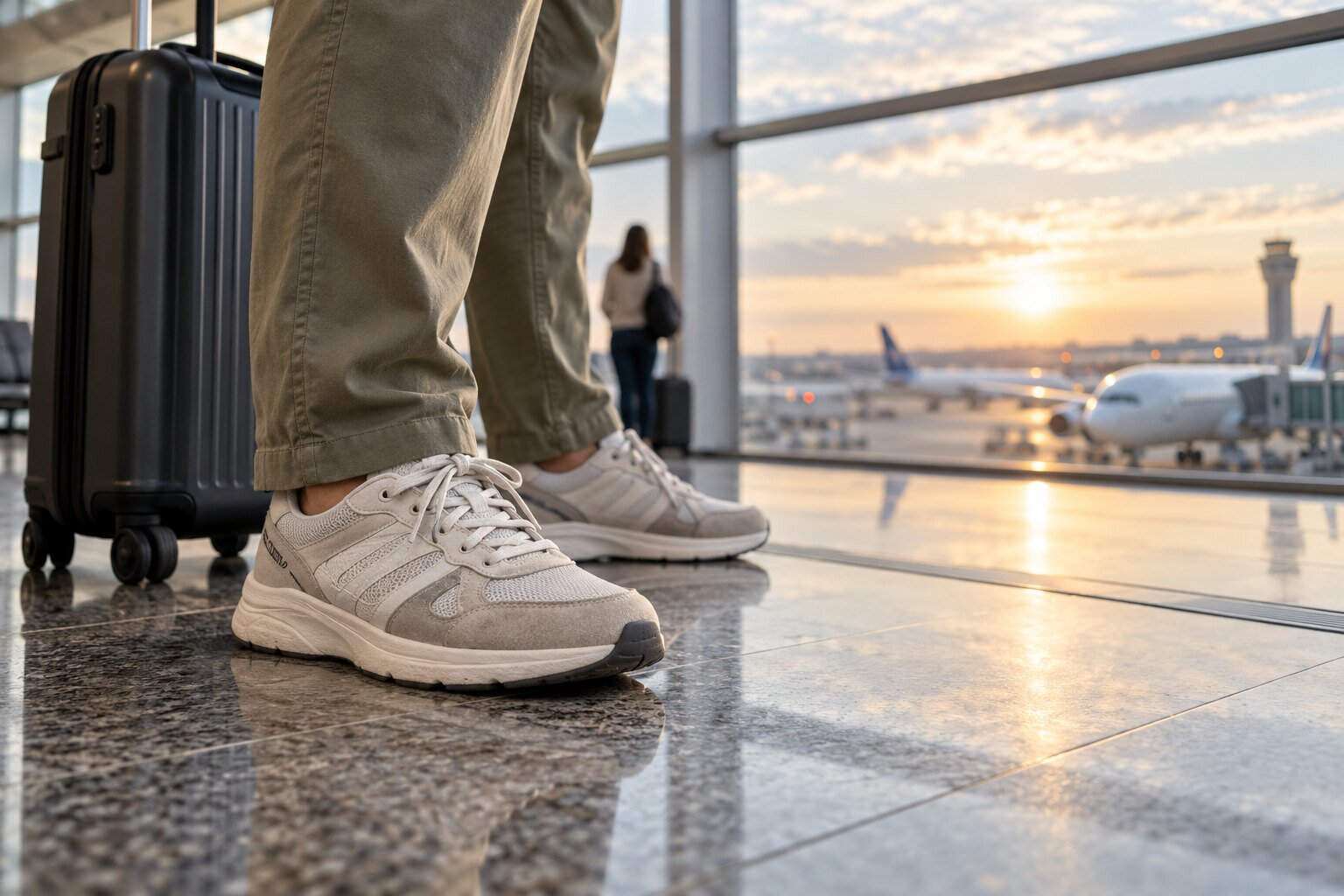
Pick shoes by the whole route, not just the flight
Shoes can make an otherwise good outfit feel wrong. Think through the complete route: parking or transit, security, terminal walking, stairs, the flight, and the first hour after landing. A pair that you already wear for long walks is usually a safer choice than a new pair bought for the trip. If you need dress shoes for an event, wear the comfortable pair to the airport and pack the other pair where it will not be crushed.
Consider the conditions too. A rainy arrival may call for a water-resistant shoe; a beach week may make a heavy boot pointless. If you wear footwear that is difficult to remove, check current checkpoint guidance and allow time for the screening process. The Transportation Security Administration’s travel checklist advises travelers to wear easily removable shoes, but screening instructions can depend on the airport, lane, and traveler program. Follow the directions given at the checkpoint.
What to keep in your personal item
Your outfit works better when a few simple backups are within reach. Keep the items that prevent discomfort or a rushed change together in one small pouch or pocket:
- A thin layer for temperature changes.
- A spare tee or underlayer if you expect a long travel day.
- A small pack of tissues and any personal essentials you routinely need.
- A hair tie or simple accessory if you use one.
- A compact bag for a layer you remove.
- A clean pair of socks if your trip includes a change of shoes.
Follow the airline’s current carry-on rules and the airport’s screening instructions for any liquids, tools, or other items you plan to bring. Keep the outfit itself simple enough that you are not repacking half your bag at the checkpoint.
A quick way to build your own airport outfit
Choose the base first: what can you comfortably wear while sitting for the longest stretch? Add only one removable layer for the coldest indoor part of the route. Pick shoes based on walking and arrival, then check the outfit while carrying your actual bag. If you need to adjust the waistband, pull down a hem, or move a strap every few minutes at home, the airport will not improve it.
Finally, ask what the first hour after landing looks like. If you will walk to transit, continue sightseeing, or go straight to dinner, choose the version that already works for that activity. If you are heading directly to a room, a softer outfit may make more sense. There is no prize for dressing like you have somewhere to be if you do not.
The best airport outfit is not the most fashionable one or the most relaxed one. It is the outfit that handles your particular combination of sitting, walking, temperature changes, and arrival plans with the fewest adjustments. Pick for the whole travel day, and you will look more at ease because you actually are.
Sources
https://www.tsa.gov/sites/default/files/tsa-travel-checklist_05-24.pdf