
Train vs. Rental Car: 12 Cost and Convenience Trade-Offs to Compare Before You Book
A train ticket and a rental-car quote look easy to compare until the rest of the trip appears. Station transfers, parking, fuel, luggage, pickup time, and the way you will get around after arrival can change which option is simpler—or less expensive.
The better choice depends on the route and the travelers. Rail can be a relief for a direct city-to-city trip with a walkable destination; a car can make a scattered itinerary or remote stay practical. A larger group, extra bags, a late arrival, or one hard-to-reach stop can shift the balance.
Use the 12 trade-offs and comparison worksheet below to price the same dates, passenger count, and real door-to-door journey. Schedules, fares, rental terms, fuel, parking, and local transit vary by place and date, so confirm the details for your specific trip before booking. Before you search, pin down the exact origin and lodging address, who is traveling, how many bags you will bring, and whether anyone needs step-free access or regular breaks. A station can look central on a map and still require a long final transfer; a low rental quote can expand once pickup timing, one-way fees, tolls, fuel, and overnight parking are counted. Those details determine which costs belong in the comparison.
Compare the full trip, not the headline fare
Write down the same five things for each option: total price for everyone, door-to-door time, number of transfers, luggage effort, and the amount of freedom needed after arrival. Use the same dates and the same number of travelers. Include taxes and fees that appear before checkout. Add any required hotel night or local ride. Do not assign a dollar value to your time unless you want to; simply show the hours and decide whether that time is worth protecting.
For rail, compare the fare for the party and the cost of reaching both stations. Check which train actually runs on your dates, how long the journey takes, and whether the origin and destination are central to your trip. For a rental car, compare the final quote and add fuel, tolls, parking, pickup time, possible one-way fees, and any other selected coverage or equipment. Those extras vary widely, so use the exact provider quote and route rather than a generic online average.
12 train-vs-car trade-offs that change the answer
1. One traveler or several?
Rail fares often price by passenger; a rental car is generally priced by vehicle and rental period. That means a car’s fixed cost may be shared across a larger group, while additional train tickets add to the total. But the car also has passenger-capacity limits, luggage space limits, and a price that can rise when a larger vehicle is required. Compare one vehicle that fits the whole group against every person’s rail fare, not the cheapest rental category shown in a search result.
- A car may fit better when more people share one vehicle and the route includes several stops.
- A train may fit better when the group is small, the destination is walkable, and adding passengers does not make total rail costs exceed the practical value of the car.
2. City center to city center or station to somewhere else?

Rail’s biggest convenience advantage can disappear when both stations sit far from the places you need to be. Add the ride to the origin station and the onward trip from the arrival station. If these are short walks or direct transit links, the train can be wonderfully simple. If they require multiple transfers, timed shuttles, or expensive rideshares, include that friction and cost.
A rental car may deliver you closer to a rural rental, a trailhead, or a family home. It may also create a parking problem once you arrive in a dense downtown. Map the final mile from each station and the final mile from a realistic parking location before choosing.
3. Does the train schedule match your usable day?
Look at departure and arrival times, not just the listed duration. A train that reaches town at night may require a taxi or an extra hotel night. A very early departure can make the trip to the station expensive or inconvenient. A car gives you more control over departure time, but traffic, weather, road work, and rest breaks still affect the arrival window.
Build a simple timeline from door to door. Add realistic buffer for collecting a rental, walking to the platform, boarding, station transfers, fuel stops, and returning the vehicle. If the train’s timetable fits naturally into your day, its scheduled nature may feel like a relief. If it forces you to lose a night or miss a timed activity, that is a meaningful cost.
4. Is the route direct or transfer-heavy?
A direct train is easier to navigate with bags and companions than a chain of transfers. When comparing a connection, note the transfer time, station layout, and what happens if the first segment runs late. A car avoids platform changes, but the driver takes on navigation, road conditions, and the responsibility of keeping everyone together.
Count transitions rather than assuming one mode is automatically easier. “One train plus a short walk” can be simpler than a two-hour drive through unfamiliar roads. “Two trains, a bus, and a rideshare” can be more effort than a direct drive, especially with tired children or mobility needs.
5. How many bags will you handle?

Luggage changes the experience on both modes. In a car, bags can stay in the trunk between stops, although they still need to fit along with passengers and any equipment. On a train, you may need to lift, stow, and keep track of your bags while boarding and moving through a station. Amtrak’s current standard policy lists one personal item and two carry-on items per traveler, with size and weight limits; some connecting services have different operating-carrier rules. Verify the policy for your exact service before relying on those allowances. (https://www.amtrak.com/carry-on-baggage)
For rail, ask whether checked baggage is available at both stations if you need it; not every train or location offers that service. For a car, check trunk dimensions against your actual suitcase count, not the number of seats in the vehicle listing. A compact car with four passengers and four hard cases can turn a “cheap” rate into an awkward upgrade.
6. Are you planning one destination or several?
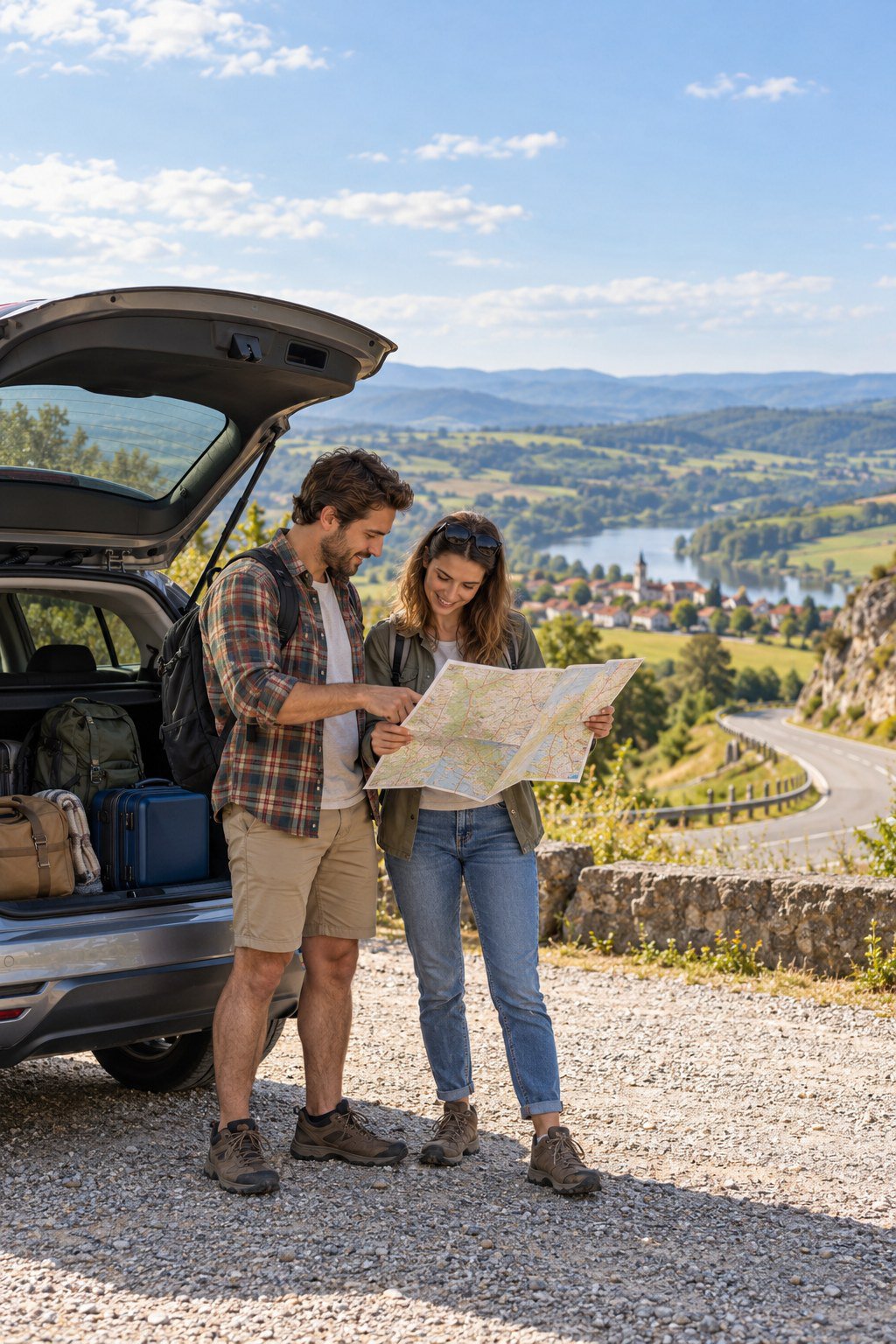
A fixed city itinerary with a hotel near the station often suits a train. Once there, walking and local transit can replace a car for the whole trip. A loop trip with several small towns, viewpoints, beaches, or trailheads usually benefits from having a vehicle, especially when public transit is infrequent or the return route does not match your schedule.
List each stop and the way you would reach it without a car. If a destination requires a long transfer, limited shuttle, or reserved excursion, that can turn “car-free” into a time-consuming plan. If you will leave the car parked for most of the trip, count parking and rental days you do not need.
7. What is your plan for driving after arrival?
The rental car is not only transport to the destination; it is a vehicle you must manage there. Ask where you will park overnight, what it costs, whether the lodging has space, and whether you are comfortable driving in that city. One-way drop-off fees and hotel parking can change the math. If the car will be used only for the journey and then sit unused, rail plus local transit might be simpler.
If your destination is spread out or local transit is thin, the car can create valuable independence. If streets are narrow, parking is limited, or you do not want to navigate after a long travel day, keeping the car may be a burden. Decide what you will do with the vehicle on day two, not just how you will arrive in it.
8. Who is doing the work during the trip?
On a train, everyone can generally use the travel time differently—read, rest, talk, or look out the window—subject to service and seating conditions. In a car, the driver cannot relax in the same way and may need a planned break. If there is only one driver, a long route can be tiring. If two people can share driving and the road itself is part of the vacation, a car may feel more flexible.
This is a personal judgment worth naming. A traveler who finds driving stressful may prefer a longer train ride with transfers. Someone who enjoys stopping at small towns may value the vehicle even when the route takes longer. Do not treat scheduled rail time and driving time as emotionally interchangeable.
9. Are you traveling with children or mobility needs?
Think through the full sequence: parking or station approach, boarding, bathroom access, luggage lifting, waiting, and the last mile. A train may reduce the need to keep children buckled for a long drive, but a station transfer can be difficult with a stroller. A car offers familiar seats and control over stops, but the person driving remains responsible for the road and cannot attend to every passenger.
If anyone has mobility, sensory, medication, or seating requirements, verify the exact vehicle or rail service’s accessibility features before booking. Ask providers about boarding assistance, vehicle adaptations, station elevators, and space for assistive devices. Do not assume a station, rental category, or itinerary supports a need just because the route is technically available.
10. How much schedule change can you tolerate?
A rental car gives you freedom to leave when you want, reroute, and stop for groceries. It does not guarantee a predictable arrival during traffic, bad weather, or road closures. A train gives you a published schedule and may reduce the driving burden, but a missed departure or service disruption can sharply change the day. Check change and cancellation conditions for the exact fare and rental agreement.
Ask which kind of uncertainty is easier for your trip. If the itinerary includes fixed timed reservations, choose the option that gives you the most reliable buffer. If spontaneity is the point, make sure you are not buying a rigid nonrefundable fare or a rental plan with restrictive return terms.
11. Do you need the vehicle for a specific activity?
Some plans require a car: a remote vacation rental, a dispersed national park visit, or a family reunion outside transit reach. Others sound car-dependent but may have a shuttle, local bus, or guided excursion that covers the main route. Compare the cost and schedule of that alternative with the total cost of keeping a rental for all days.
If a car is essential for one day, consider whether you can rent only for that portion. If it is essential for every outing and the first/last mile, the train may still be useful for the long-distance leg, but the combination needs a clear transfer plan. Hybrid trips work best when the connection between modes is easy to verify and not dependent on a very tight schedule.
12. Which hidden cost would bother you most?
Rail’s hidden cost is often the local transport and time required to get to and from stations. A rental car’s hidden costs can include fuel, tolls, parking, taxes and fees, extra equipment, return logistics, and the stress of driving. Neither list is guaranteed; use the current booking screens and the lodging’s exact parking information.
Make a break-even worksheet with two columns. In the rail column: all passenger fares, station rides, local transport, and any checked-bag or connection expense. In the car column: final rental total, fuel estimate, tolls, parking, rides to pickup, and any equipment or coverage you select. Then compare the totals with hours, transfers, and flexibility beside them. A cheaper trip can still be the wrong trip if it adds a day of friction the group cannot manage.
A simple decision matrix
| Your trip looks like… | Start by pricing… | Why this is the first check |
|---|---|---|
| Two adults, downtown weekend, hotel near station | Train | Parking and unused car days may add cost without adding much access |
| Four travelers, several towns, flexible stops | Rental car | One vehicle cost may be shared and the itinerary may need local reach |
| One traveler, city destination, no driving planned | Train | You may avoid rental and parking entirely |
| Family with luggage and remote lodging | Rental car and station-to-door rail alternative | Capacity, luggage, and final-mile logistics can outweigh a low fare |
| One long train corridor, then one rural day | Train plus one-day rental | You may not need the car for the whole stay |
| Route with uncertain weather or road conditions | Compare current alerts and service policies | Flexibility and disruption plans matter as much as baseline duration |
These are starting points, not verdicts. A route map, operating schedule, and live quote can reverse any row.
The 10-minute comparison worksheet

- Write the real door-to-door origin and destination, including lodging.
- Enter the same dates and passenger count in both searches.
- Add rail fares, both station transfers, and local transport.
- Add the rental’s final total, fuel, tolls, parking, and pickup/return rides.
- Compare travel time from home to hotel—not only the train or driving duration.
- Count transfers, luggage lifts, and driving hours.
- Mark whether the car is needed on each day of the stay.
- Check the exact change, cancellation, baggage, and accessibility terms.
- Choose the factor that matters most to your group: cost, time, ease, or freedom.
- Recheck the total and schedule before booking.
The short verdict
Choose the train first when the route is direct, both ends are easy to reach, your destination is walkable, and you will not need a car after arrival. Choose the rental car first when your group is larger, stops are scattered, a remote location is part of the plan, or schedule independence is essential. Price a train-plus-short-rental when the long-distance rail leg is convenient but one or two outings need a vehicle.
That verdict is intentionally conditional. For your actual trip, compare total party cost and door-to-door time using current information. The best choice is the one that fits your route and your travelers’ energy—not a generic rule that trains or cars always win.
Sources
https://www.amtrak.com/carry-on-baggage
https://www.amtrak.com/baggage-policy