
Best Paris Itineraries for First-Time Visitors: Essential Tips & Sights
Paris can feel overwhelming when you’re planning your first trip. Between the Eiffel Tower, the Louvre, Notre-Dame, and all those neighborhoods begging to be explored, it’s easy to lose track of what matters most. The truth? You really don’t have to see everything to fall in love with the City of Light.
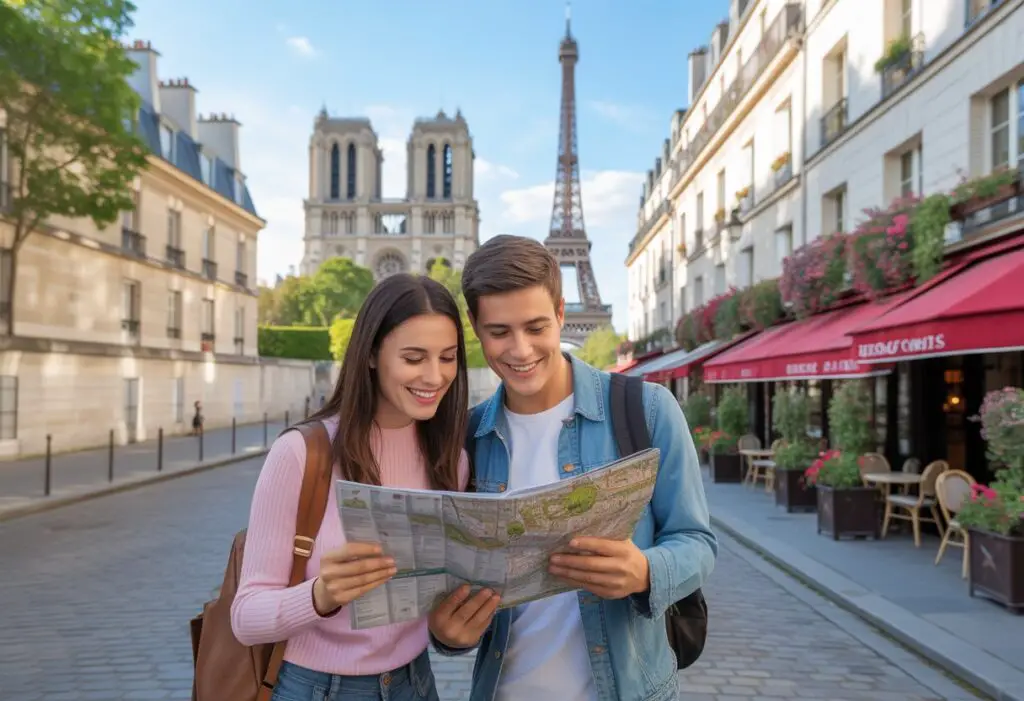
The best Paris itinerary for first-time visitors mixes iconic landmarks with genuine Parisian moments, letting you explore at your own pace instead of dashing from sight to sight. Give yourself at least five days if you want to see the big attractions and get a taste of different neighborhoods. That way, you can squeeze in museums, climb the Eiffel Tower, wander pretty streets, and linger over long meals at a local café.
Plan ahead for the busiest sights, but don’t schedule every minute. Paris rewards a little spontaneity, and sometimes the best moments are the ones you never saw coming. Whether you’re staying three days or a full week, a flexible plan helps you experience Paris the way it should be. Let’s get into how to make it all work—where to stay, what to see, and how to actually enjoy your days in one of the world’s most beautiful cities.
How to Plan Your Paris Itinerary
If you get the basics of Paris trip planning right, you’ll save yourself a lot of stress. The big questions: how long should you stay, when should you book, and what’s worth reserving ahead?
How Many Days to Spend in Paris
With just 3 full days, you’ll hit the main highlights, but you’ll be hustling between the Eiffel Tower, the Louvre, and Notre-Dame. Most folks leave wishing they’d had more time.
5 days is the sweet spot for a first visit. You can see the famous sights without running yourself ragged, wander into a few neighborhoods, and maybe squeeze in a day trip to Versailles. Plus, you’ll have those slow café moments that make Paris feel like Paris.
If you can stretch it to 7 days, you’ll settle into the city’s rhythm. There’s time for a trip to Giverny or the Loire Valley, or to just revisit a favorite spot. You might even stumble onto a local market or a tiny art gallery you’d never find in a guidebook.
Choosing the Best Time to Visit Paris
April, May, September, and October are honestly the best months in Paris. You get mild weather—think 15-22°C—manageable crowds, and that dreamy light for photos. Plus, hotels don’t gouge you as much as in peak summer.
June through August means long days and warm weather, which sounds ideal. But the city gets packed, hotel prices spike, and a lot of Parisians take off on vacation. If you have to come in summer, book as early as you can and brace yourself for lines.
November through March brings fewer tourists and cheaper prices, but it’s chilly, gray, and the days are short. Some people love winter Paris for its moody vibe and local feel. If that’s you, just pack layers and expect a bit of rain.
Essential Advance Bookings
Book these 2-3 months before your trip:
- Eiffel Tower tickets (especially if you want the summit at sunset)
- Popular restaurant reservations like Septime, Frenchie, or Bistrot Paul Bert
- Versailles entry if you’re planning a weekend visit
Buy these on arrival or 1-2 weeks ahead:
- Paris Museum Pass (€62 for 2 days, €77 for 4 days) for skipping lines
- Metro tickets or unlimited passes
- Musée d’Orsay and Louvre tickets—grab them online a few days before
The Paris Museum Pass pays off if you’re museum-hopping, but the real perk is skipping ticket lines at crowded spots. For travel tips, staying in central neighborhoods like Le Marais or the Latin Quarter costs more but can save you a ton of time on the metro. Sometimes, that’s worth every euro.
Where to Stay in Paris
Where you stay in Paris can really shape your trip. The city’s layout means you can reach major sights from lots of neighborhoods, but each one feels different and has its own perks.
Top Neighborhoods for First-Time Visitors
Le Marais is a favorite for first-timers. It covers the 3rd and 4th arrondissements and feels properly Parisian—think independent shops, lively cafés, and plenty of good food. You can walk to big sights or hop on the metro in minutes.
The Latin Quarter (5th arrondissement) puts you near the Pantheon and Luxembourg Gardens. It’s got winding medieval streets, classic bookshops, and a youthful buzz thanks to all the students. You’ll find restaurants for every budget.
Saint-Germain-des-Prés (6th arrondissement) serves up classic Parisian charm with old-school cafés and chic boutiques. You’re close to museums and the Seine, and the vibe is a little more polished.
Montmartre (18th arrondissement) gives you that village-in-the-city feeling. Around Sacré-Cœur, you’ll get amazing views, but be ready for hills and stairs.
Arrondissement Guide
The 1st arrondissement puts you right next to the Louvre and Tuileries Gardens. It’s super central, but hotels cost more and you’ll deal with crowds. Good if you’re short on time and want to be in the middle of it all.
The 2nd arrondissement, just north of the 1st, offers better value and great food on Rue Montorgueil. Still central, but a little less hectic.
The 5th (Latin Quarter) nails the balance between touristy and local. Metro access is great, and you can walk to Notre-Dame and the Pantheon.
The 9th, especially Pigalle, has gotten trendy—lots of creative restaurants and bars. It’s less touristy but still easy to get around. The area near Opéra Garnier is convenient but busy.
The 18th includes both lovely Montmartre and some spots you might want to skip. Stick close to Sacré-Cœur and the Abbesses metro area.
Best Hotels for Every Budget
Budget (Under $150)
Try the 2nd, 9th, or 18th arrondissements for better rates. Small boutique hotels and family-run places often give you more for your money here.
Mid-Range ($150-$300)
Le Marais and the Latin Quarter have lots of solid options in this range. Expect comfy rooms, great locations, and welcoming staff—without the crazy price tag.
Luxury ($300+)
The 1st and Saint-Germain-des-Prés have some of Paris’s best hotels. Think top-notch service, beautiful design, and locations steps from the big sights.
Book hotels a few months ahead, especially for spring and fall. Check if breakfast is included—otherwise, it can add $20-30 per person per day. Proximity to major metro lines (especially Line 1 and Line 4) makes life so much easier.
Must-See Paris Landmarks
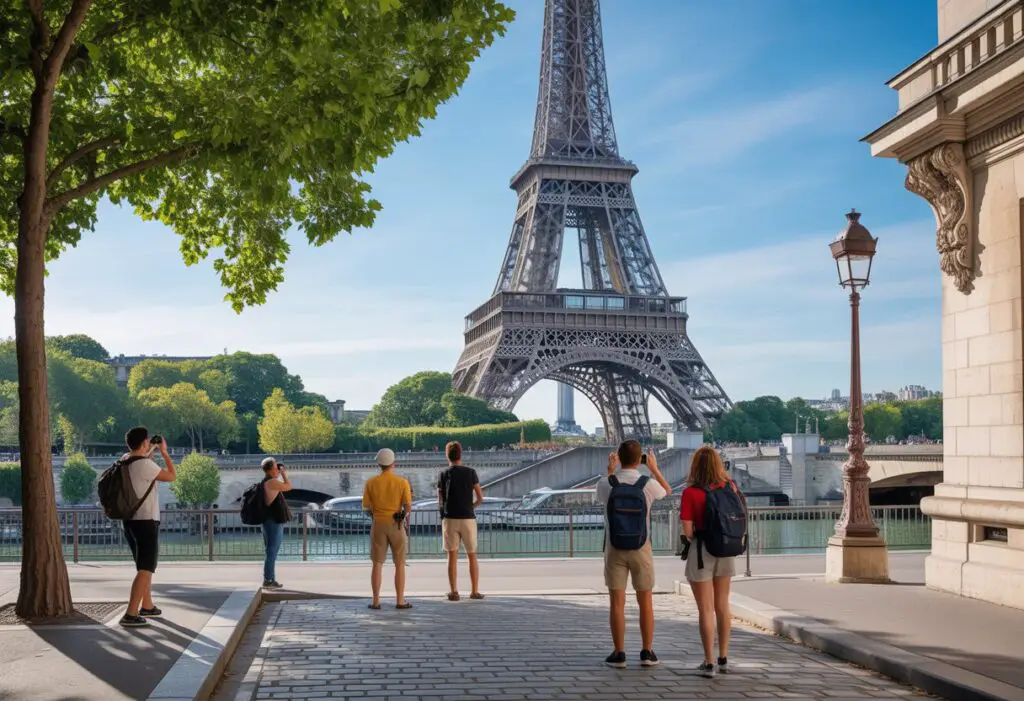
Paris crams centuries of history into a tight space, and these four landmark areas are the core of any first-timer’s trip. Each one gives you a different flavor—iconic views, jaw-dropping art, or just that feeling you’re somewhere special.
Eiffel Tower and Trocadéro
The Eiffel Tower rises 330 meters above the city and is, let’s face it, the symbol everyone comes to see. Book your tickets 2-3 months out, especially if you want sunset. The second floor gives you the best views—you’re high enough to see everything but still close to the city.
Start your visit at Trocadéro plaza across the river for the best photos (and fewer crowds). Morning, around 8-9 AM, is when the light is perfect. After you’ve done the tower, stroll through the Champ de Mars gardens for a whole new angle.
Skip the overpriced restaurants under the tower. Pick up picnic supplies from Rue Cler nearby and eat in the gardens instead. Elevator tickets to the second floor run €18-28, or €28-35 if you want to go all the way up.
The tower sparkles for five minutes at the top of every hour after dark. Best spots to watch? Trocadéro or the Champ de Mars lawn.
Louvre Museum Highlights
The Louvre holds 35,000 works of art in a space so big you’ll never see it all in one go. Focus on three areas to dodge museum fatigue.
Start in the Denon Wing for Italian paintings—yes, the Mona Lisa is here, and yes, it’s smaller than you think and surrounded by crowds. Snap your photo and check out the huge Veronese and Tintoretto paintings nearby that most people miss.
Head to the Sully Wing for Egyptian antiquities. These rival anything you’ll find in Cairo. Then pop back to the Denon Wing’s ground floor for Greek and Roman sculptures—the Venus de Milo and Winged Victory of Samothrace are the stars.
How to visit the Louvre without losing your mind:
- Arrive right at 9 AM (closed Tuesdays)
- Limit your visit to 2-3 hours, tops
- Buy tickets online for faster entry
- Use the Carrousel du Louvre entrance to dodge the pyramid crowds
The Paris Museum Pass gets you in and lets you skip the ticket line. It’s €62 for 2 days or €77 for 4 days.
Notre-Dame and Île de la Cité
Notre-Dame Cathedral is still closed for restoration after the 2019 fire, but you can admire the outside and watch the work in progress. The Gothic facade and flying buttresses are easy to spot from the plaza.
Sainte-Chapelle, tucked inside the old royal palace, is the real gem on Île de la Cité. Its 13th-century stained glass windows are unbelievable—arrive at 9 AM to see them without the crowds. Entry is €13 and you’ll need about 45 minutes.
Walk the island to see where Paris began 2,000 years ago. Check out the green bouquiniste book stalls along the Seine, then cross to Île Saint-Louis for Berthillon ice cream and peaceful streets.
Notre-Dame is set to reopen in late 2024 or 2025, so check the latest before you go.
Arc de Triomphe and Champs-Élysées
The Arc de Triomphe anchors the western end of the Champs-Élysées and honors French military history. Climb the 284 steps to the top for 360-degree Paris views. Twelve grand boulevards spin out from the monument like spokes—a wild bit of Baron Haussmann’s 19th-century city planning you can’t really appreciate until you’re up there, squinting into the distance.
The arch stands 50 meters tall in the middle of a roaring traffic circle. Take the underground passage—don’t even try crossing above ground. Entry costs €13 (or nothing extra if you have the Paris Museum Pass).
The Champs-Élysées stretches 1.9 kilometers from the Arc to Place de la Concorde. Walk it once just to say you did, but honestly, the cafes and chain stores are mostly overpriced. The avenue’s charm is more about its history than any real Parisian energy these days.
Place de la Concorde is where King Louis XVI and Marie Antoinette lost their heads during the French Revolution. The Egyptian obelisk in the center, dating back to the 13th century BC, arrived as a gift in 1829.
Try visiting the Arc around 4-5 PM for that soft light and smaller crowds. The Eiffel Tower view from the top is especially striking at sunset—worth the climb if you can time it right.
Iconic Paris Neighborhoods to Explore
Paris shows its true colors when you wander through its neighborhoods. Each one brings a different flavor—history, architecture, and a bit of local weirdness. These three spots mix big-name sights with everyday street life, so you’ll get both those classic photo ops and a taste of real Paris.
Montmartre and Sacré-Cœur Basilica
Start your Montmartre adventure at the Abbesses metro and walk up through the neighborhood instead of taking the funicular. On Rue Lepic, you can snag a pastry and watch locals haggle over their groceries—way better than just rushing to the top.
The white-domed Sacré-Cœur Basilica crowns Montmartre’s highest point, with sweeping city views. Entry is free, but climbing the dome (€8) gets you even higher. The basilica, built in 1914, pulls in millions of visitors every year.
Place du Tertre overflows with portrait artists and tourists. It’s a little much, but you can’t deny its connection to Montmartre’s artistic roots. Instead of hanging around, wander the quieter streets northwest of Sacré-Cœur. The Musée de Montmartre (€12) tells the story of artists like Renoir and Toulouse-Lautrec who lived here. As you explore, you’ll stumble onto medieval staircases, ivy-draped houses, and secret gardens—it starts to feel like you’ve left the city behind. Downhill, the Moulin Rouge marks the base of Montmartre. The cabaret’s history is fascinating, though the shows come with a hefty price tag.
Le Marais and Jewish Quarter
Le Marais squeezes medieval buildings, indie shops, and killer food into a few walkable blocks in the 3rd and 4th arrondissements. The area dodged Haussmann’s wrecking ball, so you’ll find 17th-century mansions and skinny lanes everywhere you look.
Start at Place des Vosges, the city’s oldest planned square—symmetrical pink-brick buildings and shaded arcades set the mood. Musée Carnavalet is free and surprisingly fun, with rooms full of paintings, furniture, and random Parisian artifacts. Rue des Francs-Bourgeois is the place for boutiques and galleries.
The Jewish Quarter centers on Rue des Rosiers, where the falafel is legendary. L’As du Fallafel draws the longest lines (skip Saturdays), but Miznon does wild things with pita. Marché des Enfants Rouges, the city’s oldest covered market, serves up everything from Moroccan tagines to Italian pasta for €10-15. It’s lively and feels like a real neighborhood hangout. Le Marais also hosts a strong LGBTQ+ scene, vintage shops, and some of the city’s best people-watching at café tables.
Latin Quarter Culture Walk
The Latin Quarter got its name from the Sorbonne students who once spoke Latin in the streets. Now it’s a jumble of academic buzz, old churches, and cheap eats. Start at the Panthéon (€11.50), where Voltaire, Rousseau, and Marie Curie are buried beneath the massive dome.
Slip through the medieval lanes toward the river. Shakespeare and Company bookshop sits across from Notre-Dame, its shelves packed to the rafters with English books. The current shop opened in 1951, but it still channels the spirit of the 1920s original, where Hemingway and Joyce hung out. You can browse for free, and sometimes they host readings in the evenings.
Rue Mouffetard, one of the city’s oldest streets, turns into a bustling market most mornings (closed Mondays). Vendors hawk cheese, produce, and snacks while locals bargain in rapid-fire French. The street slopes down past cafés, wine shops, and crêperies. At night, students take over the bars and cheap restaurants around Place de la Contrescarpe. The neighborhood’s winding layout rewards aimless wandering—you’ll stumble across fountains, Roman ruins, and quiet courtyards that barely feel like central Paris.
Best Experiences and Things to Do
There’s so much more to Paris than its headline sights. You get to know the city by floating down the Seine, finding hidden gardens, or chasing the kinds of views locals actually care about. These experiences help explain why Paris gets under people’s skin.
Seine River Cruise and Bridges
Taking a Seine cruise gives you a view of Paris you just can’t get on foot. At water level, the city unfolds in a new way, and you’ll pass under bridges that look completely different from below.
Bateaux Parisiens runs one-hour cruises for €15-17. You’ll glide past Notre-Dame, the Louvre, and the Eiffel Tower, with audio commentary filling in the backstory. Evening cruises feel special—Paris lights up, and suddenly the monuments seem magical.
The bridges themselves deserve a look. Pont Neuf is actually the oldest bridge in Paris, despite its name. Pont des Arts used to be covered in love locks (they’re gone now, but the romance lingers). Try walking across a few bridges during your visit—they each have their own quirks and the views change every time.
Buy cruise tickets at the dock to save a few euros, unless you’re visiting in peak summer—then booking online might be smarter.
Parks and Gardens of Paris
Paris parks are more than green spaces—they’re where locals unwind, picnic, and people-watch. They’re a great break from museums or just a spot to rest your feet.
Tuileries Garden stretches between the Louvre and Place de la Concorde. Shady paths, fountains, and scattered statues set the scene. Grab one of the movable green chairs by the big fountain and watch kids sail toy boats—it’s oddly hypnotic.
Luxembourg Gardens might just be the favorite. Sixty acres of lawns, the Medici Fountain, and a palace backdrop—it’s hard to beat. Rent a toy sailboat for €4, play chess, or just read in a metal chair under the trees.
Jardin des Plantes is the city’s main botanical garden. There’s a small zoo, a natural history museum, and an alpine garden packed with mountain plants. If you’re in town in late May or June, the rose garden is spectacular.
Jardin du Palais Royal is a quieter hideaway near the Louvre. The black-and-white columns in the courtyard (Colonnes de Buren) make for quirky photos, and the surrounding arcades shelter boutique shops.
Stunning Parisian Views
The best Paris views aren’t always from the big-name towers. Each vantage point gives you a different slice of the city’s patchwork.
The Eiffel Tower’s second floor has killer views, but of course, you’re not seeing the tower itself. Tour Montparnasse (€18) solves that—its observation deck puts the Eiffel Tower front and center, especially at sunset, and it’s usually less crowded.
Sacré-Cœur on Montmartre hill offers free city views from the steps. If you climb the dome (€8), you’ll get even higher. From elsewhere in Paris, the basilica’s white silhouette stands out on the skyline.
The Arc de Triomphe rooftop (€13) gives you a bird’s-eye view of Haussmann’s grand boulevards fanning out below. You can spot most of the city’s major landmarks from up there.
Galeries Lafayette rooftop terrace is totally free and gives you 360-degree views. Being near Opéra Garnier, you’re right in the thick of things.
Hidden Gems and Local Tips
The real Paris hides away from the main tourist drags. These spots show you where locals hang out and how they spend their days.
Duck into the covered passages (passages couverts) from the 1800s. Galerie Vivienne has mosaic floors and a gorgeous glass roof—these old arcades were the city’s first shopping malls, and some still have indie shops and cafés.
Check out neighborhood markets like Marché d’Aligre or Marché Bastille on weekend mornings. Watch Parisians buy produce, cheese, and flowers, all while negotiating prices in rapid French. The energy feels real—not staged for tourists.
Wander along Canal Saint-Martin in the 10th. On warm evenings, locals lounge by the water with wine and snacks. The arched bridges and old locks give this area a village vibe—so different from the city center.
The Promenade Plantée is an elevated park built on a former railway (it actually inspired New York’s High Line). Start at Bastille and walk through the 12th arrondissement for a peek at residential Paris.
Shakespeare and Company near Notre-Dame is touristy but still feels magical. The cluttered English-language bookstore has welcomed writers since 1951, and you can easily lose track of time browsing the stacks.
Top Museums and Cultural Highlights
Paris has some of the world’s best art, but you don’t have to see every museum to get your cultural fix. Pick the ones that interest you, and consider the Paris Museum Pass to skip those endless lines.
Musée d’Orsay & Impressionist Art
The Musée d’Orsay, set in a gorgeous old train station, holds the best Impressionist collection anywhere. Monet, Renoir, Van Gogh, Degas, Cézanne—they’re all here.
Head straight up to Level 5 for the Impressionist galleries. The light pouring through the curved glass ceiling makes the paintings glow. Entry’s €16, and two or three hours is plenty to see the best bits without feeling rushed.
Thursday evenings are the sweet spot—the museum stays open until 9:45 PM, and crowds thin out after 6. Don’t miss the clock windows up top for a great Seine-to-Montmartre view.
If Impressionism is your thing, add Musée de l’Orangerie to your route. It’s just a short walk from the Louvre, tucked into the Tuileries. Monet’s Water Lilies fill two oval rooms, creating a peaceful, immersive vibe. Tickets are €12.50.
Hidden Art Museums
Musée Rodin gives you a break from the crowds and a shot of sculpture in a beautiful mansion and garden. See The Thinker, The Kiss, and The Gates of Hell scattered among the roses. Entry is €13, and the gardens are perfect on a sunny day.
Musée Carnavalet tells Paris’s story from prehistoric times to today with a wild collection of 600,000 objects. Best part? It’s totally free. You’ll find period rooms, Revolutionary relics, and a sense of how Paris became, well, Paris.
The Musée de la Chasse et de la Nature in Le Marais mixes hunting artifacts with modern art in a quirky, cabinet-of-curiosities style. It’s €10 and takes about an hour. Afterwards, stroll through Galerie Vivienne nearby—one of those lovely covered passages from the 1800s.
Paris Museum Pass Guide
The Paris Museum Pass unlocks skip-the-line access at 60+ museums and monuments. You’ll pay €62 for 2 days, €77 for 4 days, or €92 for 6 days.
The pass makes sense if you:
- Plan to hit 3+ paid attractions each day
- Care more about skipping lines than pinching pennies
- Like the freedom to wander into museums on a whim
What’s included: Louvre, Musée d’Orsay, Versailles, Arc de Triomphe, Sainte-Chapelle, Musée Rodin, and plenty more.
What’s not included: Eiffel Tower, Sacré-Cœur dome in Montmartre, or special exhibitions.
You can buy the pass at the airport, big metro stations, or most participating museums. It starts ticking on your first use, not the day you buy it. If you see the Louvre, Orsay, and Versailles in 4 days, you’ll pocket about €30 in savings—not to mention all the time you won’t spend in ticket lines.
Unmissable Day Trips from Paris
Paris puts you within easy reach of some of France’s biggest attractions. You can check out a royal palace, meet Disney characters, or wander through historic towns—all just a short ride from the city center.
How to Visit Palace of Versailles
The Palace of Versailles is only 45 minutes from Paris by train. It’s one of the world’s most famous royal palaces. King Louis XIV turned the original château into a sprawling estate with over 700 rooms. That’s a lot of gold and mirrors.
The Hall of Mirrors steals the show—gold everywhere, and 357 mirrors bounce light around from massive windows. Try to get there early or book a skip-the-line tour if you hate waiting around.
The grounds go way beyond the main palace. Gardens stretch for what feels like forever, dotted with fountains and sculptures. The Petit Trianon offers a peek at royal life on a smaller scale—Marie Antoinette used it as her hideaway.
You’ll want at least half a day for Versailles. Hop on the RER C train from central Paris to Versailles Château Rive Gauche. Buying tickets online saves you hassle.
Disneyland Paris Adventure
Disneyland Paris is a solid pick for families. The resort has two theme parks, just 37 minutes from Paris by train.
Disneyland Park delivers the classics—Big Thunder Mountain, Sleeping Beauty Castle, all that. Walt Disney Studios Park is more about movies, with rides for Marvel, Pixar, and Star Wars fans. If you get there at opening, you can do both parks in one day, though you’ll be tired.
Spring and fall bring shorter lines than summer. Catch the RER A train straight to the parks; it’s cheaper than other options. Food inside costs a lot, so pack snacks and water if you can.
More Unique Day Trip Ideas
Giverny lets you step into Monet’s world—his home and gardens, including the Water Lilies pond. It’s about 75 minutes away by train and car.
Mont-Saint-Michel rises dramatically from the sea on its tidal island. The medieval abbey sits 4 hours from Paris. Going with a tour group is much easier than trying to piece together public transport.
The Champagne region is all about tasting bubbly at local producers. Most tours from Paris include transport and stops at several champagne houses. The Loire Valley, about an hour out, offers castle tours and wine tastings too.
Essential Paris Travel Tips
Planning ahead pays off in Paris. A few smart moves with transport, budgeting, and local customs can mean the difference between feeling lost and feeling like you belong.
Getting Around the City
The Paris Metro is your best bet. It runs from 5:30 AM to 1:15 AM on weekdays and until 2:15 AM on weekends. Stations are everywhere in central Paris.
Grab a carnet of 10 tickets for €16.90—it beats paying €2.10 each time. Day passes make sense if you plan on five or more trips. The Navigo Découverte card (€5 to buy, then €30 for a week of unlimited rides) is a steal if you’re around for a week.
Honestly, walking often beats the Metro for trips under 1.5 km. Paris is compact, and you’ll stumble across hidden cafés and beautiful buildings in between the big sights. Citymapper is the best app for mixing walking and Metro directions.
Skip taxis—Uber or the Metro are way cheaper. Taxis start at €7-8 before you even move. The Metro gets you nearly anywhere in central Paris for less than €2.
Money-Saving Passes and Tickets
The Paris Museum Pass (€62 for 2 days, €77 for 4 days, €92 for 6 days) pays off if you hit four or more museums. You’ll also dodge most ticket lines, saving hours in high season.
Most big museums are free on the first Sunday of each month. If you’re under 26 and from an EU country, you get in free at many places year-round.
The Paris Visite Pass runs €29.25 for 3 days of unlimited rides, but unless you’re taking 15+ Metro trips a day, it’s not a great deal. Most people save more with single tickets or a Navigo card.
Book restaurants for lunch, not dinner. Many top spots do €20-30 lunch menus that jump to €60-80 at dinner for similar food. Bakeries sell killer sandwiches for €5-7.
Safety and Etiquette
Paris is generally safe, but pickpockets work busy Metro lines and tourist spots. Keep your phone and wallet in your front pockets. Be extra careful on Metro lines 1 and 4.
Say “Bonjour” to shopkeepers when you walk in—it’s expected. “Au revoir” on the way out, too. This tiny gesture really changes how people treat you.
Lunch is from noon to 2:30 PM, dinner from 7:30 PM onward. Showing up at 5 PM for dinner screams “tourist”—most kitchens won’t be open yet.
Don’t eat or drink on the Metro. Locals consider it rude, and you’ll get the side-eye. Save your coffee for when you get to your stop.
Where and What to Eat in Paris
Paris is a food lover’s playground—flaky croissants at the corner bakery, fresh produce at old-school markets, and bistros serving steak-frites or trendy food stalls packed with locals at lunch.
Best Cafés and Bakeries
Kick off your morning at a neighborhood bakery for croissants or pain au chocolat. They’re at their best still warm from the oven. Look for the “Artisan Boulanger” sign—they bake everything on-site.
For coffee, avoid the touristy places and find specialty shops where baristas care about their craft. Many bakeries also offer simple breakfasts like tartines with butter and jam.
Galeries Lafayette’s food hall on Boulevard Haussmann is worth a stop. You’ll find great pastries and a wide range of French treats in one spot. The rooftop terrace is a lovely place for coffee with a view.
Don’t skip the afternoon goûter—a light snack time around 4 PM, often with pastries or bread and chocolate. It’s the perfect excuse to check out a pâtisserie.
Classics of French Cuisine
Traditional bistros serve up the French classics. Go for steak-frites, coq au vin, or duck confit at places with chalkboard menus and red-checked tablecloths. Lunch is usually cheaper than dinner for the same dishes.
Le Marais is packed with options for classic French dining. Cozy spots serve escargot, French onion soup, and rich chocolate mousse. Many require reservations, so try calling ahead or popping by earlier in the day.
The Latin Quarter and Saint-Germain-des-Prés have old-school bistros where locals actually eat. If the daily specials are only in French, that’s usually a good sign. A typical meal is three courses—starter, main, and dessert or cheese.
Trendy Food Markets
Marché des Enfants Rouges is Paris’s oldest covered market and a real local favorite. Food stalls here serve everything from Moroccan tagines to Italian pasta. Grab a spot at a communal table and soak up the buzz.
The market opens Tuesday through Sunday, with the best selection at lunch. Prices are fair, and portions are filling—no need for a formal restaurant.
Canal Saint-Martin draws younger crowds who picnic by the water. Grab takeout from nearby bakeries or wine shops and join the locals along the canal. It’s perfect for laid-back dining.
On Sunday mornings, outdoor markets pop up across the city. Pick up cheese, bread, rotisserie chicken, and fruit for a DIY Parisian picnic. Vendors usually offer samples, so don’t be shy about tasting before you buy.
Frequently Asked Questions
Most first-timers in Paris have a lot of the same questions. Here are some quick answers to help you plan your trip—what to see, where to wander, local favorites, and a few cultural pointers.
What are the must-see attractions for a first-time visitor to Paris?
The Eiffel Tower is at the top of nearly every list. Book your tickets online to dodge the lines, which can get ridiculous.
The Louvre Museum is packed with world-famous art—the Mona Lisa, Venus de Milo, and more. Give yourself at least three or four hours; it’s huge and easy to get lost in.
Notre Dame Cathedral is still a must, even mid-reconstruction. You can admire the outside and watch the restoration work.
Sacré-Cœur Basilica sits high above Montmartre and gives you killer views over Paris. The white dome and the artsy neighborhood make it memorable.
The Arc de Triomphe anchors the Champs-Élysées. Climb to the top for city views that are totally different from the Eiffel Tower’s.
A Seine River cruise is a chill way to see a bunch of landmarks from the water. You’ll float past Notre Dame, the Louvre, and Musée d’Orsay, all while learning a bit about Parisian history.
Can you recommend a 3-day itinerary for exploring Paris?
Day one: focus on the Eiffel Tower area. Start at the tower, then head to Trocadéro for photos. Take a Seine cruise in the afternoon and stroll down the Champs-Élysées to the Arc de Triomphe.
Day two: museums and islands. Spend the morning at the Louvre (book ahead). After lunch, check out Notre Dame’s exterior and the stained glass at Sainte-Chapelle on Île de la Cité. The Latin Quarter is a good dinner spot.
Day three: Montmartre and neighborhoods. Climb to Sacré-Cœur in the morning, wander Montmartre’s streets, then spend your afternoon in Le Marais browsing boutiques or relaxing at Place des Vosges. If you have extra time, try Musée d’Orsay.
Which neighborhoods in Paris should I make sure to visit during my trip?
Le Marais blends history and style—beautiful buildings, cool shops, art galleries, and great restaurants. Place des Vosges and the Jewish quarter on Rue des Rosiers are highlights.
Montmartre keeps its artsy, village vibe. The hill leads up to Sacré-Cœur, and the cobbled streets are full of artists at work. It’s touristy, but still has a bohemian feel.
Saint-Germain-des-Prés is classic Paris. Legendary cafés like Les Deux Magots and Café de Flore share the streets with designer boutiques and galleries.
The Latin Quarter buzzes with student life and history. Winding streets pass bookshops, cafés, and plenty of budget eats, all around the Sorbonne.
The Champs-Élysées district shows off grand Parisian architecture. Beyond the avenue itself, you’ll find elegant buildings, luxury shops, and Place de la Concorde.
Are there any hidden gems in Paris that first-time tourists should include in their itinerary?
Canal Saint-Martin brings a laid-back, local vibe far from the usual tourist hustle. Grab a spot by the water for a picnic, watch boats squeeze through the old locks, or just wander past the quirky cafes and indie boutiques lining the canal. It’s a lovely way to see a different side of Paris.
Parc des Buttes-Chaumont is a bit of an escape, tucked into the 19th arrondissement. With its steep cliffs, winding paths, and that dramatic suspension bridge, it feels almost wild compared to the manicured parks in the city center. Fewer crowds, too, which is always a win.
Marché des Enfants Rouges, the city’s oldest covered market, is a real treat for food lovers. There’s a jumble of food stalls—Moroccan tagines, Italian pasta, Japanese bento, you name it. The atmosphere’s lively, prices are fair, and it’s a good spot to sample Paris’s melting pot of flavors.
The Promenade Plantée, built on old railway tracks, floats above the streets for almost three miles. Locals stroll, jog, or just lounge with a book. It’s a surprisingly peaceful walk and, funny enough, New York’s High Line actually took inspiration from this Paris original.
Belleville is a neighborhood that’s proud of its grit and mix of cultures. Street art splashes the walls, and you’ll stumble on authentic little restaurants and buzzing markets. Climb to the park at the top for a view that’ll catch you off guard—it’s one of the best in town, honestly.
What’s the best way to experience the cultural highlights of Paris in a short visit?
If you’re pressed for time, try to blend museums, architecture, and some live culture. The Louvre and Musée d’Orsay? They’re both musts—totally different vibes, but together they cover a huge chunk of Western art history. You could spend days, but even a few hours in each leaves an impression.
Snag a ticket to the Palais Garnier if you can. Even if you skip the show, the guided tours are worth it. The place is jaw-dropping inside, and it’s wild to realize it inspired The Phantom of the Opera.
Weekday mornings tend to be quieter at the big museums. Some have late-night hours once or twice a week—those evenings can feel almost intimate, if you time it right.
Don’t rush past the cafes. Sitting at a terrace with a coffee or glass of wine, watching the city swirl by, is practically a Parisian rite. Skip the famous touristy spots and duck into a neighborhood place; it’s where you really soak up the rhythm of local life.
Wander through a few neighborhoods on foot. The grand Haussmann buildings along the boulevards, winding medieval alleys in Le Marais, and the Belle Époque touches up in Montmartre—all these details tell their own stories about the city’s past and present.
Thinking about a cabaret? Moulin Rouge is the classic, but it books up fast, especially when the city’s busy. If you want a seat, it’s best to plan ahead—sometimes way ahead. But hey, that’s part of the adventure, right?
How can I fit visiting the top museums in Paris into my travel plan?
Go ahead and book museum tickets online before your trip—it’ll save you hours of standing around and you’ll actually get in when you want. For places like the Louvre or Musée d’Orsay, you pretty much have to book in advance anyway.
Give each big museum its own day. Trying to cram too many into one day just turns everything into a blur. The Louvre alone can eat up a whole morning or afternoon, and Musée d’Orsay, honestly, takes at least a couple of hours to do it any justice.
Before you go, pick out a handful of must-see pieces for each museum and figure out a loose route. No one can see it all in a single trip, so don’t even try—just enjoy what you can.