
15 Embarkation Day Tips From Bag Drop to Your First Meal
Cruise embarkation can feel oddly fragmented: you drop luggage, pass through check-in, wait for the cabin, and try to remember where you put the documents you need next. A calmer first day comes from planning the handoffs. Keep essentials in one small bag, know which tasks can wait until you are onboard, and avoid filling the first few hours with reservations that depend on perfect timing.
The process differs by cruise line, terminal, port, and sailing. Use these tips as a planning framework, then check the current instructions for your own booking. Your boarding time, required documents, baggage process, and muster instructions are the authority for that trip.
Before leaving for the terminal

1. Recheck the cruise line’s actual arrival window
A boarding pass or app may assign an arrival window, and the terminal may not accept guests substantially earlier. Check the latest check-in instructions the day before travel and save a screenshot in case mobile service is unreliable. Plan your ground transportation around the assigned time, while leaving a modest buffer for traffic. Arriving extremely early can mean waiting with luggage rather than getting onboard sooner. If a flight delay affects arrival, use the cruise line’s stated contact channel immediately.
2. Keep travel documents and check-in details together
Put the documents required for your itinerary in one secure, easy-to-reach place: identification, boarding information, and any visas or health documents applicable to your route. Requirements can depend on nationality, destination, and transit points, so verify them with the cruise line and relevant government sources rather than relying on another traveler’s checklist. Keep digital copies accessible offline where practical, but do not assume a phone image replaces an original document when one is required.
3. Pack a small bag for the hours before checked luggage arrives
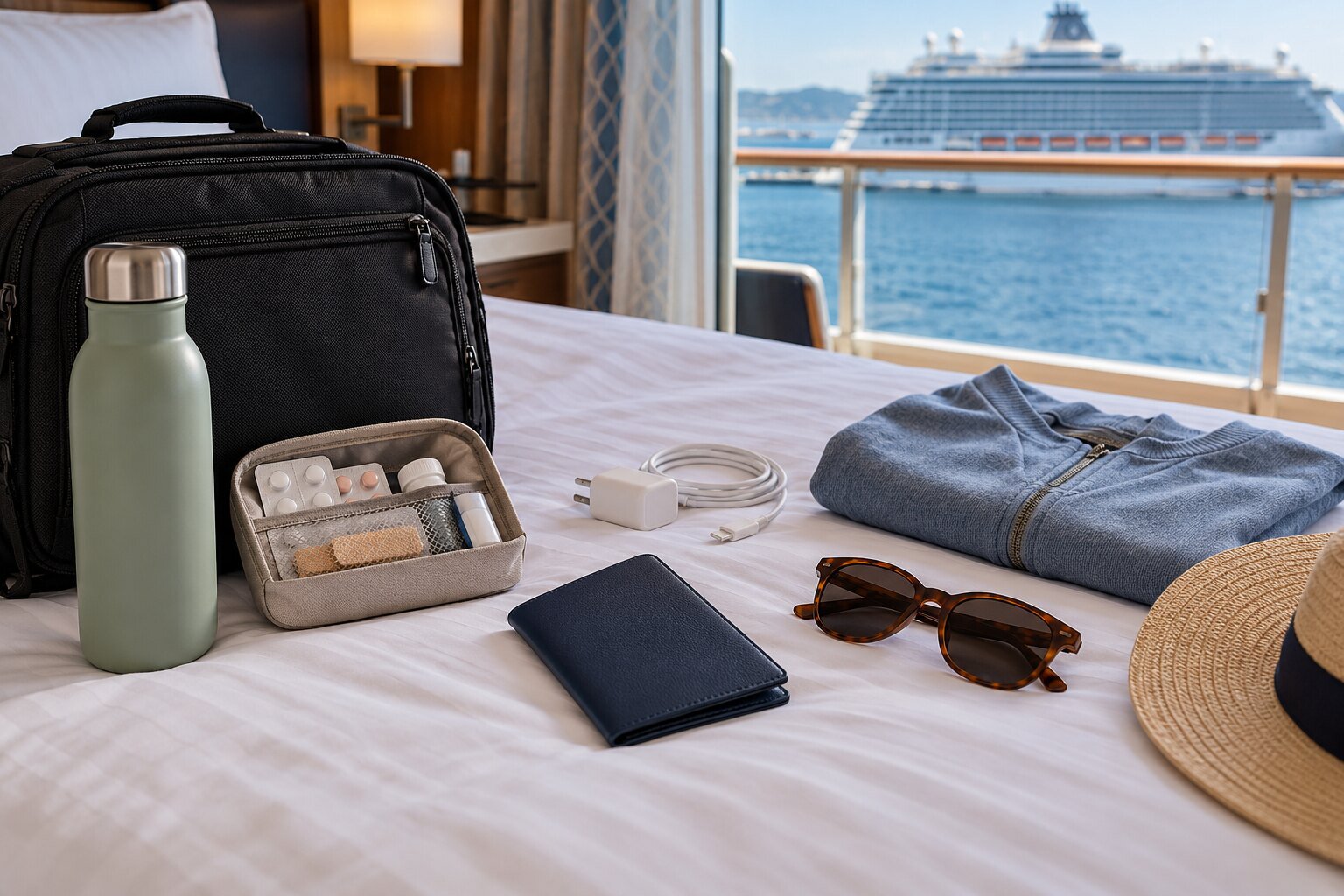
Your cabin may not be available the moment you board, and checked bags can arrive later. Put medication, glasses, valuables, phone charger, a change of essentials, and anything needed during the afternoon in your carry-on. Keep the bag compact enough to manage through security and crowded corridors. Leave items you will not need during boarding in the luggage you hand over, but never pack irreplaceable documents or time-sensitive medication where you cannot reach them.
4. Confirm what baggage the terminal accepts
Cruise lines and terminals set their own baggage limits, labels, and handoff process. Read the current guidance for checked and carry-on luggage, then label bags as instructed. Keep any claim tags until the luggage reaches your cabin. If you have a mobility aid, stroller, unusual equipment, or accessibility request, contact the line in advance and verify the terminal procedure. A smooth handoff depends on matching the bag to the correct sailing and following the port’s directions.
5. Eat and hydrate before the process gets busy
A simple meal and water before arrival can make queues and check-in easier, particularly if you are traveling with children or older relatives. Do not count on a particular onboard dining venue being open at a specific time unless the cruise line confirms it for your sailing. Keep any food you bring consistent with the line’s current rules. If someone in your party has a dietary or medical need, pack a suitable permitted snack and keep the relevant supplies in the carry-on.
At the terminal and during boarding
6. Follow signs and staff instructions over habit
The terminal flow can differ from the airport and from the port you used last time. Watch for signs directing baggage drop, security, check-in, and boarding, and ask staff if a queue is unclear. Do not assume a previous sailing used the same entrance or document check. Keep your group together before entering a line and agree on a meeting point in case you are separated. Patience at this stage is more useful than trying to predict every step.
7. Keep essentials reachable without opening every pocket
Place your identification and boarding materials in a pocket or pouch you can reach while standing in line, then return them to the same secure place after each check. Avoid passing documents loosely between family members. A small zip pouch can keep them together, but do not place it where it is easy to lose or where you must unpack the whole bag to retrieve it. The goal is a quick handoff with less rummaging in a crowded terminal.
8. Wear shoes and clothes that work for waiting
Boarding may involve standing, walking, security screening, stairs, and time in a warm terminal. Choose shoes you have already worn comfortably and clothing with pockets or layers that suit the travel day. Keep a light layer available if you tend to feel cold in air conditioning. Avoid a complicated outfit that makes it difficult to manage bags, pass screening, or move with children. You can change into pool clothing after your cabin is open.
9. Set a meet-up point for your group
If your party is splitting between check-in lanes or needs different boarding assistance, choose a visible meeting point and a backup method such as a phone message. Agree on what to do if a phone loses signal or a device battery runs down. For children, use a simple, age-appropriate plan and make sure they know which uniformed staff to approach for help. A clear regrouping plan prevents a small separation from turning into an avoidable search.
10. Use the official app, but keep a backup
The cruise line app may show boarding passes, schedules, dining information, and ship notices. Install or update it before travel, log in, and save key details for offline access if the app allows it. Keep a screenshot or printed backup for the items the line accepts in that format. Do not assume the terminal has strong Wi-Fi or that every feature works before the ship’s network is available. Charge your phone before leaving the hotel or home.
11. Take a quick inventory at each handoff
Before leaving a car, taxi, or rideshare, count the bags and check the area around your seat. After baggage drop, retain the claim information and check that personal carry-ons are still with your group. At security, gather belongings before stepping away from the belt. These short checks are easier than trying to reconstruct a lost item later. Keep a basic list of bags and distinctive details on your phone, especially if several suitcases look alike.
Once you are onboard

12. Follow the day’s safety briefing instructions promptly
Every sailing has required safety information and muster procedures. Follow the instructions provided by the crew and the cruise line app, and complete any required check-in or briefing within the stated time. The process may not resemble a traditional assembly drill, so read the current directions rather than assuming what happened on another ship. If you have mobility needs or questions about reaching your assigned station, ask crew early while the ship is still relatively calm.
13. Check which spaces and services are open before making a plan
Some venues, pools, or activities may operate on a limited schedule during embarkation. Consult the onboard app or printed schedule once it is available. Build a loose plan around what is confirmed, not a list copied from a review of another sailing. If you want to explore the ship, choose a few places you care about and leave time to find the cabin and settle in. You do not need to see every deck before the first meal.
14. Make your first meal easy to reach and flexible
Choose an open dining option that fits your arrival time and energy level. Check whether your sailing uses assigned dining, reservations, or open seating, and confirm the venue’s hours for that day. If the first choice is crowded, have one backup rather than walking the ship hungry while trying several places. Families may want a quick meal before exploring; others may prefer to unpack essentials first. The best option is the one that reduces stress for your group.
15. Do a five-minute cabin setup, not a full unpack
When the cabin opens, put medication, chargers, and the next day’s essentials where you can find them. Check that luggage has arrived and report a missing bag through the cruise line’s process. Unpack only what helps you settle in; you can organize the rest later. If you need to change for dinner or the pool, use the carry-on items you packed for that purpose. A short setup leaves time to enjoy the first evening without turning it into a closet project.
A simple first-day sequence
A low-stress sequence is straightforward: verify the arrival window and documents, travel to the terminal, complete the baggage and check-in process, board with your essentials, follow safety instructions, check the day’s venue hours, and choose an easy first meal. The exact order can change based on the ship’s instructions, but this framework keeps the important tasks visible. Add a ship tour, pool visit, or reservation only after you know the day’s timing.
Before leaving home, put three reminders in your phone: the boarding window, the location of required documents, and the number or link for the cruise line’s support channel. Before leaving the terminal queue, confirm that each person has their phone, medications, and carry-on. Those small checks can prevent the most common first-day frustrations.
What not to overplan
Embarkation day is a poor time to schedule a nonrefundable activity that requires a tight connection. Avoid assuming that a cabin will be ready immediately, that checked luggage will arrive before dinner, or that a favorite restaurant will be open. Do not carry more loose items than you can keep track of in a busy line. Use the day to get oriented, complete required steps, and choose one or two things that genuinely make the start of the trip better.
Prepare for a late flight or ground-transport delay
The easiest embarkation day begins before the ship day. If you are flying to the port, arriving the day before can reduce the chance that a single delay disrupts the whole trip. That choice adds a hotel night and may not be practical for every traveler, but it gives you more control over the morning. If you must arrive the same day, understand the cruise line’s cutoff and missed-boarding policy before departure, and keep its contact details handy.
For ground transport, save the terminal address and the cruise line’s directions in advance. A rideshare pin can lead to the wrong entrance in a large port complex, so use the terminal name as well as the street address. If someone else is driving, agree on the drop-off point and a way to contact each other after luggage is handed over. Do not ask a driver to wait in a restricted area while you sort out check-in.
Give your group one person who keeps track of the time and documents, but make sure another adult knows where the essentials are in case the first person is occupied. This is especially helpful when traveling with children or relatives who need extra time to walk or use the restroom. A few minutes of coordination can make the terminal feel much less chaotic.
Adjust the plan to the people traveling
Travelers who use mobility devices, need medication on a strict schedule, or find crowds difficult may benefit from contacting the cruise line before sailing to ask what assistance is available. Verify where to meet staff and whether the terminal uses a separate process. Keep essential mobility or medical items with you and follow the provider’s instructions for transporting them. Do not assume a generic embarkation tip covers a personal medical or accessibility need.
For a family, divide the carry-on so the items needed by each person are easy to reach. A spare shirt, wipes, snack, and small quiet activity can help during a wait. For a couple or group of friends, agree on a simple first-hour plan: where to meet after boarding, when to check the cabin, and whether everyone wants lunch before exploring. The point is not to control every minute; it is to remove avoidable decisions when everyone is tired.
Once you have confirmed the sailing-specific rules, keep the rest of the day light. Boarding is a transition between travel and vacation, and it is normal if the ship feels unfamiliar at first. A document pouch, one manageable carry-on, a realistic arrival window, and a flexible meal plan are often enough to make the first few hours feel settled.
Sources
- https://www.royalcaribbean.com/faq/questions/what-time-can-i-board-the-ship
- https://www.royalcaribbean.com/faq/questions/what-is-the-muster-drill